Zinc for Immune Health: How It Supports Defenses and May Shorten Colds
Zinc for Immune Health: How It Supports Defenses and May Shorten Colds
Zinc is a trace mineral, meaning the body needs it in small amounts but depends on it for important functions. It plays a central role in immune health, wound healing, cell growth, DNA synthesis, and normal taste and smell.
Because the body does not store large amounts of zinc, regular intake from food is important. For people who do not get enough, low zinc status can weaken immune defenses and may increase susceptibility to infections.
How zinc supports immune health
Zinc helps the immune system in several key ways:
- Supports the development and activity of immune cells, including cells involved in both innate and adaptive immunity
- Helps maintain healthy skin and mucous membranes, which act as physical barriers against germs
- Supports normal inflammatory responses, helping the body respond without excessive immune activation
- Helps cells communicate during immune responses
- Supports antioxidant defenses that protect cells from oxidative stress
In simple terms, zinc helps the immune system recognize threats, respond efficiently, and maintain healthy barriers.
Zinc and the common cold
Zinc is best known for its potential role in reducing the duration of common cold symptoms. Research suggests that zinc lozenges or zinc syrup may shorten a cold for some people when started within 24 hours of symptom onset.
The benefit appears to depend on the zinc form, dose, timing, and product quality. Zinc is more likely to help when used early, before symptoms have progressed for several days.
Zinc does not prevent every cold, and it does not work like an antibiotic. Most colds are caused by viruses, and zinc may help by interfering with viral activity in the throat and supporting immune response.
Best food sources of zinc
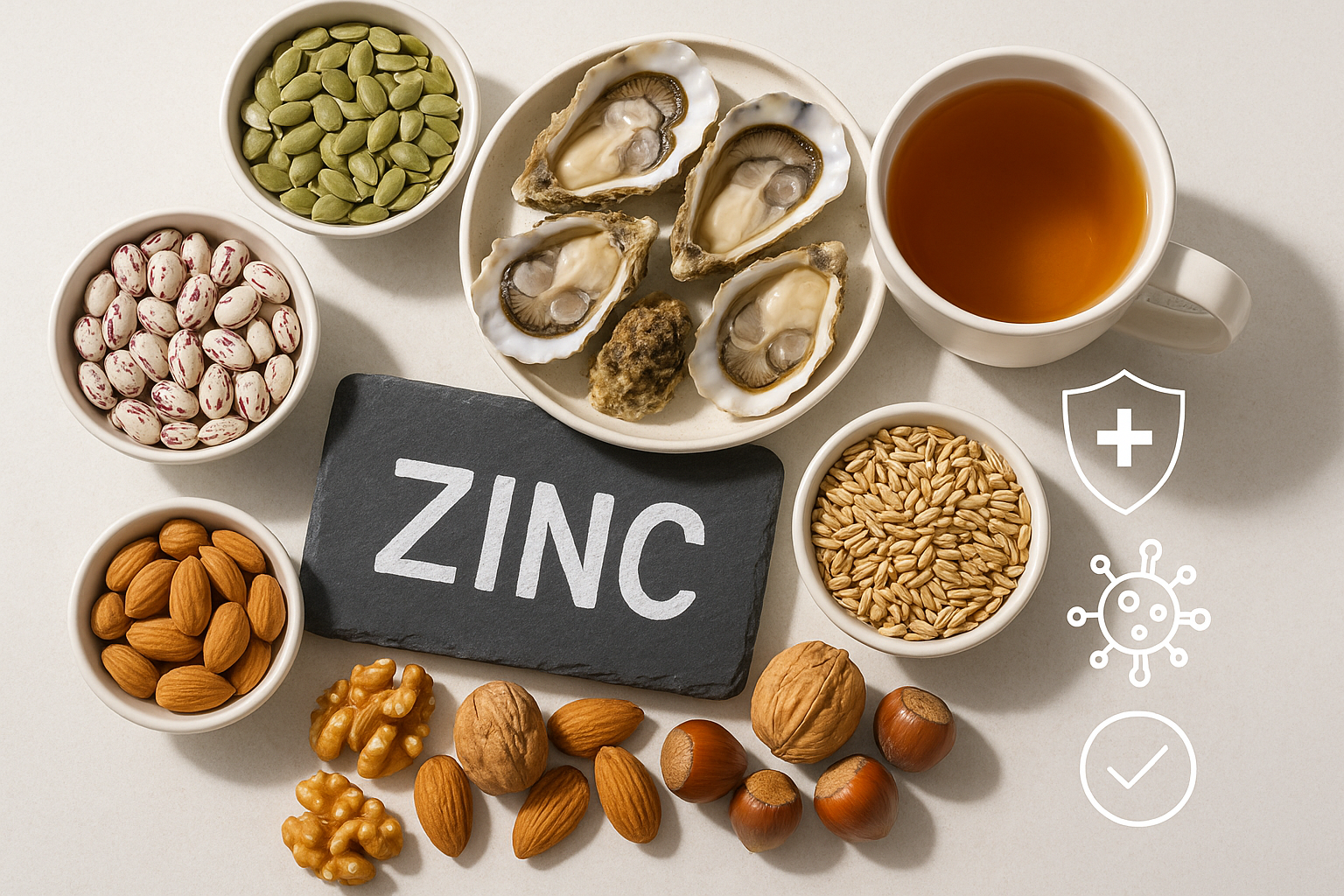
Food is the safest foundation for healthy zinc intake. Good sources include:
- Oysters and other shellfish
- Beef, poultry, and pork
- Beans, lentils, and chickpeas
- Pumpkin seeds, hemp seeds, and sesame seeds
- Cashews and other nuts
- Yogurt and dairy products
- Whole grains and fortified cereals
Animal sources are generally more easily absorbed. Plant foods can still provide zinc, but phytates in beans, grains, and seeds can reduce absorption. Soaking, sprouting, fermenting, and choosing leavened whole-grain breads may improve mineral availability.
Zinc supplements for colds
For cold symptoms, zinc lozenges or syrup are the forms most often studied. They are usually intended for short-term use, not daily long-term immune boosting.
General tips:
- Start as soon as cold symptoms begin, ideally within 24 hours
- Use only as directed on the product label or by a clinician
- Avoid taking zinc lozenges at the same time as high-calcium foods or drinks if the product instructions advise separation
- Stop use if side effects are bothersome
- Do not use intranasal zinc products, as they have been linked to loss of smell
Common side effects can include nausea, bad taste, stomach upset, or mouth irritation.
How much zinc do adults need?
Recommended zinc intake varies by age, sex, pregnancy, and breastfeeding status. Many adults can meet their needs through diet. In the United States, the tolerable upper intake level for adults is 40 mg per day from food and supplements combined, unless a healthcare professional recommends otherwise.
Taking too much zinc over time can cause problems, including copper deficiency, anemia, lowered HDL cholesterol, and impaired immune function. More is not better.
Who may be at risk for low zinc?
Some people may have a higher risk of inadequate zinc intake or absorption, including:
- People with limited diets or low intake of zinc-rich foods
- Vegetarians and vegans who rely heavily on unprocessed grains and legumes
- People with certain digestive disorders
- People with alcohol use disorder
- Older adults with poor dietary intake
- Pregnant or breastfeeding people with increased needs
If you suspect low zinc status, a healthcare professional can help evaluate diet, symptoms, medical history, and whether testing or supplementation is appropriate.
Zinc interactions and safety notes
Zinc can interact with certain medications, including some antibiotics and penicillamine. It may need to be taken several hours apart from these medicines. Zinc can also compete with copper when taken in high doses for long periods.
Before using zinc supplements, ask a clinician if you take prescription medications, have kidney disease, are pregnant or breastfeeding, or are giving zinc to a child.
Bottom line
Zinc is essential for immune health because it helps immune cells function, supports protective barriers, and contributes to normal inflammatory balance. Getting enough zinc through food is the best long-term strategy. For colds, short-term zinc lozenges or syrup started early may modestly reduce symptom duration, but high-dose or long-term supplementation can be harmful. Use zinc thoughtfully and seek medical guidance when needed.
References
NIH Office of Dietary Supplements: Zinc Fact Sheet for Consumers