Why Zinc Matters for Immune Health and How to Get Enough
Why Zinc Matters for Immune Health and How to Get Enough
Zinc is a trace mineral, which means your body needs it in small amounts, but it plays a major role in everyday health. It supports immune defenses, helps wounds heal, contributes to normal growth and development, and is involved in many enzyme reactions throughout the body.
Because the body does not store large amounts of zinc, it is important to get zinc regularly from food or, when appropriate, supplements.
How zinc supports immune health
Zinc contributes to immune health in several important ways:
- It helps immune cells develop and function normally.
- It supports the skin and mucous membranes, which act as physical barriers against germs.
- It plays a role in inflammation regulation.
- It helps the body repair tissue and heal wounds.
- It supports normal cell division and protein production.
Low zinc intake can affect the immune system and may make it harder for the body to respond well to everyday immune challenges.
How much zinc do you need?
Daily zinc needs vary by age, sex, and life stage. For most adults, the recommended daily intake is about 8 mg per day for women and 11 mg per day for men. Needs are higher during pregnancy and breastfeeding.
More zinc is not always better. Taking too much zinc, especially from supplements, can cause nausea, digestive upset, headaches, and may interfere with copper absorption over time.
Best food sources of zinc
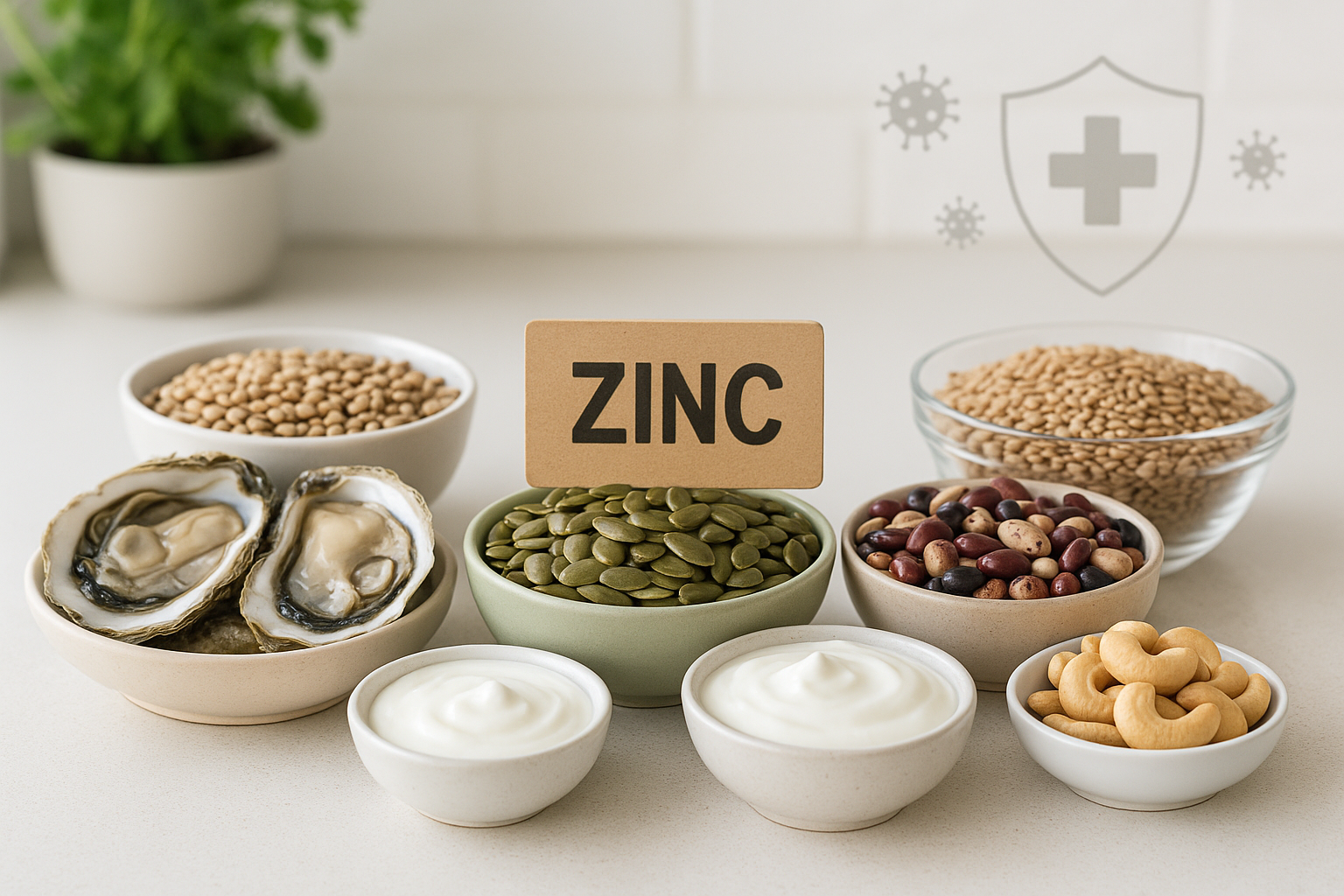
The best way to get zinc is usually through a balanced diet. Zinc is found in both animal and plant foods, but animal sources are generally absorbed more easily.
Good zinc-rich foods include:
- Oysters and other shellfish
- Beef, poultry, and pork
- Beans, chickpeas, and lentils
- Pumpkin seeds, sesame seeds, and hemp seeds
- Cashews and other nuts
- Yogurt, milk, and cheese
- Eggs
- Whole grains and fortified cereals
Plant foods can contain phytates, natural compounds that reduce zinc absorption. Soaking, sprouting, fermenting, or cooking legumes and grains may improve mineral availability.
Who may be at risk of low zinc?
Some people may be more likely to have inadequate zinc intake or absorption, including:
- People who eat a very limited diet
- Vegetarians and vegans who do not plan zinc intake carefully
- Older adults with low food intake
- People with certain digestive disorders
- People who have had gastrointestinal surgery
- Pregnant or breastfeeding individuals
- People with alcohol use disorder
If you think you may be low in zinc, it is best to speak with a healthcare professional before taking high-dose supplements.
Should you take a zinc supplement?
A supplement may be helpful for people who do not get enough zinc from food or who have increased needs. However, routine high-dose zinc is not necessary for most people and can cause problems if taken long term.
If you use a zinc supplement, check the label for the amount of elemental zinc. Many products contain different forms, such as zinc gluconate, zinc citrate, or zinc picolinate. Avoid exceeding the tolerable upper intake level unless your healthcare professional recommends it.
Zinc can also interact with certain medications, including some antibiotics and penicillamine. It may need to be taken at a different time of day from those medicines.
Simple ways to get enough zinc
You can support zinc intake with practical daily habits:
- Add pumpkin seeds or hemp seeds to oatmeal, yogurt, or salads.
- Include beans, lentils, or chickpeas in soups and bowls.
- Choose zinc-rich proteins such as seafood, poultry, beef, eggs, or dairy.
- Use fortified cereals or whole grains when appropriate.
- Pair plant-based zinc foods with a varied diet to support overall nutrient intake.
Key takeaway
Zinc is essential for normal immune function, but balance matters. Most people can meet their needs through zinc-rich foods, while supplements may be useful in specific situations. For long-term immune health, zinc works best as part of a broader foundation that includes enough sleep, a nutrient-rich diet, regular movement, stress management, and appropriate medical care.
References
NIH Office of Dietary Supplements: Zinc Fact Sheet for Consumers