
How Low Vitamin D Levels May Affect Immune Function and Seasonal Wellness
How Low Vitamin D Levels May Affect Immune Function and Seasonal Wellness
Vitamin D is best known for helping the body absorb calcium and maintain bone health, but it also contributes to normal immune function. When vitamin D levels are low, the immune system may not function as efficiently as it should, which can be especially relevant during seasons when people spend more time indoors and get less sunlight.
This does not mean vitamin D is a cure or guaranteed protection against infections. Instead, vitamin D is one of several nutrients that help support the complex systems involved in immune defense and immune balance.
What vitamin D does in the immune system
Vitamin D receptors are found in many immune cells, including cells involved in the body’s first-line defenses and adaptive immune responses. Adequate vitamin D helps regulate immune activity, supporting the body’s ability to respond appropriately without excessive inflammation.
In practical terms, vitamin D may help with:
- Supporting normal immune cell function
- Helping regulate inflammatory responses
- Maintaining healthy barriers such as the respiratory tract lining
- Supporting overall seasonal wellness when combined with sleep, nutrition, hydration, and healthy lifestyle habits
Why low vitamin D is common
Vitamin D deficiency and insufficiency are common because relatively few foods naturally contain vitamin D, and many people get limited sun exposure. The body can produce vitamin D when skin is exposed to ultraviolet B rays from sunlight, but that process varies widely.
Common reasons for low vitamin D include:
- Spending most of the day indoors
- Living at northern latitudes or areas with limited winter sunlight
- Wearing clothing that covers most skin
- Consistent use of sunscreen, which is important for skin cancer prevention but reduces vitamin D production
- Darker skin pigmentation, which naturally reduces UVB-driven vitamin D synthesis
- Older age
- Certain digestive conditions that reduce fat absorption
- Obesity, which can affect vitamin D availability in the body
- Limited intake of fortified foods or vitamin D rich foods
Seasonal wellness and vitamin D levels
Vitamin D levels often decline during fall and winter because sunlight exposure decreases. Shorter days, colder weather, and more indoor time can all reduce the body’s natural production of vitamin D.
This seasonal decline may overlap with the time of year when respiratory infections are more common. While many factors influence seasonal illness patterns, maintaining adequate vitamin D status is one reasonable part of a broader wellness plan.
A seasonal wellness approach should also include:
- Regular sleep and consistent sleep timing
- A nutrient-dense diet with protein, fruits, vegetables, and healthy fats
- Hand hygiene and appropriate vaccination when recommended
- Physical activity
- Stress management
- Avoiding smoking and limiting excess alcohol
Signs and symptoms of vitamin D deficiency
Low vitamin D can be subtle. Some people have no noticeable symptoms, while others may experience general issues that can overlap with many other health conditions.
Possible signs may include:
- Fatigue
- Muscle aches or weakness
- Bone discomfort
- More frequent illness than usual
- Low mood in some individuals
- Slow recovery from general aches or weakness
Because these symptoms are nonspecific, testing is the best way to confirm whether vitamin D is low.
How vitamin D deficiency is tested
Healthcare professionals typically assess vitamin D status with a blood test called 25-hydroxyvitamin D. This test reflects vitamin D from sunlight, food, and supplements.
Testing may be especially useful if you have risk factors for deficiency, bone health concerns, malabsorption conditions, certain chronic diseases, or if you are considering higher-dose supplementation.
Food sources of vitamin D
Only a limited number of foods naturally provide meaningful vitamin D. Fortified foods are often important sources.
Vitamin D food sources include:
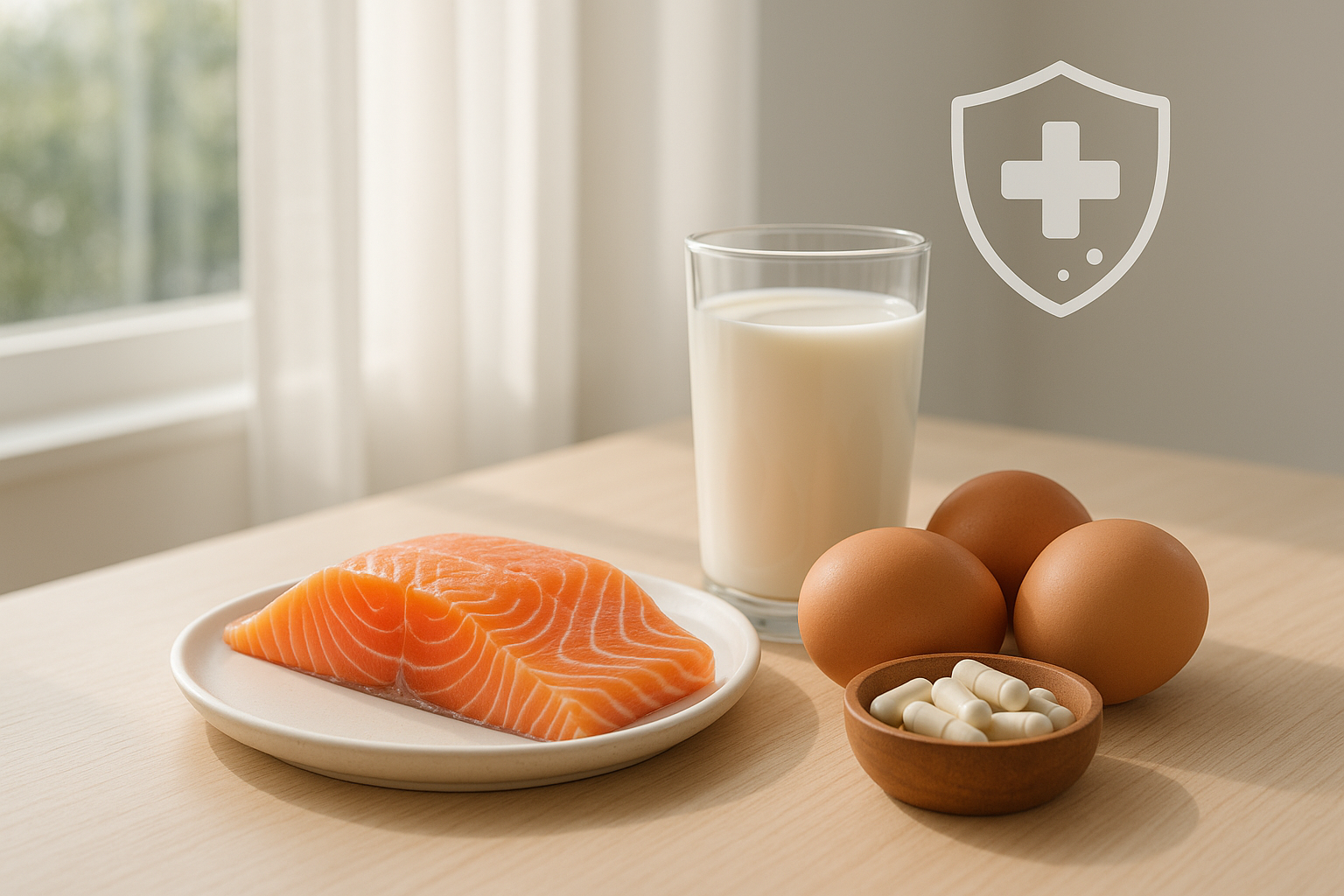
- Fatty fish such as salmon, trout, sardines, and tuna
- Egg yolks
- Fortified milk or fortified plant milks
- Fortified breakfast cereals
- Fortified orange juice in some products
- Some mushrooms exposed to ultraviolet light
Food alone may not be enough for everyone, but it can contribute to maintaining healthy levels.
Sunlight and vitamin D: balance matters
Sunlight can help the body produce vitamin D, but safe sun habits are important. Excessive ultraviolet exposure increases the risk of sunburn, premature skin aging, and skin cancer.
Vitamin D production from sunlight depends on season, latitude, time of day, cloud cover, air pollution, skin pigmentation, age, and exposed skin area. Because of these variables, there is no single sunlight recommendation that fits everyone.
If you are concerned about low vitamin D, a blood test and clinician-guided plan are safer than relying on prolonged sun exposure.
Supplementation: helpful, but dose matters
Vitamin D supplements can help correct deficiency or maintain adequate levels, especially during low-sunlight months. Vitamin D3 and vitamin D2 are both used, though vitamin D3 is commonly found in supplements.
However, more is not always better. Vitamin D is fat-soluble, meaning excessive intake can build up and cause toxicity. Too much vitamin D can raise calcium levels and may lead to nausea, weakness, confusion, kidney stones, or kidney problems.
Before taking high doses, it is best to speak with a healthcare professional, especially if you:
- Are pregnant or breastfeeding
- Have kidney disease
- Have high calcium levels
- Take medications that affect vitamin D or calcium metabolism
- Have sarcoidosis or certain granulomatous diseases
- Are already taking multivitamins or calcium supplements
Who may benefit from discussing vitamin D with a clinician
You may want to ask a healthcare professional about vitamin D testing or supplementation if you:
- Rarely spend time outdoors
- Live in a region with long winters
- Have darker skin pigmentation
- Are an older adult
- Follow a diet low in vitamin D rich foods
- Have a condition that affects fat absorption, such as celiac disease, Crohn’s disease, or certain pancreatic disorders
- Have had bariatric surgery
- Have osteoporosis, osteopenia, or frequent fractures
- Take medications that may affect vitamin D metabolism
Key takeaway
Vitamin D is an important nutrient for immune regulation and seasonal wellness. Low vitamin D levels may make it harder for the body to maintain optimal immune function, especially during months with reduced sunlight. The best approach is to combine a nutrient-rich diet, safe sun habits, healthy lifestyle practices, and professional guidance when testing or supplementation is needed.