Iron Deficiency Fatigue Signs and Food-Based Solutions
Iron Deficiency Fatigue Signs and Food-Based Solutions
Iron deficiency is one of the more common nutrient deficiencies and can contribute to fatigue because iron helps make hemoglobin, the protein in red blood cells that carries oxygen. When iron is low, your tissues may not get oxygen as efficiently, which can leave you feeling drained even after rest.
Common iron deficiency fatigue signs
Fatigue from low iron can feel different from ordinary tiredness. Possible signs include:
- Persistent low energy that does not improve with sleep
- Weakness or reduced exercise tolerance
- Shortness of breath during usual activities
- Dizziness or lightheadedness
- Pale skin or pale inner eyelids
- Cold hands and feet
- Headaches
- Fast or noticeable heartbeat
- Brain fog, poor concentration, or irritability
- Brittle nails or hair shedding
- Cravings for non-food items such as ice or dirt, known as pica
These symptoms can have many causes, so testing is important. A healthcare professional may check hemoglobin, hematocrit, ferritin, serum iron, transferrin saturation, and other labs depending on your situation.
Who is more likely to develop low iron?
Iron deficiency is more likely in people with increased needs, reduced intake, or blood loss. Higher-risk groups can include menstruating people, pregnant people, frequent blood donors, infants and young children, endurance athletes, people following vegetarian or vegan diets without planning, and people with gastrointestinal conditions that affect absorption.
Heavy menstrual bleeding, digestive bleeding, recent surgery, and certain chronic diseases can also contribute. If fatigue is new, severe, or unexplained, do not assume diet is the only cause.
Food-based solutions for better iron intake
There are two main forms of dietary iron:
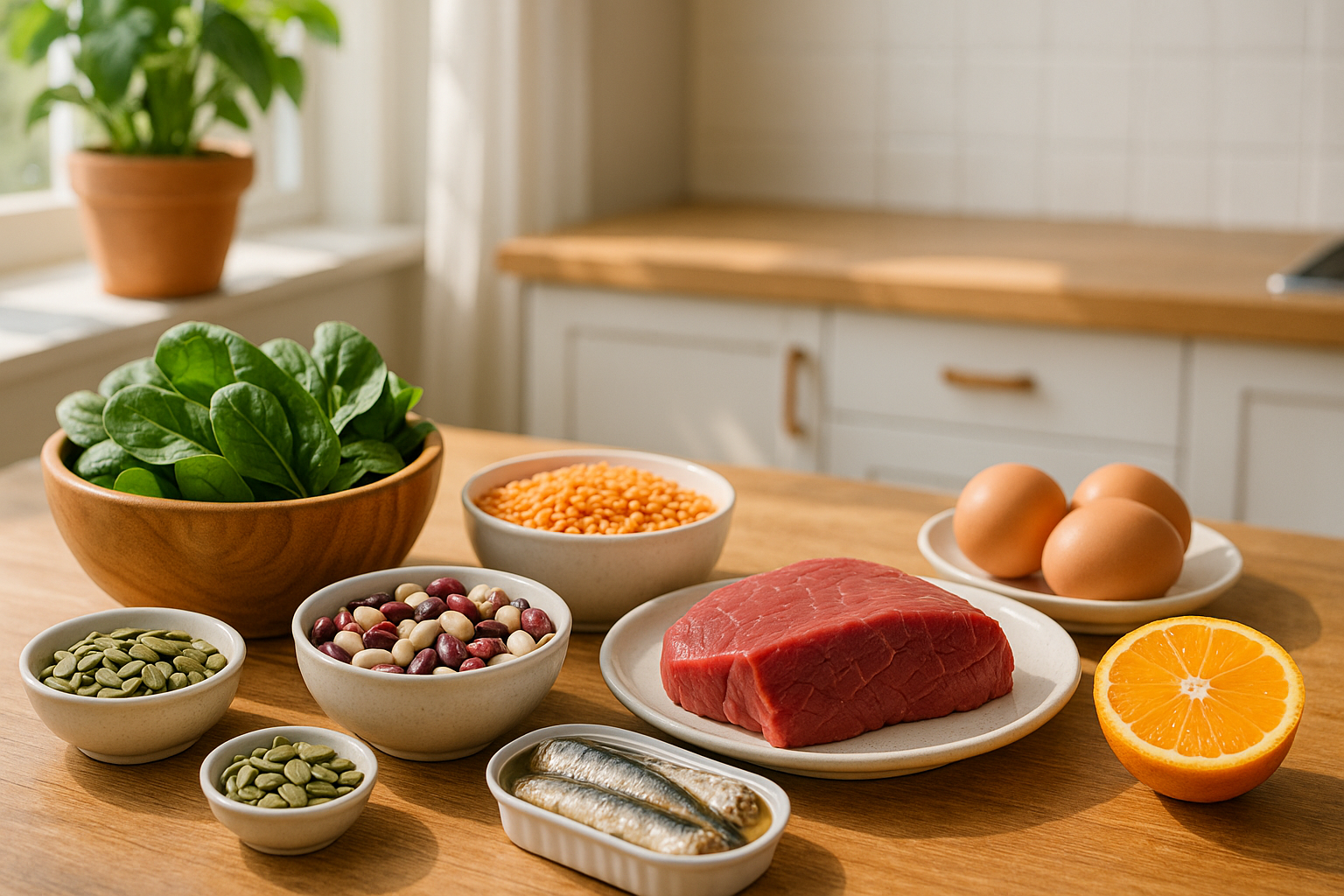
- Heme iron: Found in animal foods and generally absorbed more efficiently.
- Non-heme iron: Found in plant foods and fortified foods. Absorption varies more and is influenced by what you eat with it.
Heme iron foods
Good sources include:
- Lean beef or lamb
- Dark poultry meat
- Turkey
- Sardines, tuna, and salmon
- Oysters, clams, and mussels
- Eggs, especially the yolk
Plant-based iron foods
Good sources include:
- Lentils, chickpeas, black beans, kidney beans, and soybeans
- Tofu and tempeh
- Spinach, Swiss chard, and beet greens
- Pumpkin seeds, sesame seeds, hemp seeds, and cashews
- Quinoa and oats
- Iron-fortified cereals and breads
- Dried apricots, raisins, and prunes
Pair iron with vitamin C
Vitamin C can improve absorption of non-heme iron. Try combining plant-based iron foods with:
- Citrus fruit or orange slices
- Strawberries or kiwi
- Bell peppers
- Tomatoes
- Broccoli
- Potatoes
- Lemon or lime juice
Examples include lentil soup with tomatoes, spinach salad with strawberries, black beans with salsa, or tofu stir-fry with bell peppers.
Watch timing with absorption blockers
Some foods and drinks can reduce iron absorption when consumed at the same time as iron-rich meals. You may not need to avoid them completely, but spacing them out can help if iron is low.
Common inhibitors include:
- Tea and coffee
- Calcium supplements or high-calcium meals
- Large amounts of bran or phytate-rich foods without soaking, sprouting, or fermenting
If you drink tea or coffee, consider having it between meals rather than with your most iron-rich meal.
Simple meal ideas
- Breakfast: Iron-fortified oatmeal with strawberries and pumpkin seeds
- Lunch: Lentil and tomato soup with a side of citrus fruit
- Dinner: Lean beef or tofu stir-fry with spinach and bell peppers
- Snack: Hummus with red pepper strips or trail mix with cashews and dried apricots
When food may not be enough
Diet can help maintain iron levels, but it may not correct significant deficiency quickly. If lab tests show iron deficiency anemia, your clinician may recommend iron supplements and investigate the underlying cause. Do not start high-dose iron unless advised, because too much iron can be harmful.
Key takeaway
Iron deficiency fatigue signs may include persistent tiredness, weakness, shortness of breath, dizziness, pale skin, headaches, and poor concentration. Eating iron-rich foods, pairing plant iron with vitamin C, and timing tea, coffee, and calcium away from iron-rich meals can support healthier iron intake. For ongoing or severe symptoms, seek medical evaluation and testing.