
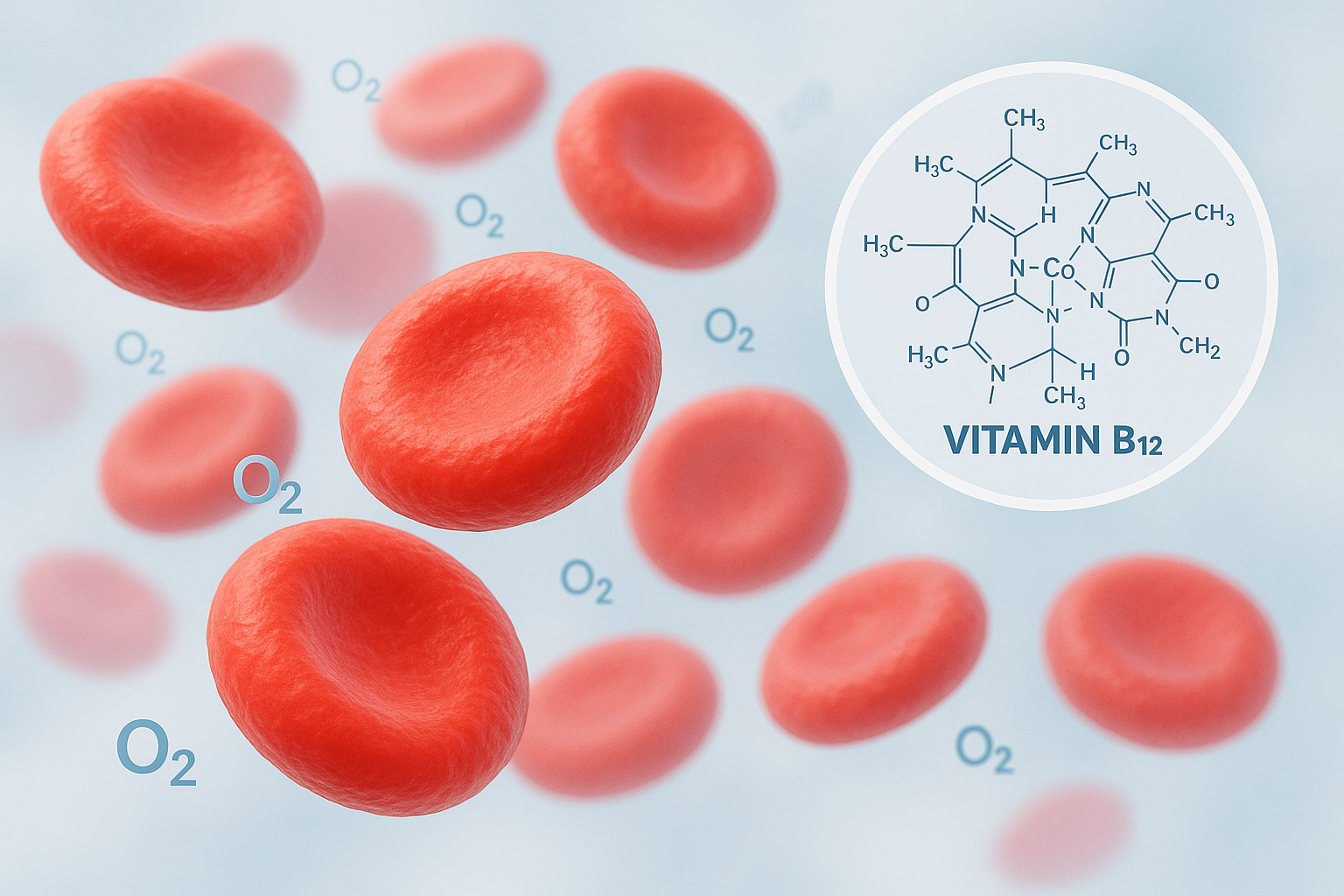
Why Vitamin B12 Deficiency Causes Fatigue and How to Correct It Naturally
Why Vitamin B12 Is Essential for Energy
Vitamin B12, also known as cobalamin, is a water soluble vitamin that supports several processes directly tied to energy production. It is required for:
- Formation of healthy red blood cells
- DNA synthesis
- Proper neurological function
- Conversion of food into usable cellular energy
Without adequate B12, these systems cannot function efficiently, leading to fatigue and weakness.
How Vitamin B12 Deficiency Causes Fatigue
1. Reduced Red Blood Cell Production
Vitamin B12 is essential for making healthy red blood cells. When levels are low, the body produces fewer red blood cells or produces abnormally large cells that do not function properly. This condition, known as megaloblastic anemia, reduces the blood’s ability to carry oxygen.
Less oxygen reaching muscles and organs leads to:
- Persistent tiredness
- Shortness of breath
- Pale skin
- Dizziness
2. Impaired Oxygen Delivery
Even mild deficiency can reduce oxygen delivery efficiency. Cells rely on oxygen to generate energy in the mitochondria. When oxygen supply drops, energy production declines, resulting in physical and mental fatigue.

3. Nervous System Effects
Vitamin B12 supports the protective covering around nerves called myelin. Deficiency may damage nerve function, contributing to:
- Brain fog
- Memory problems
- Tingling or numbness
- Mood changes
Neurological strain can further worsen feelings of exhaustion.
Common Causes of Vitamin B12 Deficiency
- Low intake of animal based foods
- Pernicious anemia
- Gastrointestinal disorders affecting absorption
- Long term use of certain medications
- Aging related decline in stomach acid
Because B12 absorption requires stomach acid and intrinsic factor, digestive health plays a major role.
Natural Ways to Correct Vitamin B12 Deficiency
1. Increase B12 Rich Foods
Vitamin B12 is naturally found in animal based foods such as:
- Beef and liver
- Fish and shellfish
- Eggs
- Milk and dairy products
For those following plant based diets, fortified foods such as nutritional yeast, fortified cereals, and plant milks may help.
2. Consider Oral Supplements
Oral vitamin B12 supplements are widely available and effective for many individuals. Forms such as cyanocobalamin and methylcobalamin are commonly used. Sublingual forms may benefit individuals with mild absorption concerns.
3. Address Digestive Health
Since absorption depends on proper stomach and intestinal function, treating underlying digestive conditions can improve B12 levels. Individuals with significant malabsorption may require medically supervised injections.
4. Monitor Levels with Testing
A blood test measuring serum B12 can confirm deficiency. In some cases, additional markers such as methylmalonic acid may be used for more accurate assessment.
How Long Does It Take to Feel Better?
Many people begin noticing improvements in energy within a few weeks of correcting deficiency, though neurological symptoms may take longer to resolve. Early identification and treatment improve outcomes.
Key Takeaway
Vitamin B12 deficiency fatigue occurs because low B12 impairs red blood cell production, oxygen delivery, and nerve function. Restoring adequate intake through diet, fortified foods, or supplements can significantly improve energy levels. Persistent fatigue should always be evaluated by a healthcare professional to determine the underlying cause.
References: