
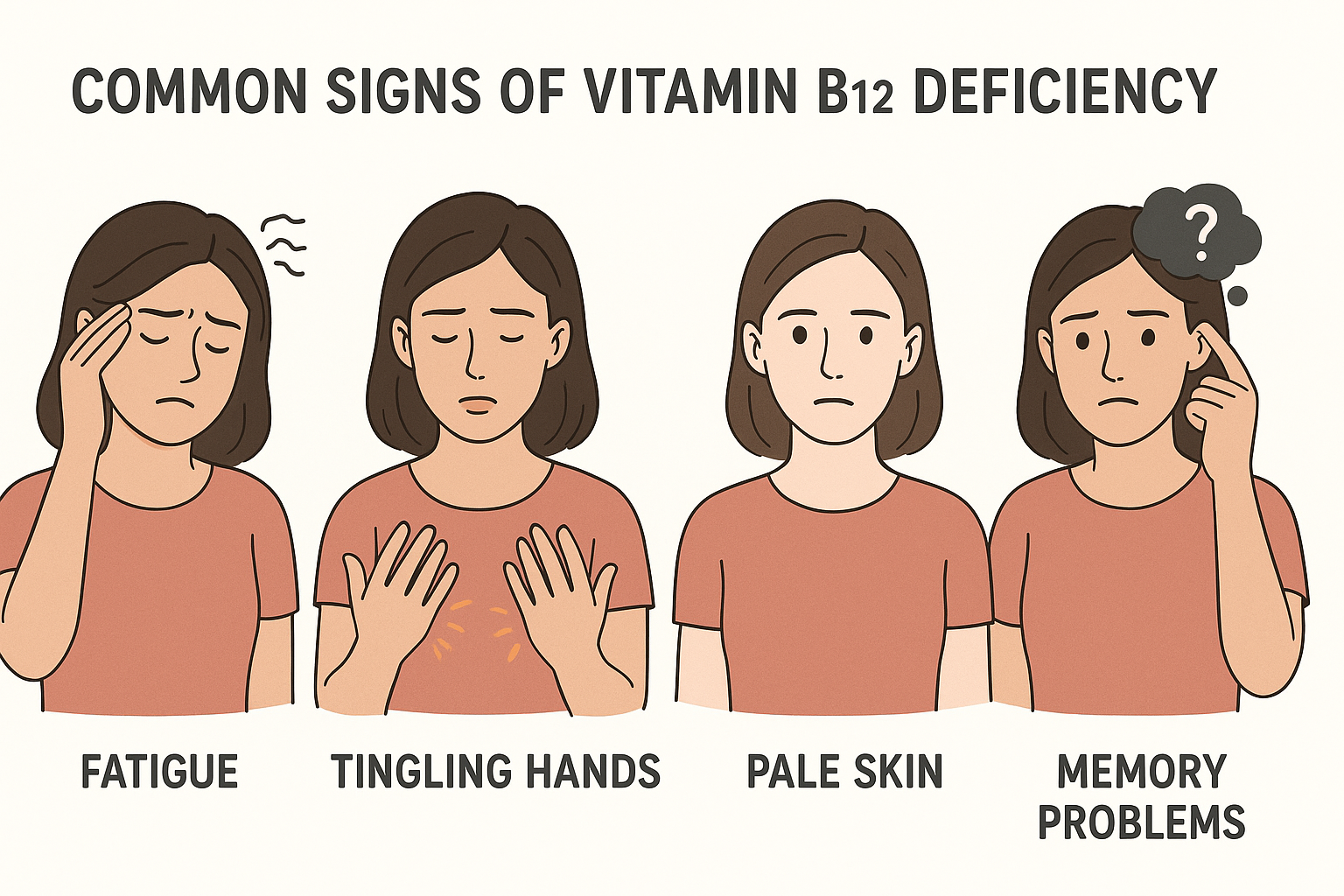
Common Signs of Vitamin B12 Deficiency and Natural Solutions
What Is Vitamin B12?
Vitamin B12 is a water-soluble vitamin essential for:
- Red blood cell formation
- Healthy nerve function
- DNA production
- Energy metabolism
It is naturally found in animal-based foods such as meat, fish, eggs, and dairy. Some fortified plant-based foods also contain added B12.
Common Vitamin B12 Deficiency Signs
1. Fatigue and Weakness
One of the earliest and most common symptoms is persistent fatigue. Without enough B12, the body cannot produce adequate healthy red blood cells, leading to reduced oxygen delivery to tissues.
2. Pale or Jaundiced Skin
Low B12 levels can cause megaloblastic anemia, which may result in pale skin. In some cases, mild yellowing of the skin or eyes can occur.
3. Numbness and Tingling
Vitamin B12 is crucial for maintaining the protective covering of nerves. Deficiency can cause nerve damage, leading to tingling, numbness, or a pins-and-needles sensation in the hands and feet.

4. Balance Problems
Nerve involvement may also affect coordination and balance, increasing the risk of falls, particularly in older adults.
5. Memory Issues and Brain Fog
Low B12 levels have been linked to memory difficulties, confusion, and trouble concentrating. Severe, prolonged deficiency may contribute to cognitive decline.
6. Mood Changes
Depression, irritability, and mood disturbances may occur, possibly due to B12’s role in neurotransmitter production.
7. Glossitis and Mouth Ulcers
A swollen, inflamed tongue (glossitis) and mouth sores can be early warning signs.
Who Is at Higher Risk?
- Older adults
- Vegans and vegetarians
- People with digestive disorders such as Crohn’s disease or celiac disease
- Individuals who have had gastrointestinal surgery
- Those taking certain medications that reduce stomach acid
Natural Solutions to Support Healthy B12 Levels
1. Eat B12-Rich Foods
Natural dietary sources include:
- Beef and liver
- Fish such as salmon and tuna
- Eggs
- Milk and dairy products
For plant-based diets, look for fortified foods like nutritional yeast, plant milks, and fortified cereals.
2. Consider B12 Supplements
Oral B12 supplements or sublingual tablets may help maintain adequate levels, especially for those at higher risk. Always confirm deficiency through proper testing before supplementing.
3. Support Digestive Health
Healthy stomach acid and intrinsic factor are necessary for B12 absorption. Managing digestive conditions with professional guidance can improve absorption.
4. Routine Screening
If you have risk factors or symptoms, a simple blood test can measure B12 levels. Early detection helps prevent long-term nerve damage.
When to Seek Medical Care
Seek medical attention if you experience persistent fatigue, numbness, balance problems, or cognitive changes. Untreated vitamin B12 deficiency can lead to irreversible neurological damage.
Early recognition of vitamin B12 deficiency signs and appropriate dietary or medical intervention can restore healthy levels and protect long-term health.
References: