
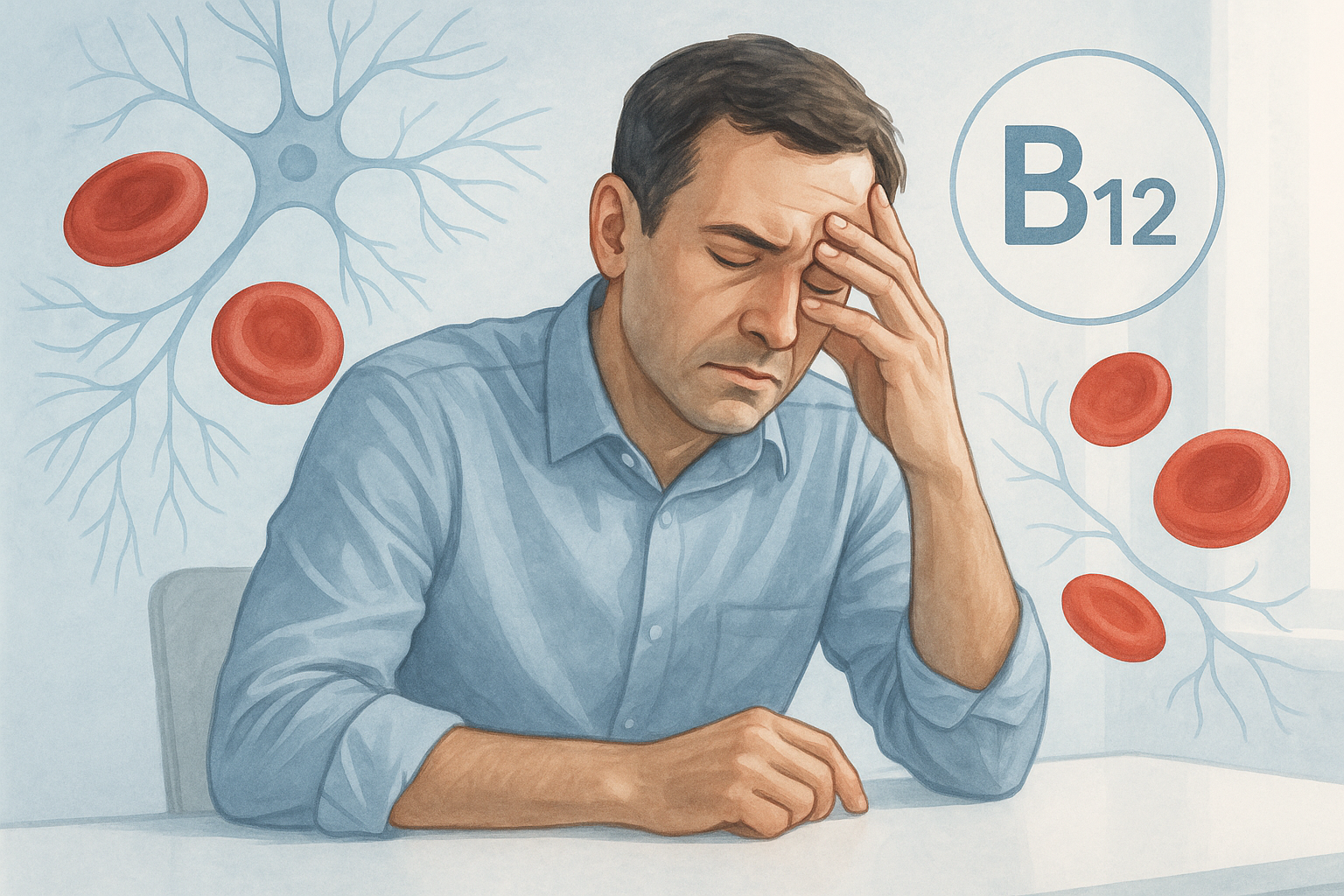
Why Vitamin B12 Deficiency Can Cause Fatigue and Brain Fog
Why Vitamin B12 Deficiency Can Cause Fatigue and Brain Fog
Vitamin B12 deficiency is a well-known cause of fatigue, weakness, and cognitive symptoms such as brain fog. B12, also called cobalamin, helps the body make healthy red blood cells, supports normal nerve function, and plays a key role in DNA synthesis. When B12 levels fall too low, energy production and neurological function can be affected in ways that feel like persistent tiredness, poor focus, slow thinking, or memory difficulty.
How vitamin B12 supports energy
Vitamin B12 does not act like caffeine or a stimulant. Instead, it supports normal biological processes that help the body function efficiently. One of its most important roles is helping form healthy red blood cells. Red blood cells carry oxygen throughout the body. If B12 deficiency leads to megaloblastic anemia, red blood cells may become unusually large and less effective, which can reduce oxygen delivery and contribute to fatigue, shortness of breath, dizziness, and weakness.
B12 is also involved in converting food into usable energy through normal metabolism. A deficiency can disrupt these processes, making a person feel drained even after rest.
Why B12 deficiency can cause brain fog
The nervous system depends on adequate vitamin B12. B12 helps maintain myelin, the protective coating around nerves that supports efficient nerve signaling. Low B12 can affect the brain and nerves, which may lead to symptoms such as brain fog, slowed thinking, difficulty concentrating, memory problems, irritability, low mood, numbness, tingling, or balance issues.
Brain fog from B12 deficiency can be subtle at first. Some people describe it as feeling mentally cloudy, less sharp, forgetful, or unable to focus for long periods. Because these symptoms overlap with stress, poor sleep, thyroid disease, depression, iron deficiency, and many other conditions, testing is important rather than guessing.

Common symptoms of vitamin B12 deficiency
Vitamin B12 deficiency can cause a wide range of symptoms. Common signs may include:
- Ongoing fatigue or low stamina
- Weakness or lightheadedness
- Pale skin
- Shortness of breath with exertion
- Fast heartbeat or palpitations
- Brain fog or trouble concentrating
- Memory changes
- Numbness or tingling in the hands or feet
- Trouble with balance or walking
- Sore tongue or mouth symptoms
- Mood changes, irritability, or depressive symptoms
Some people develop neurological symptoms even without obvious anemia, which is one reason persistent brain fog or nerve symptoms should be medically evaluated.
Who is at higher risk?
Vitamin B12 is naturally found in animal-based foods and is also added to some fortified foods. Risk is higher in people who may not consume, absorb, or process enough B12. Higher-risk groups include:
- People following vegan or strict vegetarian diets without reliable B12 supplementation or fortified foods
- Older adults, because stomach acid and absorption can decrease with age
- People with pernicious anemia or autoimmune conditions affecting intrinsic factor
- People with gastrointestinal disorders such as Crohn disease or celiac disease
- People who have had bariatric surgery or certain gastrointestinal surgeries
- People taking certain long-term medications, such as metformin or acid-reducing medicines, when clinically relevant
- People with heavy alcohol use or poor overall nutrient intake
Why absorption matters
Getting enough B12 from food is only part of the story. The body must also absorb it. B12 absorption requires normal digestion, stomach acid, and intrinsic factor, a protein made in the stomach that helps B12 be absorbed in the small intestine. If intrinsic factor is lacking, as in pernicious anemia, a person can become deficient even if they eat enough B12-rich foods.
This is why some people need high-dose oral supplementation or B12 injections under medical supervision.
How B12 deficiency is diagnosed
A healthcare professional may evaluate symptoms, diet, medical history, medications, and risk factors. Testing often includes a blood count and serum vitamin B12 level. In some cases, additional markers such as methylmalonic acid or homocysteine may be used to help clarify deficiency, especially when symptoms are present but the B12 result is borderline.
Because fatigue and brain fog have many possible causes, clinicians may also check iron status, folate, thyroid function, vitamin D, blood sugar, kidney or liver markers, sleep quality, and other relevant factors.
Treatment and recovery
Treatment depends on the cause and severity of deficiency. Options may include dietary changes, oral B12 supplements, sublingual forms, or B12 injections. People with absorption problems, pernicious anemia, or significant neurological symptoms may need a specific treatment plan and follow-up testing.
Fatigue may improve within weeks for some people, especially if anemia is corrected. Neurological symptoms can take longer to improve, and in some cases may become persistent if deficiency is severe or untreated for too long. Early diagnosis matters.
Food sources of vitamin B12
Vitamin B12 is found in animal-derived foods and fortified products. Sources include:
- Fish and shellfish
- Meat and poultry
- Eggs
- Milk, yogurt, and cheese
- Fortified breakfast cereals
- Fortified plant milks or nutritional yeast, if labeled as containing B12
People who avoid animal products should use reliable fortified foods or a B12 supplement, because plant foods do not naturally provide dependable active B12.
When to seek medical care
Seek medical advice if you have persistent fatigue, brain fog, numbness, tingling, balance problems, unexplained weakness, memory changes, or symptoms of anemia. Prompt evaluation is especially important if you are vegan, an older adult, pregnant, have a digestive disorder, have had bariatric surgery, or take medications that may affect B12 status.
Vitamin B12 deficiency is treatable, but it should be properly diagnosed and managed so the underlying cause is addressed and nerve-related complications are reduced.