
Early Signs of B12 Deficiency and Natural Ways to Improve Absorption
Early Signs of B12 Deficiency and Natural Ways to Improve Absorption
Vitamin B12 is essential for healthy red blood cell formation, nerve function, DNA production, and energy metabolism. Because the body stores B12 in the liver, deficiency may develop slowly over months or years. Early signs can be easy to dismiss, but untreated deficiency can lead to anemia and potentially lasting nerve damage.
Common early signs of B12 deficiency
Early symptoms may be mild, intermittent, or mistaken for stress, aging, or poor sleep. Common signs of B12 deficiency include:
- Ongoing fatigue or weakness
- Lightheadedness or shortness of breath with activity
- Pale or slightly yellow skin
- Heart palpitations
- Numbness, tingling, or pins and needles in the hands or feet
- Balance problems or clumsiness
- Brain fog, poor concentration, or memory changes
- Mood changes, irritability, or low mood
- Sore, red, or smooth tongue
- Mouth ulcers
- Reduced appetite or unintentional weight loss
Neurological symptoms such as tingling, numbness, balance changes, or confusion deserve prompt medical attention because nerve-related effects can become more serious if deficiency is not corrected.
Why B12 deficiency happens
B12 is naturally found in animal foods and is also added to some fortified foods. Deficiency may occur when intake is too low, absorption is impaired, or the body has higher needs.
Common risk factors include:

- Vegan or strict vegetarian diets without reliable fortified foods or supplements
- Older age, because stomach acid and absorption may decline
- Pernicious anemia, an autoimmune condition that affects intrinsic factor needed for B12 absorption
- Gastrointestinal disorders such as celiac disease, Crohn’s disease, or chronic gastritis
- Weight-loss or gastrointestinal surgery, including gastric bypass
- Long-term use of certain medicines, including metformin or acid-reducing medications
- Heavy alcohol use
- Pregnancy or breastfeeding with low B12 intake
How B12 is absorbed
B12 absorption depends on several steps. Food-bound B12 must be released from protein in the stomach. It then binds to intrinsic factor, a protein made in the stomach, and is absorbed mainly in the small intestine. Problems with stomach acid, intrinsic factor, the pancreas, or the small intestine can reduce absorption even when dietary intake seems adequate.
Natural ways to improve B12 absorption
1. Eat reliable B12 food sources
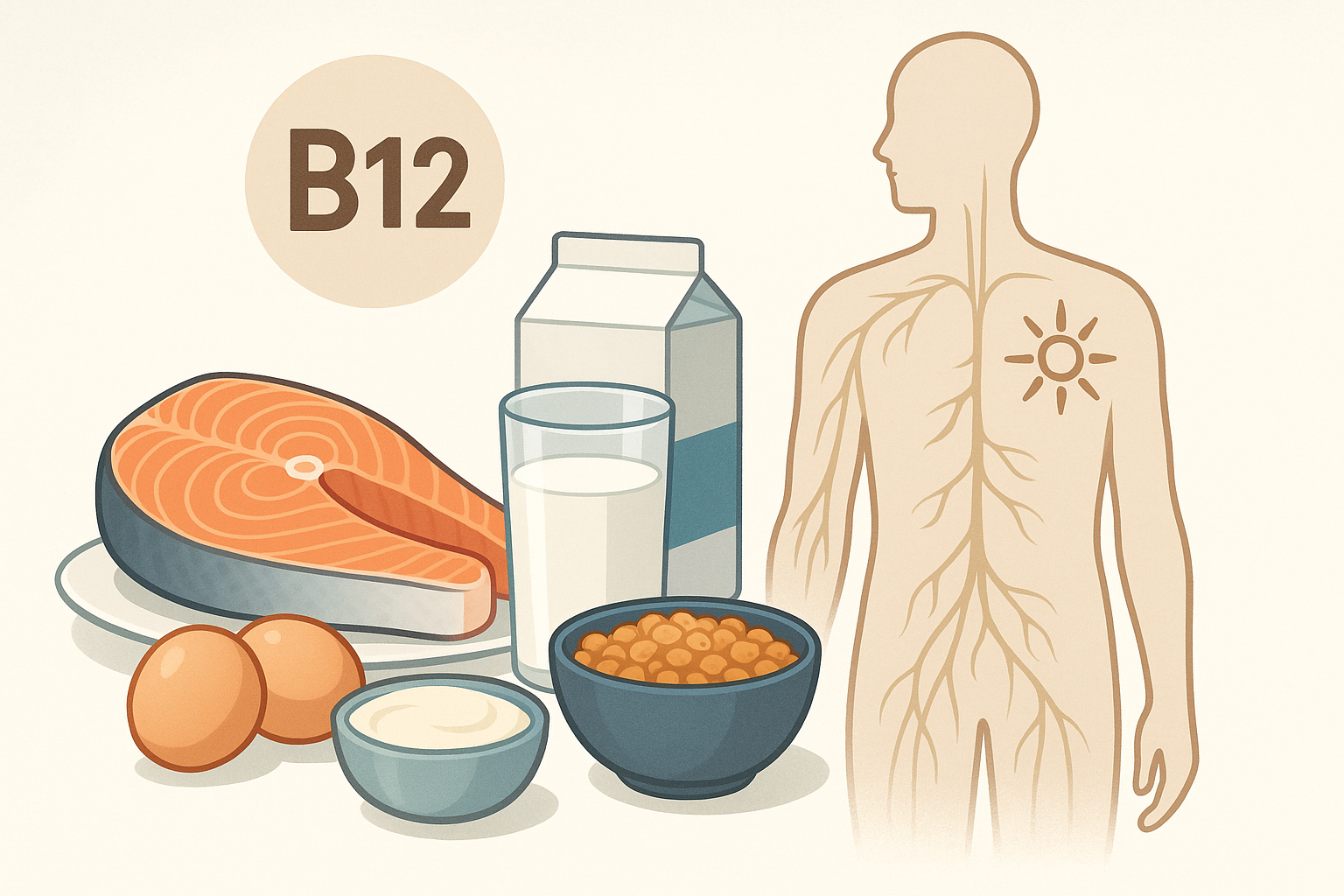
The most natural way to improve B12 status is to eat foods that contain it regularly, if appropriate for your diet. Good sources include fish, shellfish, beef, poultry, eggs, milk, yogurt, cheese, and fortified foods such as fortified breakfast cereals, fortified nutritional yeast, and some fortified plant milks.
2. Use fortified foods if you avoid animal products
People following vegan or mostly plant-based diets should not rely on unfortified plant foods for B12. Choose clearly labeled fortified foods and check the nutrition label for vitamin B12 content. Many people on vegan diets still need a supplement to maintain healthy levels.
3. Support healthy digestion
Because B12 absorption depends on the digestive tract, addressing ongoing digestive symptoms can be important. Chronic diarrhea, unexplained weight loss, persistent reflux, bloating, or signs of malabsorption should be discussed with a healthcare professional.
4. Review medications with a clinician
Metformin and long-term acid-suppressing medicines may reduce B12 levels in some people. Do not stop prescribed medication without medical guidance, but ask whether B12 testing or supplementation is appropriate.
5. Avoid heavy alcohol intake
Excessive alcohol can interfere with nutrient intake, digestion, and overall nutritional status. Reducing heavy alcohol use may help support better absorption and reduce the risk of multiple vitamin deficiencies.
6. Consider supplement form when absorption is a concern
If absorption is impaired, food alone may not correct deficiency. A healthcare professional may recommend oral B12, sublingual B12, nasal B12, or injections depending on the cause and severity. In pernicious anemia or after certain surgeries, lifelong supplementation may be needed.
When to get tested
Ask a healthcare professional about testing if you have symptoms of deficiency or risk factors such as vegan diet, older age, digestive disease, gastric surgery, long-term metformin use, or long-term acid-reducing medication use. Common tests may include a complete blood count, serum B12, methylmalonic acid, homocysteine, folate, and tests for pernicious anemia when appropriate.
When to seek urgent care
Seek prompt medical care if you have severe weakness, chest pain, fainting, new confusion, trouble walking, rapidly worsening numbness, or shortness of breath at rest. These symptoms may reflect serious anemia, neurological involvement, or another medical condition.
Key takeaway
The early signs of B12 deficiency often include fatigue, weakness, tingling, brain fog, mood changes, and mouth or tongue soreness. Improving intake through B12-rich or fortified foods can help, but absorption problems often require testing and medical treatment. If symptoms are present, the safest next step is to confirm the cause with a qualified healthcare professional.