
How B Vitamins Support Energy Metabolism and Nervous System Health
How B Vitamins Support Energy Metabolism and Nervous System Health
B vitamins are a group of water-soluble nutrients that help the body turn food into usable energy. They are often marketed as vitamins for energy, but it is important to understand what that really means: B vitamins do not act like stimulants and they do not contain calories. Instead, they serve as essential cofactors in metabolic pathways that allow your cells to use carbohydrates, fats, and proteins efficiently.
Because B vitamins are also involved in nerve function, red blood cell formation, DNA synthesis, and brain health, low levels may contribute to symptoms such as fatigue, weakness, numbness, tingling, mood changes, or poor concentration. These symptoms can have many causes, so suspected deficiency should be evaluated by a healthcare professional.
What are B vitamins?
The B vitamin family includes eight essential nutrients:
- Vitamin B1, also called thiamin
- Vitamin B2, also called riboflavin
- Vitamin B3, also called niacin
- Vitamin B5, also called pantothenic acid
- Vitamin B6, also called pyridoxine
- Vitamin B7, also called biotin
- Vitamin B9, also called folate
- Vitamin B12, also called cobalamin
Each B vitamin has distinct functions, but many work together in energy metabolism and nervous system support.
How B vitamins help with energy metabolism
Your body produces usable energy through cellular processes that break down macronutrients from food. B vitamins help these processes function normally.

B1 supports carbohydrate metabolism
Thiamin helps cells convert carbohydrates into energy. It is especially important for the brain and nervous system, which rely heavily on glucose. Low thiamin intake can affect energy levels, nerve function, and heart health.
B2 helps enzymes release energy from food
Riboflavin is part of coenzymes that help the body process fats, carbohydrates, and proteins. It also supports normal cell growth and antioxidant-related functions.
B3 supports cellular energy production
Niacin is used to make NAD and NADP, compounds involved in many energy-producing reactions. These are central to how cells generate and use energy.
B5 helps make coenzyme A
Pantothenic acid is needed to form coenzyme A, which plays a major role in fatty acid metabolism and energy production.
B6 supports protein metabolism and neurotransmitters
Vitamin B6 helps the body metabolize amino acids and supports the production of neurotransmitters such as serotonin and dopamine. This connects B6 to both energy metabolism and nervous system function.
Biotin supports fat, carbohydrate, and protein metabolism
Biotin acts as a cofactor for enzymes involved in breaking down and using macronutrients. Biotin deficiency is uncommon, but low levels can affect skin, hair, nerves, and energy-related metabolism.
Folate and B12 support cell division and red blood cells
Folate and vitamin B12 are needed for DNA synthesis and healthy red blood cell formation. If either is low, the body may not produce red blood cells normally, which can contribute to anemia-related fatigue and weakness.
Do B vitamins give you energy?
B vitamins support the body’s ability to make energy from food, but taking extra B vitamins will not necessarily make you feel more energetic if you already get enough. Supplements are most likely to help when fatigue is related to a confirmed low intake, increased need, poor absorption, or deficiency.
Common non-vitamin causes of low energy include poor sleep, stress, dehydration, low calorie intake, thyroid disease, depression, infection, anemia, chronic illness, and medication effects. Persistent fatigue should be discussed with a healthcare provider.
B vitamins and nervous system health
Several B vitamins are especially important for nerve and brain health:
- B1 supports nerve signaling and brain energy metabolism.
- B6 helps make neurotransmitters involved in mood and cognition.
- B9 supports fetal neural tube development and normal cell division.
- B12 helps maintain the protective myelin sheath around nerves.
Vitamin B12 deficiency is particularly associated with neurological symptoms, including numbness, tingling, balance problems, memory changes, and mood symptoms. These issues can become serious if deficiency is not identified and treated.
Who may be at higher risk of B vitamin deficiency?
Risk varies by nutrient, diet, health condition, and medication use. People who may be more likely to develop certain B vitamin deficiencies include:
- Older adults, especially for vitamin B12
- Vegans and strict vegetarians, because B12 is naturally found mainly in animal foods
- People with gastrointestinal disorders that affect absorption
- People who have had weight-loss or gastrointestinal surgery
- People with alcohol use disorder
- Pregnant or breastfeeding people, who have higher needs for some B vitamins
- People taking certain medications, such as metformin or acid-reducing medications, which may affect B12 status
Food sources of B vitamins
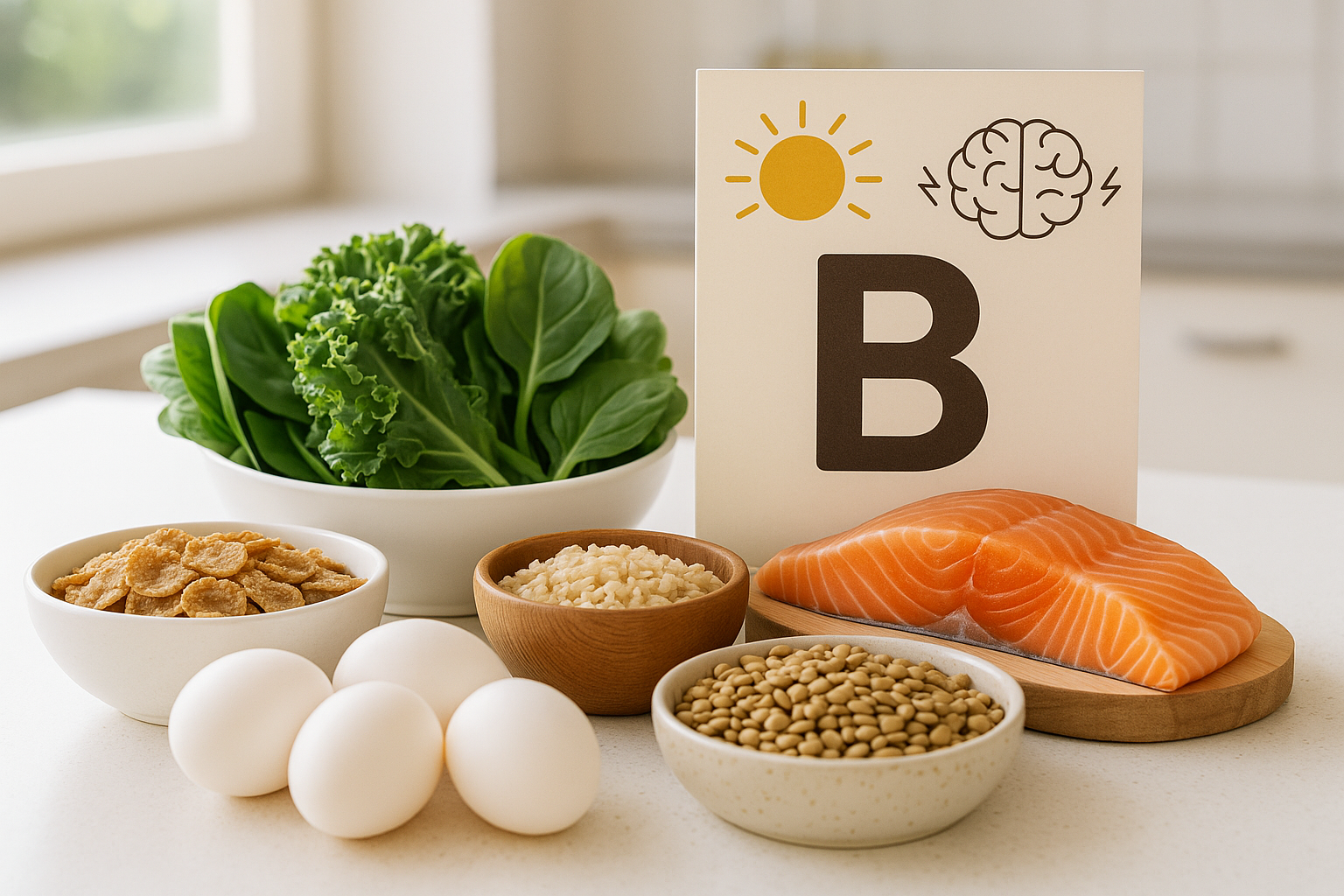
A balanced diet can provide most B vitamins. Good sources include:
- Whole grains and fortified grains
- Eggs and dairy products
- Fish, poultry, and lean meats
- Legumes such as beans, lentils, and peas
- Leafy green vegetables
- Nuts and seeds
- Nutritional yeast and fortified foods
Vitamin B12 is found naturally in animal-based foods such as fish, meat, eggs, and dairy. People who avoid animal products typically need B12-fortified foods or a supplement.
Should you take a B-complex supplement?
A B-complex supplement may be useful for some people, especially those with restricted diets, increased nutrient needs, or a diagnosed deficiency. However, more is not always better. Some B vitamins can cause side effects at high supplemental doses. For example, too much niacin may cause flushing or liver concerns, and excessive B6 over time may contribute to nerve problems.
If you are considering B vitamins for energy, it is best to first look at diet, sleep, medical history, medications, and possible deficiency testing. A healthcare professional can help determine whether a supplement is appropriate and what dose is safe.
Key takeaways
B vitamins are essential for energy metabolism because they help your body convert food into usable cellular energy. They also support nervous system health, red blood cell formation, DNA synthesis, and neurotransmitter production. While B vitamins may help improve fatigue when a deficiency is present, they are not a stimulant and may not boost energy in people who already have adequate levels. If low energy, numbness, tingling, or weakness persists, seek medical guidance to identify the underlying cause.
References
NIH Office of Dietary Supplements: Vitamin and Mineral Fact Sheets