
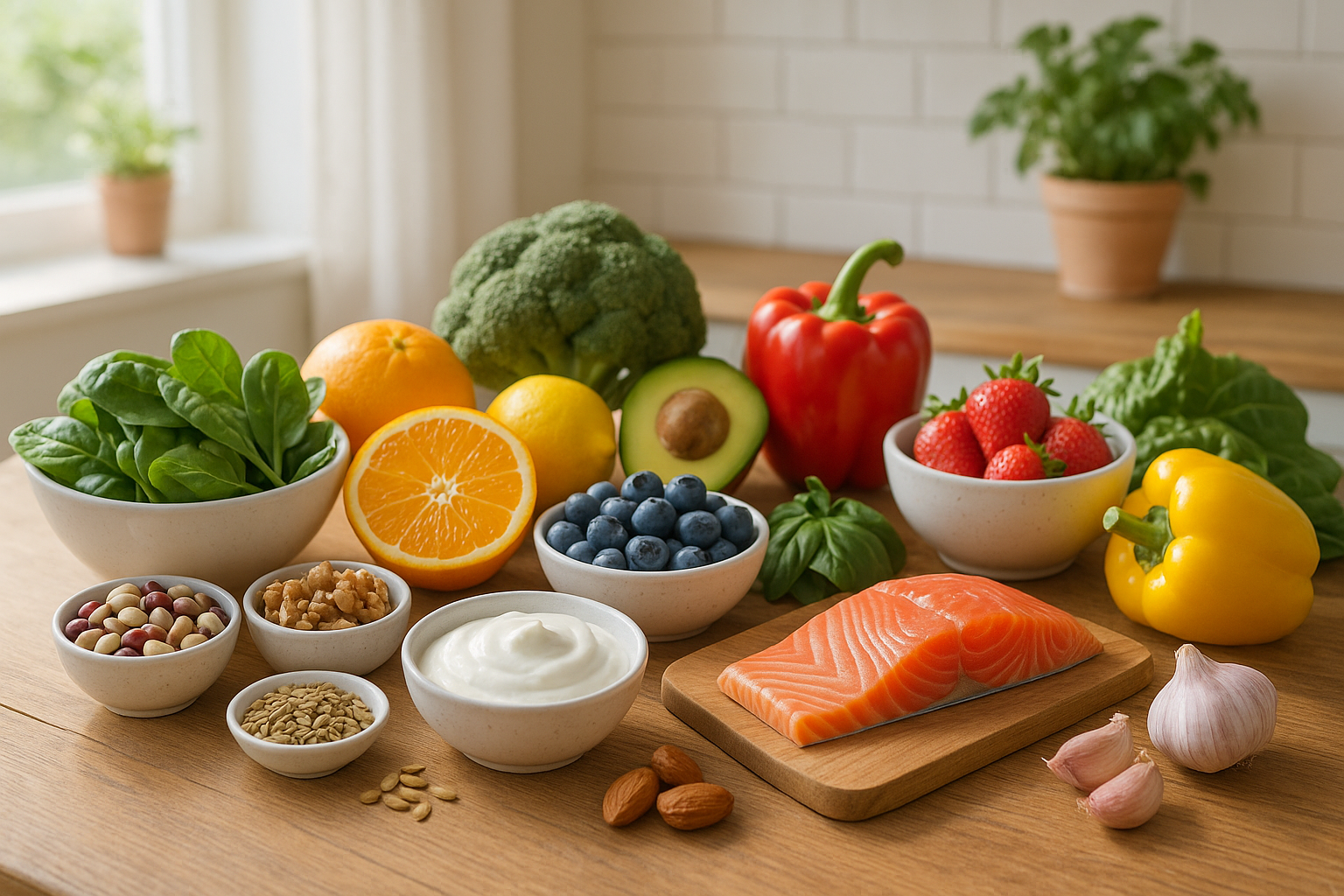
Immune Supporting Foods to Add to Your Daily Routine
Immune Supporting Foods to Add to Your Daily Routine
Immune supporting foods are everyday foods that provide nutrients your immune system uses to work properly. These include protein, vitamin C, vitamin D, zinc, selenium, iron, omega-3 fats, fiber, and a variety of plant compounds found in colorful fruits, vegetables, legumes, herbs, and spices.
No food can guarantee protection from infections, but a balanced pattern of eating can support normal immune function and overall wellness.
1. Citrus fruits and other vitamin C-rich produce
Vitamin C supports the normal function of immune cells and helps protect cells from oxidative stress. Citrus fruits are a familiar choice, but they are not the only option.
Good daily choices include oranges, grapefruit, lemons, kiwi, strawberries, bell peppers, broccoli, Brussels sprouts, and potatoes.
Easy routine idea: Add berries or kiwi to breakfast, squeeze lemon over vegetables, or snack on bell pepper strips with hummus.

2. Leafy greens and colorful vegetables
Leafy greens and colorful vegetables provide vitamins, minerals, fiber, and antioxidants. Spinach, kale, Swiss chard, carrots, sweet potatoes, tomatoes, and red peppers all contribute different nutrients that support general health.
Easy routine idea: Add a handful of spinach to eggs, soups, smoothies, grain bowls, or pasta dishes.
3. Protein-rich foods
Protein is essential for building and maintaining immune cells and antibodies. Many people focus on vitamins but forget that adequate protein is also important.
Good options include fish, poultry, eggs, Greek yogurt, tofu, tempeh, lentils, beans, chickpeas, nuts, seeds, and lean meats.
Easy routine idea: Include a protein source at each meal, such as eggs at breakfast, beans at lunch, and fish or tofu at dinner.
4. Yogurt, kefir, and fermented foods
Fermented foods can support gut health, and the gut plays an important role in immune function. Yogurt and kefir with live and active cultures are convenient options. Other fermented foods include sauerkraut, kimchi, miso, and tempeh.
Easy routine idea: Choose plain yogurt or kefir and add fruit, cinnamon, and nuts instead of buying heavily sweetened versions.
5. Beans, lentils, and whole grains
Fiber-rich foods help nourish beneficial gut bacteria. Beans, lentils, oats, barley, quinoa, brown rice, and whole grain bread can all support a balanced eating pattern.
Easy routine idea: Add lentils to soup, use beans in tacos, or make overnight oats with fruit and seeds.
6. Nuts and seeds
Nuts and seeds provide healthy fats, plant protein, vitamin E, zinc, selenium, magnesium, and fiber. These nutrients support many normal body functions, including immune health.
Good choices include almonds, walnuts, pumpkin seeds, sunflower seeds, chia seeds, flaxseed, and Brazil nuts.
Easy routine idea: Sprinkle seeds on yogurt, oatmeal, salads, or roasted vegetables.
7. Fatty fish and omega-3 foods
Fatty fish such as salmon, sardines, trout, and mackerel provide omega-3 fatty acids and vitamin D. Vitamin D is involved in immune function, and many people do not get enough from diet and sunlight alone.
Easy routine idea: Aim to include fish in meals regularly if it fits your dietary pattern, or choose plant omega-3 sources such as chia seeds, flaxseed, and walnuts.
8. Garlic, onions, herbs, and spices
Garlic, onions, ginger, turmeric, oregano, rosemary, and other herbs and spices add flavor while contributing plant compounds. They can also help make nutrient-rich meals more enjoyable without relying heavily on salt or added sugar.
Easy routine idea: Start meals with garlic and onion, add ginger to stir-fries, or season roasted vegetables with herbs and spices.
9. Hydrating foods and fluids
Hydration supports overall body function, including circulation and the health of mucous membranes. Water is the best everyday choice, but fruits, vegetables, soups, and unsweetened teas can also contribute fluid.
Easy routine idea: Keep water nearby and include hydrating foods such as cucumber, citrus, melon, soups, and herbal tea.
A simple immune supporting daily plate
A practical immune supporting meal pattern might include half a plate of colorful vegetables and fruit, one quarter protein, one quarter whole grains or starchy vegetables, plus a small portion of healthy fat from nuts, seeds, olive oil, avocado, or fatty fish.
Foods and habits to limit
Supporting immune health is not only about adding foods. It also helps to limit frequent excess alcohol, highly processed foods, and large amounts of added sugar when possible. These do not need to be completely avoided, but they should not crowd out nutrient-dense foods.
Bottom line
The best immune supporting foods are simple, everyday staples: fruits, vegetables, protein-rich foods, fermented foods, beans, whole grains, nuts, seeds, and healthy fats. Focus on consistency rather than perfection, and build meals that are colorful, balanced, and enjoyable.