
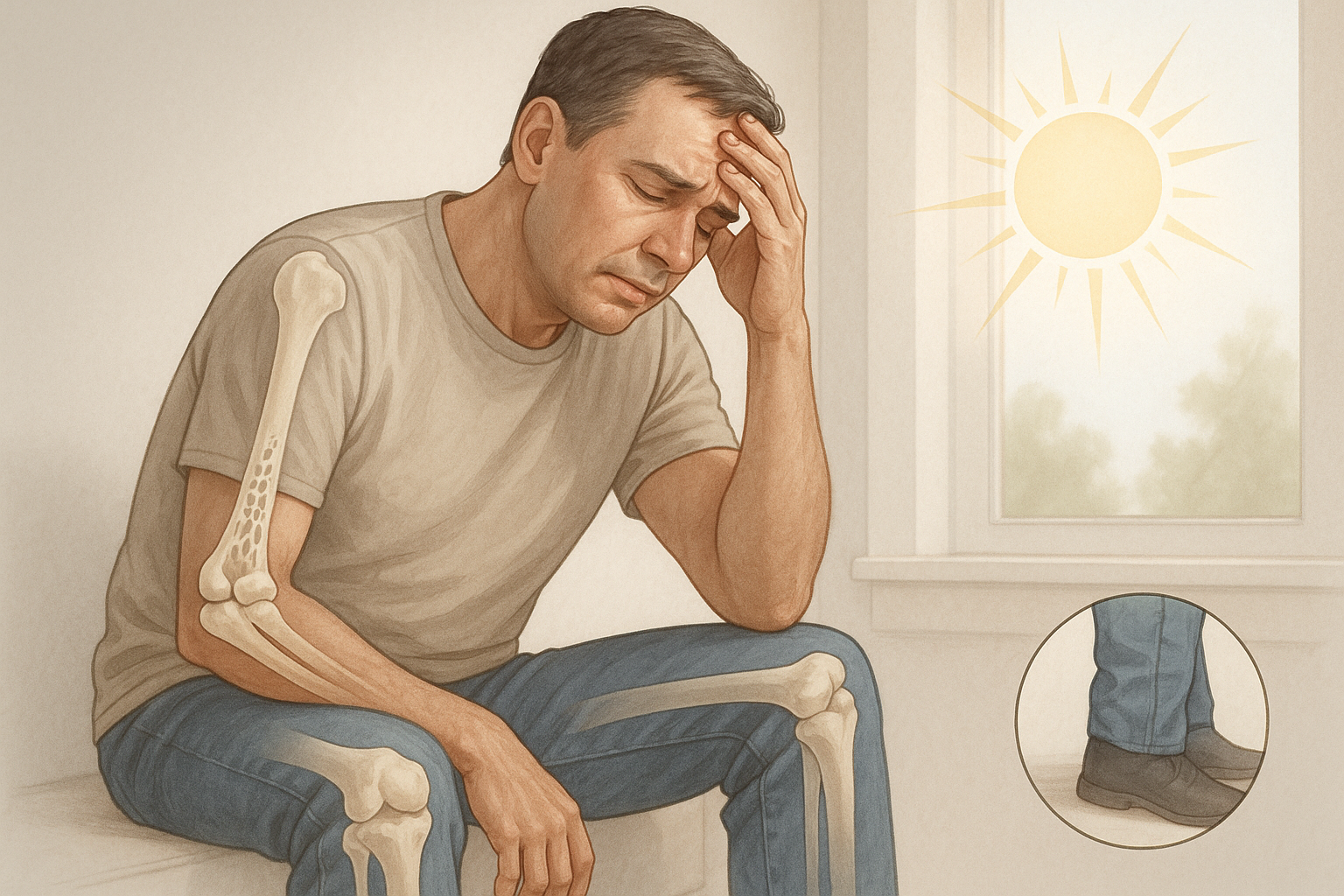
Vitamin D Deficiency Symptoms in Adults and Safe Ways to Boost Levels
## What Is Vitamin D and Why It Matters
Vitamin D is a fat soluble vitamin that functions more like a hormone in the body. It helps regulate calcium and phosphorus levels, supports bone strength, contributes to immune defense, and plays a role in muscle and nerve function.
Your body produces vitamin D when skin is exposed to sunlight. It can also be obtained through certain foods and supplements. When levels drop too low, a range of symptoms can develop.
## Common Vitamin D Deficiency Symptoms in Adults
Symptoms can vary from mild to severe. Some adults have no obvious signs until deficiency becomes significant.
### 1. Fatigue and Low Energy
Persistent tiredness is one of the most common symptoms. Low vitamin D levels have been linked to reduced energy and increased feelings of exhaustion.
### 2. Bone Pain and Lower Back Pain
Vitamin D is essential for calcium absorption. Deficiency may cause deep, aching bone pain, often felt in the lower back, hips, pelvis, or legs.
### 3. Muscle Weakness or Cramps
Adults with low vitamin D may notice muscle weakness, soreness, or frequent cramps. In older adults, this can increase the risk of falls.
### 4. Frequent Illness or Infections
Vitamin D supports immune function. Low levels may make some individuals more susceptible to colds, respiratory infections, or slower recovery from illness.
### 5. Mood Changes or Depression
Research suggests a link between low vitamin D and mood disorders, including symptoms of depression, especially in individuals with limited sun exposure.
### 6. Hair Thinning
Severe or prolonged deficiency may contribute to hair thinning or shedding in some cases.
### 7. Slow Wound Healing
Because vitamin D plays a role in inflammation control and tissue repair, low levels may delay wound healing.
## Who Is at Higher Risk of Vitamin D Deficiency
Certain groups are more likely to develop low vitamin D levels:
– Adults with limited sun exposure
– People with darker skin tones
– Older adults
– Individuals who are overweight or obese
– People with digestive disorders affecting fat absorption
– Those with chronic kidney or liver disease
– Individuals who consistently use strong sunblock
## How Vitamin D Deficiency Is Diagnosed
A simple blood test called 25 hydroxyvitamin D measures vitamin D status. Levels are generally interpreted as:
– Deficient: commonly below 20 ng per mL
– Insufficient: commonly 20 to 29 ng per mL
– Sufficient: commonly 30 ng per mL and above
Reference ranges may vary slightly by laboratory. A healthcare professional can help interpret your results.
## Safe Ways to Boost Vitamin D Levels
### 1. Sensible Sun Exposure
Short periods of sun exposure to arms and legs a few times per week may help increase vitamin D production. The exact time needed depends on skin tone, location, season, and time of day.
Avoid sunburn, as excessive ultraviolet exposure increases skin cancer risk.
### 2. Vitamin D Rich Foods
Few foods naturally contain high amounts of vitamin D, but good sources include:
– Fatty fish such as salmon, mackerel, and sardines
– Egg yolks
– Beef liver
– Fortified dairy or plant based milk
– Fortified cereals
Including these foods regularly can help maintain adequate levels.
### 3. Vitamin D Supplements
Supplements may be necessary for individuals with confirmed deficiency or limited sun exposure.
Vitamin D3 is commonly recommended because it raises blood levels more effectively than D2 in many cases. Dosage varies depending on baseline levels, age, and medical history. A healthcare professional may recommend a higher short term dose followed by a maintenance dose.
Avoid excessive supplementation, as very high levels can cause toxicity, leading to nausea, kidney problems, and abnormal calcium levels.
### 4. Maintain a Healthy Weight
Vitamin D is stored in body fat, and excess body fat may reduce its availability in circulation. Achieving and maintaining a healthy weight can support better vitamin D balance.
## How Long Does It Take to Correct a Deficiency
Improvement in blood levels may take several weeks to months, depending on the severity of deficiency and the treatment approach. Symptoms such as fatigue or muscle weakness often improve gradually as levels normalize.
Follow up blood testing is typically recommended to ensure levels have reached and remain within a healthy range.
## When to Seek Medical Advice
Consult a healthcare professional if you experience persistent fatigue, bone pain, muscle weakness, or frequent infections. Testing is especially important if you belong to a high risk group.
Early identification and safe correction of vitamin D deficiency can protect bone health, improve muscle function, and support overall wellbeing.
## Key Takeaway
Vitamin D deficiency symptoms in adults can include fatigue, bone pain, muscle weakness, mood changes, and frequent illness. Because these symptoms are often subtle, blood testing is the most reliable way to confirm low levels. Safe sun exposure, vitamin D rich foods, and appropriate supplementation under medical guidance are effective ways to restore and maintain healthy levels.