
Early Signs of Magnesium Deficiency and Natural Food Sources That May Help
Early Signs of Magnesium Deficiency and Natural Food Sources That May Help
Magnesium deficiency symptoms can be subtle at first. Because magnesium supports hundreds of enzyme reactions in the body, low levels may affect muscles, nerves, energy, blood pressure, blood sugar control, and heart rhythm. True deficiency is not always obvious from symptoms alone, and a healthcare professional may need to evaluate medical history, diet, medications, and lab results.
What magnesium does in the body
Magnesium helps the body make energy, build proteins, maintain normal muscle and nerve function, support strong bones, regulate blood glucose, and maintain a steady heartbeat. It also works with other minerals, including calcium and potassium, which is one reason magnesium imbalance can sometimes be linked with cramps, weakness, or abnormal heart rhythm.
Early magnesium deficiency symptoms
Possible early signs of low magnesium may include:
- Loss of appetite
- Nausea or occasional vomiting
- Fatigue or low energy
- General weakness
- Muscle twitches, cramps, or spasms
- Tingling or numb sensations
- Headaches or increased sensitivity to stress in some people
These symptoms can have many causes, so they do not confirm magnesium deficiency by themselves. Persistent, worsening, or unexplained symptoms should be discussed with a clinician.
More serious signs that need medical attention
More significant magnesium deficiency may contribute to:

- Abnormal heart rhythm or palpitations
- Severe muscle spasms or tremors
- Seizures
- Low calcium or low potassium levels
- Marked weakness, confusion, or fainting
Seek urgent medical care for chest pain, fainting, severe weakness, seizures, or a new irregular heartbeat.
Who is more likely to have low magnesium
Some people are more likely to develop low magnesium intake or low magnesium levels, including those with:
- Long-term poor dietary intake
- Gastrointestinal conditions that reduce absorption, such as Crohn disease or celiac disease
- Ongoing diarrhea or vomiting
- Type 2 diabetes, especially with increased urinary magnesium loss
- Alcohol use disorder
- Older age
- Use of certain medicines, including some diuretics, proton pump inhibitors, or specific antibiotics and chemotherapy drugs
If you take long-term medications or have a chronic condition, ask your healthcare professional whether magnesium status should be monitored.
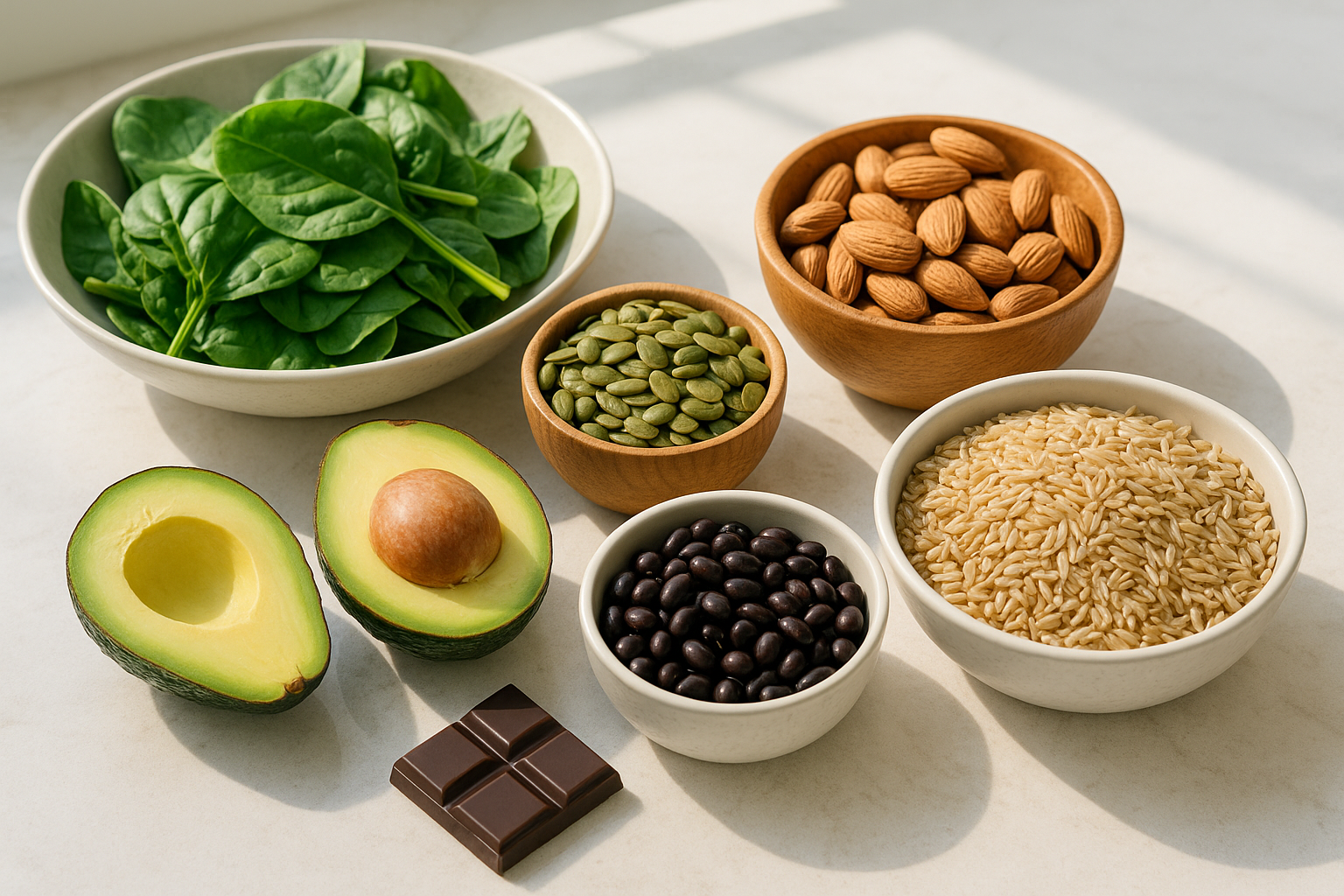
Best natural food sources of magnesium
Food is generally the preferred first step for supporting magnesium intake. Magnesium-rich foods also provide fiber, antioxidants, healthy fats, and other minerals.
Good sources include:
- Pumpkin seeds, chia seeds, flaxseeds, and sunflower seeds
- Almonds, cashews, peanuts, and peanut butter
- Spinach, Swiss chard, and other leafy greens
- Black beans, kidney beans, lentils, chickpeas, and soy foods
- Whole grains such as oats, brown rice, quinoa, and whole wheat
- Avocado
- Bananas
- Yogurt and milk
- Dark chocolate and cocoa
A practical magnesium-supportive meal could include oatmeal with chia seeds and almonds for breakfast, a spinach and black bean salad at lunch, and quinoa with lentils and vegetables at dinner.
Should you take a magnesium supplement
Some people may benefit from magnesium supplements, but they are not always necessary and may not be safe for everyone. High supplemental magnesium can cause diarrhea, nausea, abdominal cramping, and in extreme cases dangerous magnesium buildup, especially in people with kidney disease. Supplements can also interact with certain medications, including some antibiotics, osteoporosis medications, and thyroid medication.
Before starting a supplement, consider asking a healthcare professional about the right form, dose, timing, and whether testing is appropriate.
Bottom line
Magnesium deficiency symptoms may include fatigue, weakness, nausea, muscle cramps, twitching, numbness, and in more serious cases abnormal heart rhythm or seizures. Because these symptoms overlap with many other conditions, professional evaluation is important when symptoms persist. Eating magnesium-rich foods such as seeds, nuts, legumes, leafy greens, whole grains, and dark chocolate can help support healthy magnesium intake naturally.