
How Much Vitamin D Per Day? Recommended Daily Intake Explained
Recommended Daily Vitamin D Intake
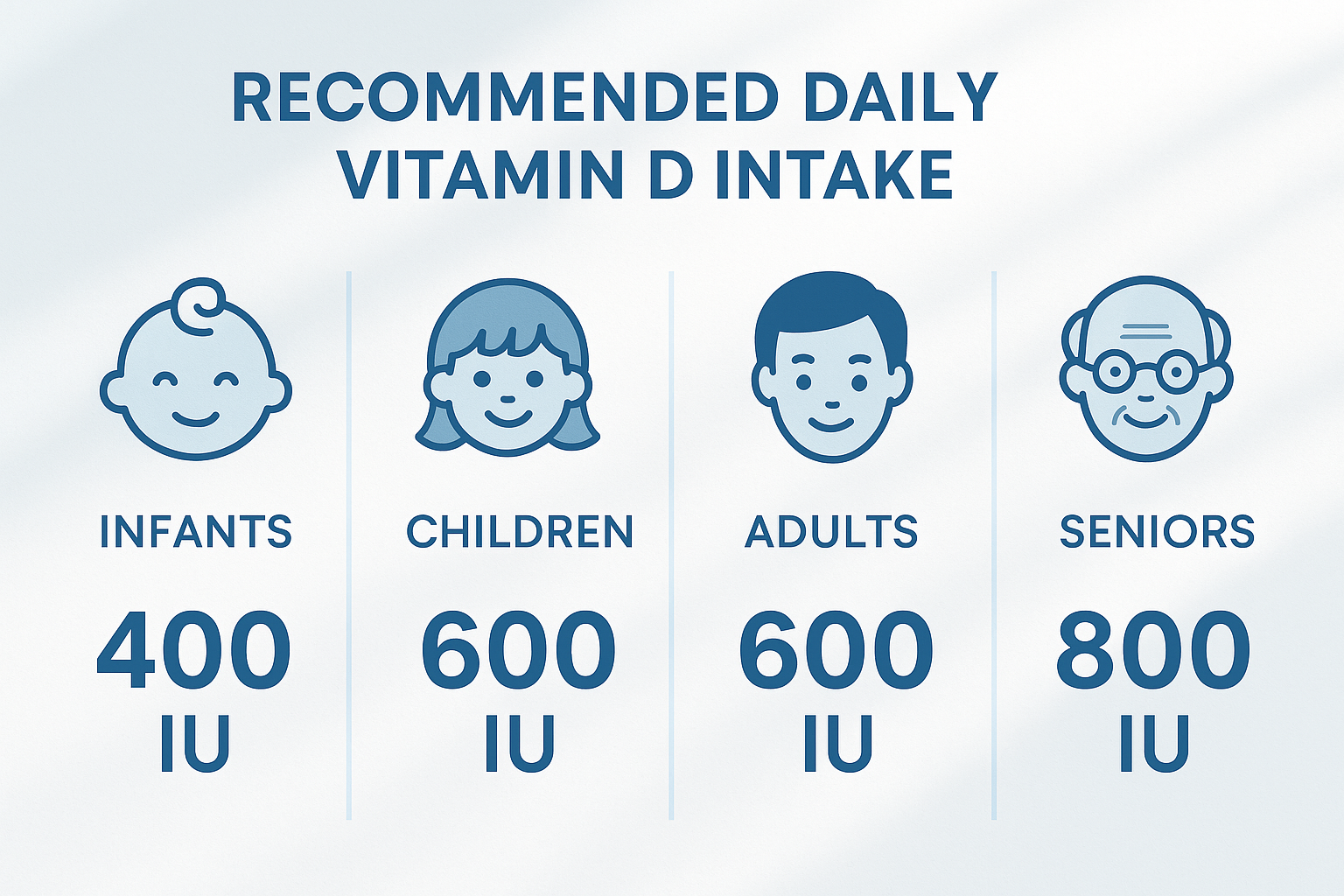
According to the National Institutes of Health Office of Dietary Supplements, the Recommended Dietary Allowance (RDA) for vitamin D is:
- Infants 0–12 months: 400 IU (10 mcg) per day
- Children and adults 1–70 years: 600 IU (15 mcg) per day
- Adults over 70 years: 800 IU (20 mcg) per day
- Pregnant and breastfeeding adults: 600 IU (15 mcg) per day
These recommendations assume minimal sun exposure.
Why Vitamin D Is Important
Vitamin D helps your body:
- Absorb calcium for strong bones and teeth
- Support immune system function
- Maintain muscle function
- Reduce the risk of bone disorders such as rickets and osteomalacia
Low vitamin D levels may increase the risk of bone loss and fractures, particularly in older adults.
Safe Upper Limits
The tolerable upper intake level (UL) for most adults is 4,000 IU (100 mcg) per day. Taking more than this amount regularly may increase the risk of toxicity, which can cause high calcium levels and kidney problems.

Higher doses may be prescribed by a healthcare provider for individuals with diagnosed deficiency, but this should be medically supervised.
Do You Need More Vitamin D?
Some people may require higher intake, including:
- Adults over age 65
- People with limited sun exposure
- Individuals with darker skin
- People with obesity
- Those with certain digestive or absorption disorders
A simple blood test measuring 25-hydroxyvitamin D can determine your vitamin D status.
Getting Vitamin D
You can get vitamin D from:
- Sunlight exposure
- Fatty fish such as salmon and mackerel
- Fortified milk and cereals
- Dietary supplements
Because few foods naturally contain significant amounts, many people rely on fortified foods or supplements to meet daily requirements.
Bottom Line
Most adults need 600 to 800 IU of vitamin D per day, depending on age. If you are unsure about your vitamin D status, speak with a healthcare professional about testing and appropriate supplementation.
References: