
Gut Health and Bloating Remedies: Natural Ways to Feel Better
Gut Health and Bloating Remedies: Natural Ways to Reduce Bloating
Bloating is the sensation of abdominal fullness, pressure, or swelling. It may happen after meals, during periods of constipation, with excess gas, or when the gut is sensitive to certain foods. Occasional bloating is usually not dangerous, but frequent or painful bloating can interfere with daily life and may signal an underlying digestive issue.
The best gut health and bloating remedies are not one-size-fits-all. They usually work best when you identify your triggers, support regular bowel movements, and make changes gradually.
Common reasons bloating happens
Bloating can have many causes, including:
- Eating quickly and swallowing air
- Large meals or eating late at night
- Constipation
- Gas-producing foods such as beans, lentils, onions, cabbage, and carbonated drinks
- Food intolerances, such as lactose intolerance
- High intake of sugar alcohols, including sorbitol, xylitol, and mannitol
- Changes in gut bacteria
- Irritable bowel syndrome, also called IBS
- Hormonal changes
- Stress, which can affect gut motility and sensitivity
1. Eat more slowly and chew well
Eating quickly can increase swallowed air and make bloating worse. Try slowing down meals, chewing thoroughly, and pausing between bites. This gives digestion a better start and may reduce post-meal pressure.
Simple habits that help:
- Sit down for meals instead of eating on the run
- Avoid talking while chewing
- Put utensils down between bites
- Stop eating when comfortably satisfied, not overly full
2. Reduce carbonated drinks
Sparkling water, soda, beer, and other carbonated drinks add gas to the digestive tract. If you often feel bloated after drinking them, switch to still water or herbal tea for one to two weeks and track whether symptoms improve.
3. Support regular bowel movements
Constipation is one of the most common drivers of bloating. When stool moves slowly, gas can build up and the abdomen may feel distended.
Natural ways to support regularity include:
- Drinking enough fluids throughout the day
- Eating fiber-rich foods gradually
- Walking daily
- Creating a consistent bathroom routine
- Not ignoring the urge to have a bowel movement
If you increase fiber too quickly, bloating may get worse at first. Add fiber slowly and pair it with water.
4. Choose fiber wisely
Fiber supports gut health, but different fibers affect people differently. Soluble fiber is often gentler and may help with bowel regularity. Foods that contain soluble fiber include oats, chia seeds, ground flaxseed, apples, citrus fruits, carrots, beans, and lentils.
If beans or lentils trigger bloating, try these strategies:
- Start with small portions
- Rinse canned beans well
- Soak dried beans before cooking
- Choose lentils or split peas, which some people tolerate better
- Increase portions slowly over several weeks
5. Try peppermint tea or enteric-coated peppermint oil carefully
Peppermint may help some people with digestive discomfort, especially when bloating is related to gut spasms or IBS-type symptoms. Peppermint tea is a gentle option for many people.
Enteric-coated peppermint oil capsules may help some adults, but they are not right for everyone. They can worsen reflux or heartburn and may interact with certain conditions or medications. Ask a healthcare professional before using peppermint oil supplements, especially if you are pregnant, breastfeeding, have gallbladder disease, or take prescription medicines.
6. Use ginger for digestive comfort
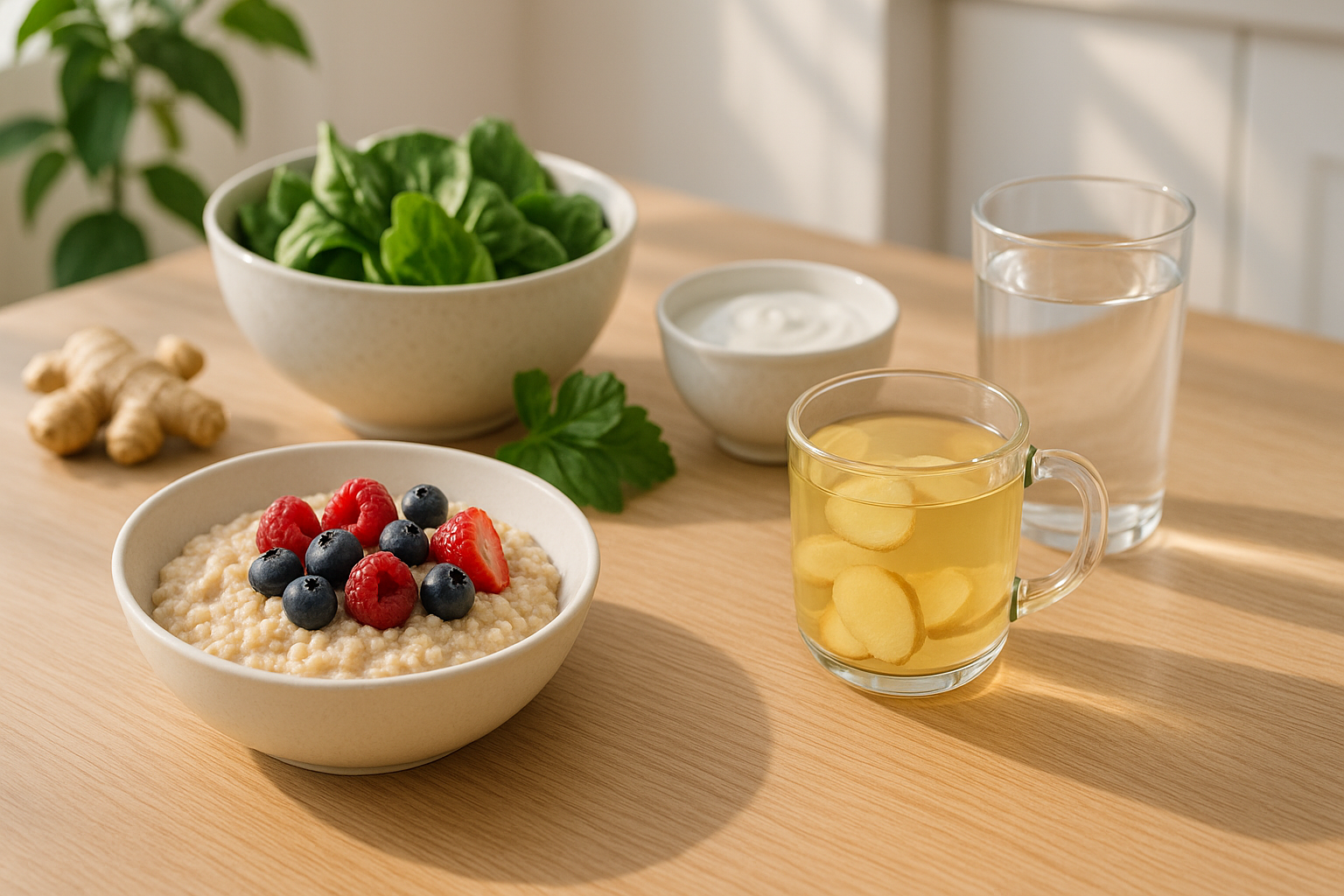
Ginger has a long history of use for nausea and digestive discomfort. Some people find ginger tea helpful after meals. You can make it by steeping fresh sliced ginger in hot water for 5 to 10 minutes.
Use ginger in moderate food-like amounts unless a clinician advises otherwise. If you take blood thinners, have a bleeding disorder, are pregnant, or have a medical condition, ask a healthcare professional before using high-dose ginger supplements.
7. Consider probiotics, but be selective
Probiotics are live microorganisms that may support gut health in specific situations. However, effects vary by strain, dose, and health condition. A probiotic that helps one person may do little for another.
If you want to try a probiotic:
- Choose a reputable brand with labeled strains
- Try one product at a time
- Use it consistently for 4 to 8 weeks
- Track symptoms
- Stop if bloating worsens significantly
Fermented foods such as yogurt with live cultures, kefir, sauerkraut, kimchi, miso, and tempeh may also support dietary variety. Start small, because fermented foods can cause gas in sensitive people.
8. Identify food triggers without over-restricting
Common bloating triggers include lactose, wheat, onions, garlic, beans, certain fruits, cruciferous vegetables, carbonated beverages, and sugar alcohols. These foods are not bad for everyone, and many are nutritious.
Instead of cutting out many foods at once, keep a short food and symptom diary for 1 to 2 weeks. Note what you ate, when bloating happened, bowel patterns, stress, sleep, and menstrual cycle timing if relevant.
If symptoms suggest IBS, a low-FODMAP diet may help some people, but it is best done with a registered dietitian because it is meant to be temporary and structured, not a permanent highly restricted diet.
9. Take a short walk after meals
Gentle movement can help gas move through the digestive tract. A 10 to 15 minute walk after meals may reduce fullness and support blood sugar balance. Avoid intense exercise immediately after a large meal if that worsens discomfort.
10. Manage stress for the gut-brain connection
The digestive system and nervous system communicate closely. Stress can change gut motility, increase sensitivity, and worsen bloating in some people.
Gut-calming practices include:
- Slow breathing before meals
- Light yoga or stretching
- Mindfulness meditation
- Regular sleep timing
- Taking meals away from screens when possible
Even two minutes of slow breathing before eating can help shift the body toward a calmer digestive state.
11. Limit very large, high-fat meals
Large meals and high-fat meals can slow stomach emptying and increase feelings of fullness. If bloating happens after heavy meals, try smaller portions and spread food intake more evenly through the day.
Helpful swaps include:
- Smaller meals with balanced protein, fiber, and healthy fats
- Cooking vegetables instead of eating large raw salads
- Choosing soups, stews, or steamed vegetables when digestion feels sensitive
12. Review supplements and medications
Some supplements and medicines can contribute to bloating, gas, diarrhea, or constipation. Examples may include iron, calcium, magnesium, fiber supplements, certain pain relievers, and some diabetes medications.
Do not stop prescribed medication without medical guidance. If bloating started after a new medication or supplement, ask your clinician or pharmacist whether it could be related.
When to seek medical care
Get medical advice if bloating is persistent, severe, or unusual for you. Seek prompt care if bloating occurs with:
- Severe or worsening abdominal pain
- Vomiting
- Blood in stool or black stools
- Unexplained weight loss
- Fever
- Ongoing diarrhea
- New constipation that does not improve
- Difficulty swallowing
- Loss of appetite
- A swollen or hard abdomen
These symptoms do not always mean something serious is happening, but they should be evaluated.
A simple 7-day bloating reset
Try this gentle plan for one week:
Day 1: Track meals, symptoms, bowel movements, stress, and sleep.
Day 2: Replace carbonated drinks with still water or tea.
Day 3: Take a 10 minute walk after your largest meal.
Day 4: Slow down meals and chew more thoroughly.
Day 5: Add one gentle fiber food, such as oats or chia, in a small portion.
Day 6: Try ginger or peppermint tea if appropriate for you.
Day 7: Review your notes and identify patterns.
If symptoms improve, continue the habits that helped. If symptoms persist, consider working with a healthcare professional to evaluate constipation, IBS, food intolerance, celiac disease, reflux, or other digestive conditions.
Bottom line
Natural gut health and bloating remedies work best when they are gradual and personalized. Start with the basics: eat slowly, hydrate, move daily, support regular bowel movements, and identify your own triggers. If bloating is ongoing, painful, or paired with warning signs, seek medical care rather than relying on home remedies alone.