
The Link Between Vitamin B12 Deficiency, Digestion, and Low Energy
Why vitamin B12 depends on digestion
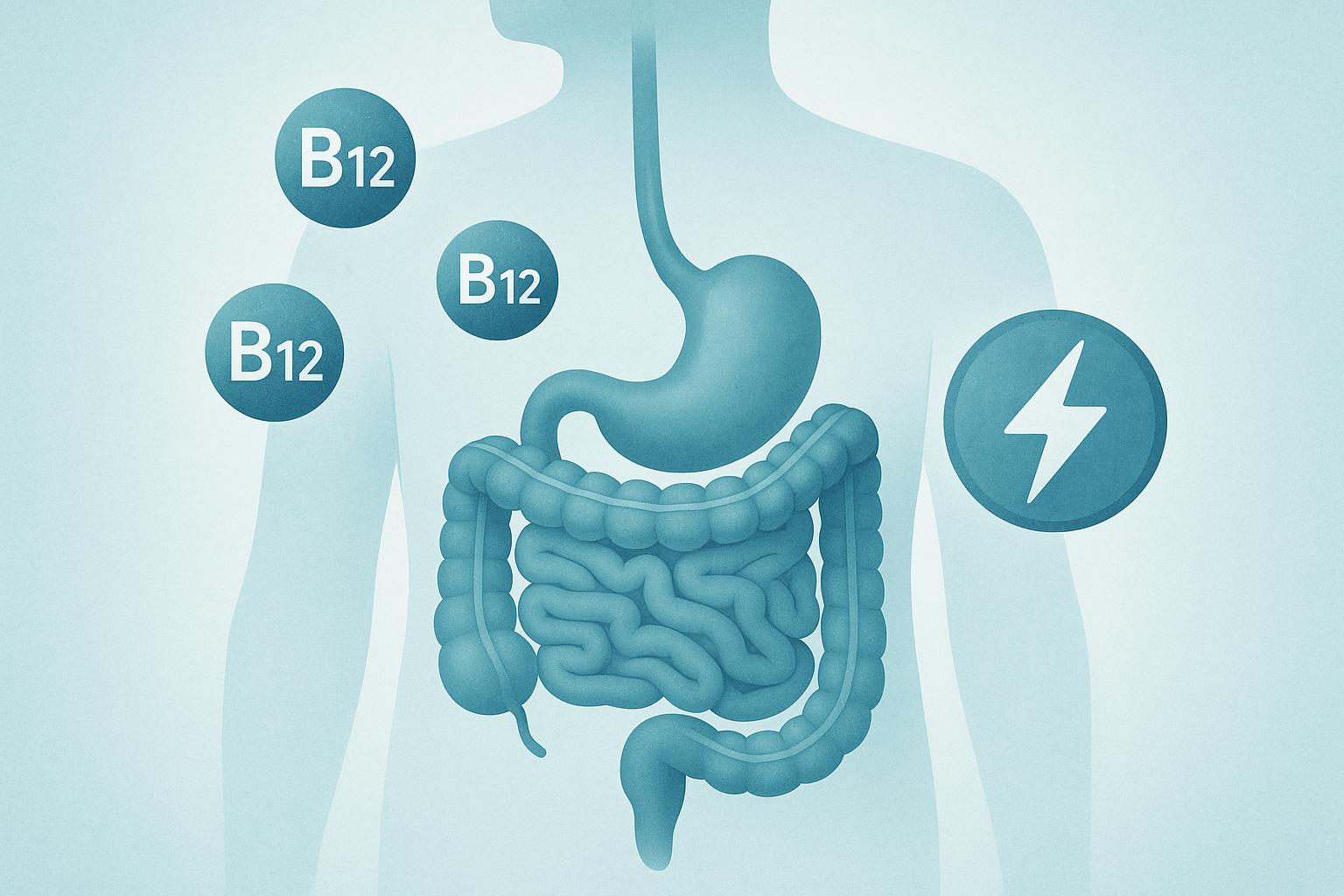
Vitamin B12 is an essential nutrient that supports red blood cell formation, nerve health, DNA production, and energy metabolism. Unlike some nutrients, B12 absorption is a multi-step digestive process. First, stomach acid helps release B12 from food. Then B12 binds to a protein called intrinsic factor, which is made in the stomach. Finally, the B12-intrinsic factor complex is absorbed in the small intestine, mainly in the ileum.
Because this process involves the stomach, pancreas, and small intestine, digestive problems can increase the risk of low B12.
How digestive issues can lead to B12 deficiency
Several digestion-related factors may reduce B12 absorption:
- Low stomach acid, which can make it harder to release B12 from food
- Pernicious anemia, an autoimmune condition that affects intrinsic factor
- Gastritis or long-term stomach inflammation
- Celiac disease, Crohn’s disease, or other intestinal conditions that affect absorption
- Surgery involving the stomach or small intestine, including some bariatric procedures
- Long-term use of acid-reducing medicines in some people
- Pancreatic problems that interfere with normal digestion
People who eat little or no animal-based foods may also be at higher risk because vitamin B12 is naturally found mainly in animal foods such as fish, meat, poultry, eggs, and dairy.
Why low B12 can cause low energy
Low energy is one of the most common reasons people start looking into B12 deficiency. B12 helps your body make healthy red blood cells. When B12 is too low, red blood cells may become larger and less effective at carrying oxygen. This can contribute to fatigue, weakness, shortness of breath, dizziness, and reduced exercise tolerance.

B12 also supports the nervous system. A deficiency may cause symptoms such as numbness or tingling, balance problems, memory changes, mood changes, or brain fog. These symptoms can make fatigue feel worse and may not always improve quickly without proper treatment.
Digestive symptoms that may appear alongside low B12
B12 deficiency can sometimes occur with digestive symptoms, especially if an underlying digestive disorder is contributing to poor absorption. Possible symptoms include appetite changes, diarrhea, constipation, a sore or smooth tongue, nausea, or unexplained weight changes. These symptoms are not specific to B12 deficiency, so testing is important.
Who may benefit from B12 testing
Consider asking a healthcare professional about vitamin B12 testing if you have ongoing fatigue plus risk factors such as digestive disease, a vegan or strict vegetarian diet, a history of stomach or intestinal surgery, long-term acid-suppressing medication use, anemia, nerve symptoms, or a known autoimmune condition.
Common lab evaluation may include serum B12, complete blood count, methylmalonic acid, homocysteine, folate, and additional testing depending on symptoms and medical history.
Treatment depends on the cause
Treatment may involve B12-rich foods, oral supplements, high-dose B12 tablets, nasal forms, or injections. If poor absorption is the issue, injections or high-dose oral B12 may be recommended. The right approach depends on the severity of deficiency, symptoms, lab results, and the reason B12 is low.
Do not ignore neurological symptoms such as numbness, tingling, balance changes, or confusion. Early diagnosis and treatment may help prevent complications.
Key takeaway
The link between B12 deficiency and digestion is important because B12 must be properly released, bound, and absorbed through the digestive system. If digestion is impaired, B12 levels may drop and contribute to low energy, anemia, and nerve-related symptoms. Testing and medical guidance can help identify the cause and the most appropriate treatment.