
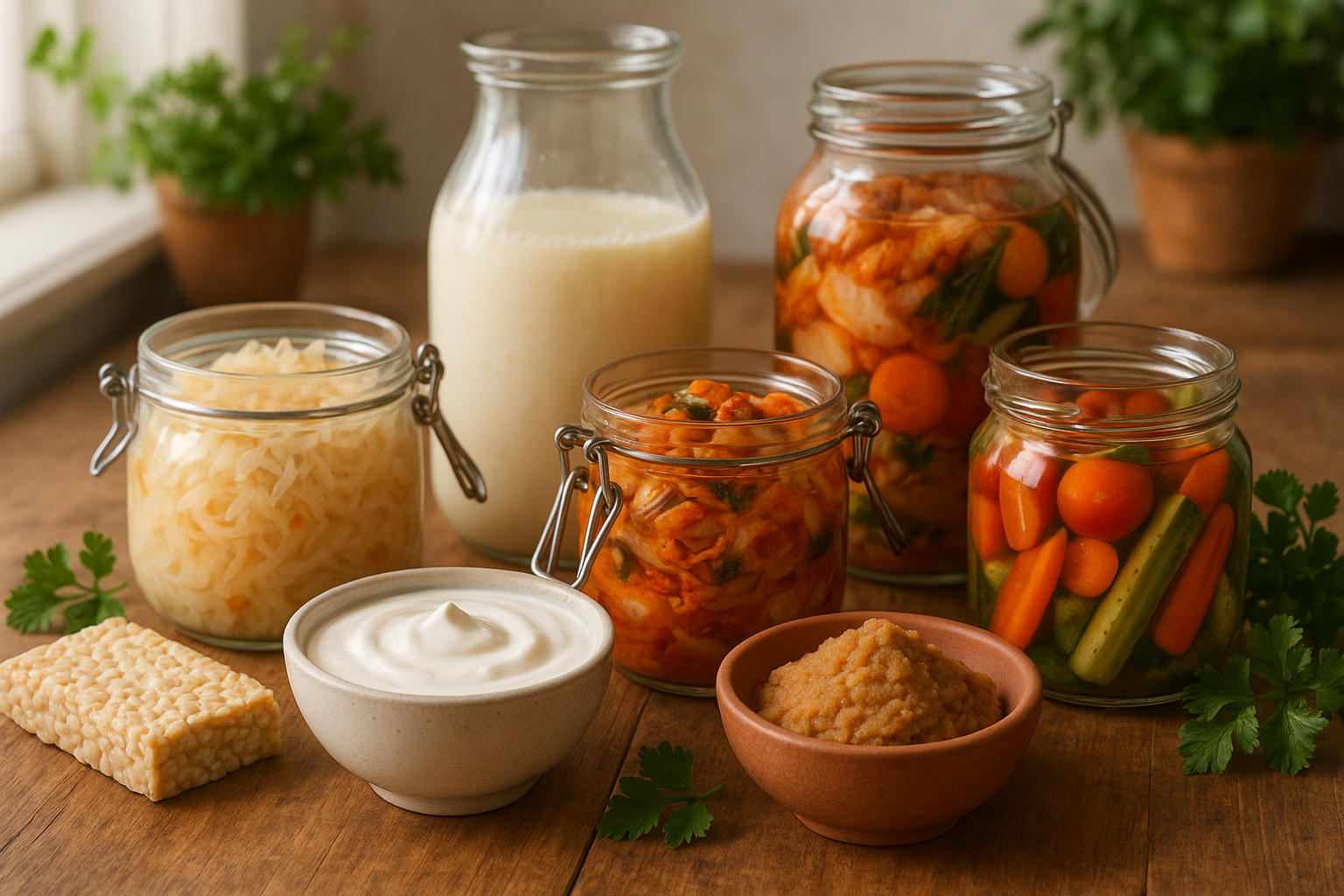
Probiotic Foods That Support Digestion, Immunity, and Microbiome Balance
Probiotic Foods for Gut Health
Probiotic foods are foods that contain live microorganisms, often beneficial bacteria or yeasts, that may support digestive health and help maintain a balanced gut microbiome. While the effects can vary by food, strain, dose, and individual health status, fermented probiotic foods can be a practical way to add microbial diversity to your diet.
How probiotic foods may support digestion
Your digestive tract contains a large community of microbes known as the gut microbiome. A balanced microbiome helps break down certain nutrients, supports the gut barrier, and interacts with the immune system. Some probiotic foods may help with digestive regularity, occasional bloating, and overall gut comfort, especially when paired with fiber-rich foods that feed beneficial bacteria.
Best probiotic foods for gut health
Yogurt with live and active cultures
Yogurt is one of the most accessible probiotic foods. Look for labels that mention live and active cultures, such as Lactobacillus or Bifidobacterium strains. Choose plain, unsweetened yogurt when possible to limit added sugar.
Kefir
Kefir is a fermented milk drink that typically contains a wider variety of microorganisms than standard yogurt. It has a tangy flavor and can be added to smoothies, oats, or consumed on its own. Some people who have trouble digesting lactose may tolerate fermented dairy better, but tolerance varies.
Sauerkraut
Sauerkraut is fermented cabbage that can provide beneficial microbes when it is raw and unpasteurized. Shelf-stable sauerkraut is often heat-treated, which may reduce or eliminate live cultures. Look for refrigerated options that say raw or unpasteurized.

Kimchi
Kimchi is a traditional Korean fermented vegetable dish, often made with cabbage, radish, garlic, ginger, and chili. It offers probiotics along with fiber and plant compounds. Because it can be high in sodium, enjoy it in moderate portions if you are watching salt intake.
Miso
Miso is a fermented soybean paste used in soups, sauces, and dressings. To preserve more live cultures, avoid boiling miso directly for long periods. Stir it into warm, not boiling, liquid near the end of cooking.
Tempeh
Tempeh is a fermented soybean product with a firm texture and nutty flavor. It is also a good source of plant-based protein. Although cooking may reduce live microbes, tempeh remains a nutrient-dense fermented food that can support a gut-friendly eating pattern.
Fermented pickles and vegetables
Naturally fermented pickles and vegetables can contain live cultures if they are made through lacto-fermentation and not pasteurized. Look for products in the refrigerated section with simple ingredients such as vegetables, water, salt, and spices, rather than vinegar-only pickles.
Probiotic foods versus prebiotic foods
Probiotics are live microorganisms, while prebiotics are fibers and compounds that feed beneficial gut bacteria. For microbiome balance, it helps to include both. Good prebiotic foods include onions, garlic, asparagus, oats, barley, beans, lentils, bananas, apples, and Jerusalem artichokes.
Tips for adding probiotic foods safely
Start with small servings, such as a few spoonfuls of yogurt or sauerkraut, and increase gradually. Eating too much fermented food too quickly may cause gas or bloating in some people. Choose lower-sugar options, pay attention to sodium, and keep refrigerated probiotic foods stored properly.
Who should be cautious with probiotics?
Most healthy adults can include probiotic foods as part of a balanced diet. However, people with weakened immune systems, serious underlying illnesses, central venous catheters, or a history of complications from infections should speak with a healthcare provider before using probiotic supplements or making significant changes with high-probiotic foods.
Simple daily gut-health meal ideas
Try plain yogurt with oats and berries for breakfast, a kefir smoothie with banana and ground flaxseed, a grain bowl topped with kimchi, or a sandwich with a small side of raw sauerkraut. For dinner, use miso in a warm broth or marinade, or add tempeh to a stir-fry with vegetables and brown rice.
Bottom line
Probiotic foods for gut health can support digestion, immunity, and microbiome balance, especially when eaten consistently with fiber-rich whole foods. The best approach is variety: combine fermented foods like yogurt, kefir, kimchi, sauerkraut, miso, and tempeh with fruits, vegetables, legumes, and whole grains.