
Common Zinc Deficiency Symptoms and Food Sources That Support Immune Health
Common Zinc Deficiency Symptoms and Food Sources That Support Immune Health
Zinc is a trace mineral, meaning the body needs it in small but steady amounts. It supports normal immune function, skin integrity, wound healing, cell growth, protein synthesis, DNA synthesis, and the senses of taste and smell.
Common zinc deficiency symptoms
Possible zinc deficiency symptoms may include:
- Frequent infections or reduced immune resilience
- Slow wound healing
- Loss of appetite
- Changes in taste or smell
- Hair thinning or hair loss
- Skin irritation, rough skin, or dermatitis-like rashes
- Diarrhea
- Fatigue or low energy
- Delayed growth or development in children
- Poor night vision in some cases
These symptoms are not specific to zinc deficiency and may have many causes. A healthcare professional can help determine whether testing, dietary changes, or supplementation is appropriate.
Who may be at higher risk of low zinc?
Some people may be more likely to have inadequate zinc intake or absorption, including:
- People with limited diets or low intake of animal-source foods
- Vegetarians or vegans who rely heavily on high-phytate grains and legumes
- People with digestive disorders that affect absorption
- People with chronic diarrhea
- Pregnant or breastfeeding individuals
- Older adults with reduced intake
- People with alcohol use disorder
Plant foods can provide zinc, but compounds called phytates in whole grains, beans, and legumes can reduce zinc absorption. Soaking, sprouting, fermenting, and leavening can help improve mineral availability.

Zinc-rich foods
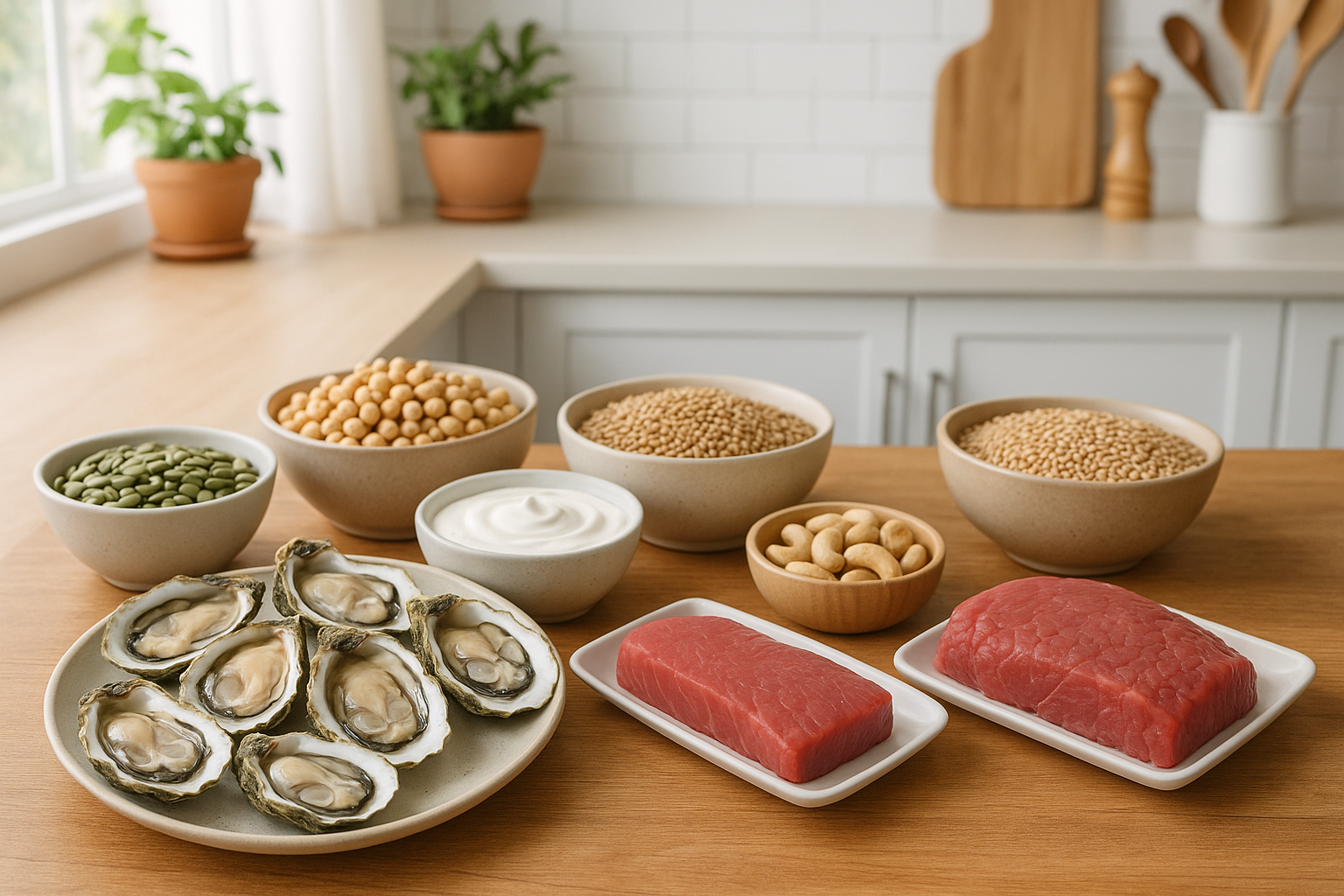
Good food sources of zinc include:
- Oysters and other shellfish
- Beef, pork, and poultry
- Crab and lobster
- Pumpkin seeds and sesame seeds
- Cashews and other nuts
- Chickpeas, lentils, and beans
- Yogurt, milk, and cheese
- Eggs
- Fortified breakfast cereals
- Whole grains such as oats and wheat products
Oysters are especially high in zinc, but many people can meet their needs through a varied diet that includes a mix of protein foods, dairy, legumes, nuts, seeds, and fortified foods.
How zinc supports immune health
Zinc helps immune cells develop and function properly. It also plays a role in maintaining the skin and mucous membranes, which act as physical barriers against pathogens. Getting enough zinc supports normal immune function, but taking more than needed does not necessarily provide extra protection and may cause side effects.
Be careful with supplements
Zinc supplements can be useful when deficiency is confirmed or intake is inadequate, but high doses may cause nausea, stomach upset, copper deficiency, and interference with certain medications. Long-term excessive zinc intake can weaken immune function rather than support it.
If you are considering zinc supplements, check with a healthcare professional, especially if you take antibiotics, diuretics, penicillamine, or other medications.
Practical ways to improve zinc intake
- Add pumpkin seeds or sesame seeds to oatmeal, salads, or yogurt.
- Include beans, lentils, chickpeas, or tofu in meals regularly.
- Choose zinc-containing proteins such as seafood, poultry, lean meat, eggs, or dairy.
- Use fortified cereals when appropriate.
- Pair plant-based zinc foods with preparation methods like soaking beans or choosing fermented grain products.
When to seek medical advice
Consider speaking with a healthcare professional if you have persistent symptoms such as frequent infections, unexplained hair loss, chronic diarrhea, delayed wound healing, or significant changes in taste or smell. Proper evaluation can help identify the cause and avoid unnecessary or excessive supplementation.