
Common B Vitamin Deficiency Symptoms and Nutrient Rich Foods to Consider
Common B Vitamin Deficiency Symptoms and Nutrient Rich Foods to Consider
B vitamins are a group of water soluble nutrients that support energy metabolism, brain and nerve function, red blood cell formation, skin health, and many other processes. Since the body does not store large amounts of most B vitamins, regular intake from food is important.
The term B vitamin deficiency can refer to low levels of one or more nutrients, including thiamin (B1), riboflavin (B2), niacin (B3), pantothenic acid (B5), vitamin B6, biotin (B7), folate (B9), and vitamin B12. Symptoms can overlap, so testing and medical evaluation are often needed to identify the specific deficiency.
Common B Vitamin Deficiency Symptoms
Possible symptoms of low B vitamins may include fatigue, weakness, poor appetite, mood changes, irritability, trouble concentrating, numbness or tingling in the hands and feet, mouth sores, cracked lips, skin changes, anemia, shortness of breath, dizziness, and changes in balance or coordination.
Some symptoms are more strongly associated with certain B vitamins. For example, vitamin B12 deficiency may cause numbness, tingling, memory changes, balance problems, and megaloblastic anemia. Folate deficiency can also contribute to megaloblastic anemia and is especially important before and during pregnancy. Thiamin deficiency can affect the nervous system and heart, while niacin deficiency can cause a condition known as pellagra, which may involve dermatitis, diarrhea, and cognitive changes.
Who May Be at Higher Risk
People who may be more likely to develop low B vitamin levels include older adults, people who avoid animal products, individuals with alcohol use disorder, people with digestive conditions that affect absorption, those who have had bariatric surgery, pregnant or breastfeeding people, and individuals taking certain medications. Vitamin B12 deficiency risk is higher in people with reduced stomach acid or conditions that affect intrinsic factor, which is needed for B12 absorption.

Nutrient Rich Foods to Consider
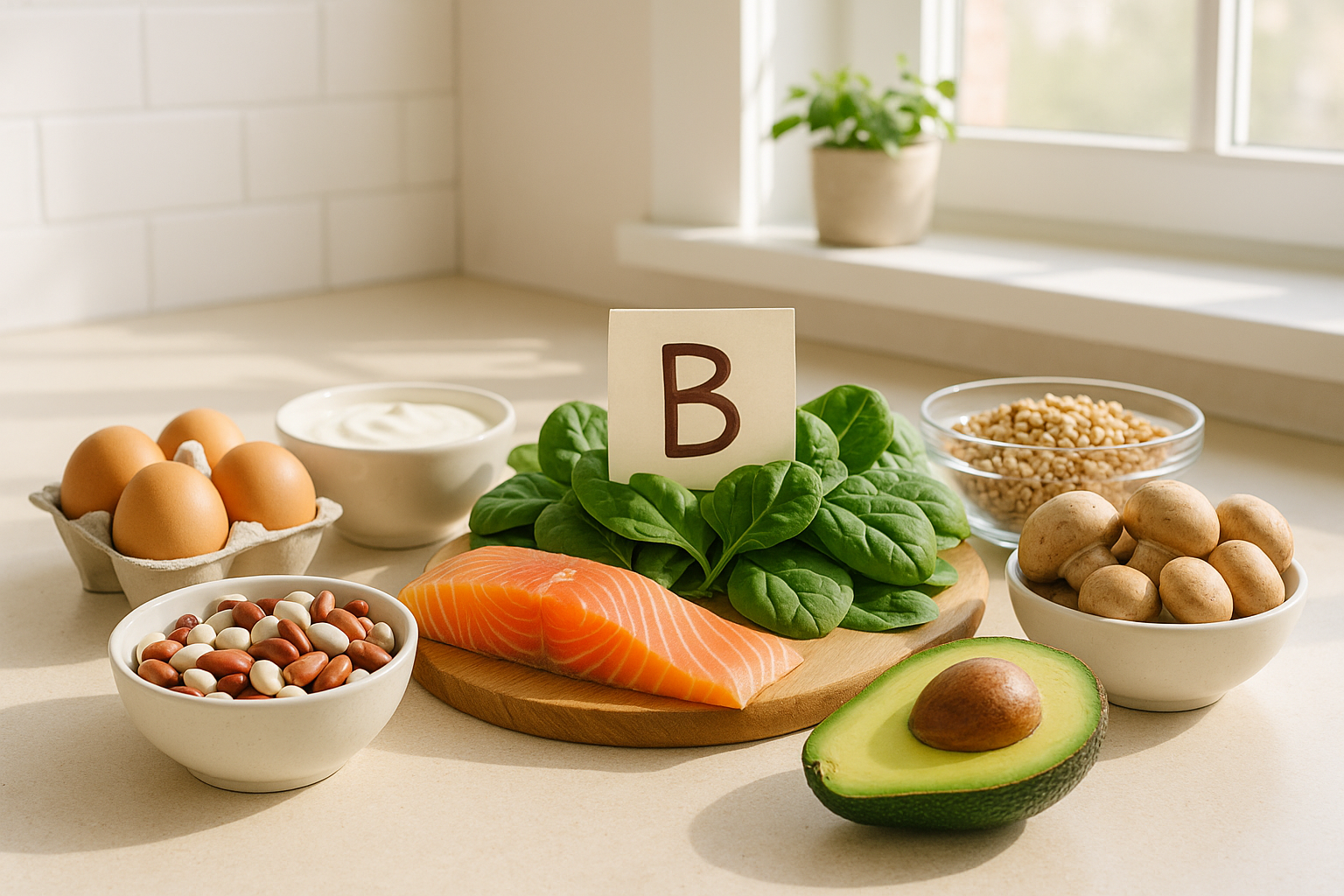
A varied diet can help provide the full range of B vitamins. Good options include whole grains, legumes, nuts, seeds, eggs, dairy products, fish, poultry, meat, leafy greens, mushrooms, avocado, and fortified foods.
For thiamin (B1), consider whole grains, fortified cereals, pork, beans, lentils, nuts, and seeds. For riboflavin (B2), foods include milk, yogurt, eggs, lean meats, almonds, and mushrooms. For niacin (B3), consider poultry, fish, peanuts, legumes, brown rice, and fortified grains. Pantothenic acid (B5) is found in many foods, including chicken, beef, potatoes, oats, yogurt, mushrooms, and avocado.
Vitamin B6 is found in chickpeas, fish, poultry, potatoes, bananas, and fortified cereals. Biotin (B7) is present in eggs, salmon, pork, sunflower seeds, sweet potatoes, and nuts. Folate (B9) is found in spinach, romaine lettuce, asparagus, Brussels sprouts, beans, peas, citrus fruits, and fortified grains. Vitamin B12 is naturally found in animal foods such as fish, meat, poultry, eggs, and dairy, and may also be available in fortified plant based foods.
When to Seek Medical Advice
Consider speaking with a healthcare professional if you have ongoing fatigue, numbness or tingling, unexplained anemia, mouth sores, balance problems, memory changes, significant dietary restrictions, or digestive issues that may affect absorption. A clinician may recommend blood tests and can help determine whether dietary changes or supplementation is appropriate.
Key Takeaway
B vitamin deficiency symptoms can be subtle at first and may overlap with other health conditions. Eating a variety of nutrient rich foods can help support adequate intake, but persistent symptoms should be evaluated by a healthcare professional.
References
NIH Office of Dietary Supplements: Vitamin B12