
Early Signs and Hidden Symptoms of Vitamin D Deficiency
What Is Vitamin D Deficiency?
Vitamin D is a fat soluble vitamin that helps the body absorb calcium, support immune function, and maintain muscle and nerve health. A deficiency occurs when blood levels of 25 hydroxyvitamin D fall below recommended ranges, often due to limited sun exposure, darker skin pigmentation, aging, certain medical conditions, or inadequate dietary intake.
Early Signs of Vitamin D Deficiency
In the early stages, symptoms may be mild or vague.
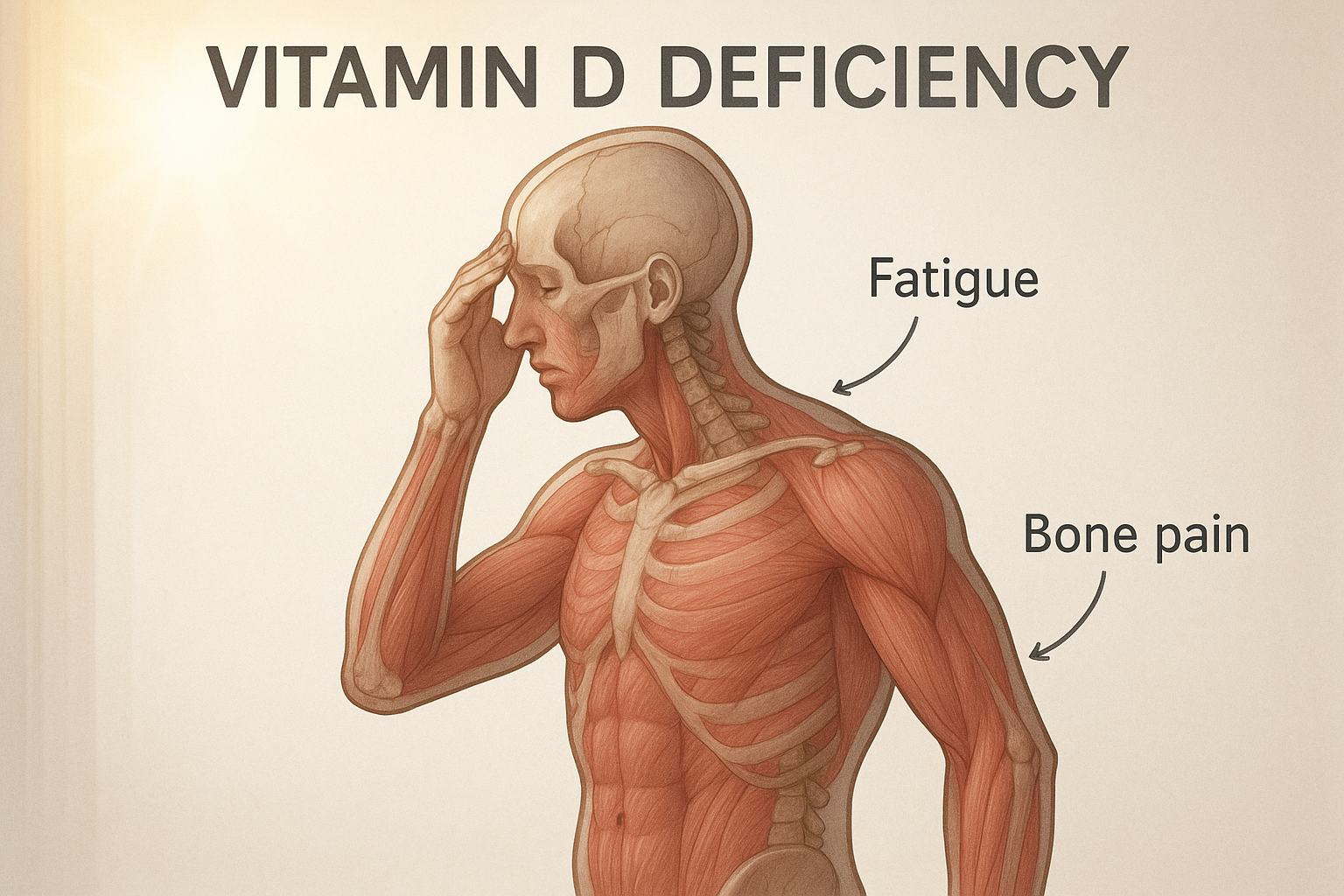
1. Persistent Fatigue
Ongoing tiredness or low energy is one of the most common early complaints. Even mild deficiency has been associated with fatigue and reduced physical performance.
2. Muscle Weakness or Aches
Vitamin D plays a key role in muscle function. Low levels may cause muscle weakness, cramps, or general aches, especially in the upper arms, thighs, and hips.
3. Bone Discomfort
Early bone pain may feel like a dull ache in the lower back, pelvis, hips, or legs. Because vitamin D helps regulate calcium, inadequate levels can impair bone mineralization.
4. Frequent Illness or Infections
Vitamin D supports immune defenses. Deficiency has been linked to increased susceptibility to respiratory infections and slower recovery from illness.
5. Mood Changes
Low vitamin D levels have been associated with mood disturbances, including symptoms of depression, particularly during seasons with limited sunlight.
Hidden or Overlooked Symptoms
Some effects of vitamin D deficiency are less obvious and may go unnoticed.
Hair Thinning
Severe or prolonged deficiency may contribute to hair shedding, although multiple factors can influence hair health.
Slow Wound Healing
Vitamin D plays a role in inflammation control and tissue repair. Delayed healing after injury or surgery may be a subtle warning sign.
Bone Loss Over Time
Chronic deficiency can lead to osteomalacia in adults, causing soft bones and increasing fracture risk. In children, severe deficiency may result in rickets.
Who Is at Higher Risk?
Individuals at greater risk include:
- Older adults
- People with limited sun exposure
- Individuals with darker skin
- Those with obesity
- People with malabsorption disorders such as celiac or Crohn disease
- Breastfed infants without supplementation
When to Seek Medical Advice
If you experience persistent fatigue, bone pain, muscle weakness, or frequent infections, ask a healthcare professional about testing your vitamin D level. A simple blood test can determine your status and guide appropriate supplementation if needed.
Prevention and Monitoring
Safe sun exposure, dietary sources such as fortified milk and fatty fish, and supplements when recommended can help maintain healthy levels. Always follow professional guidance, as excessive vitamin D intake can also cause harm.
Recognizing vitamin D deficiency symptoms early allows for timely treatment and may reduce the risk of long term complications affecting bones, muscles, and overall health.
References: