
Common Signs of Zinc Deficiency and Foods That Help Replenish It
What Is Zinc Deficiency?
Zinc deficiency happens when the body does not get enough zinc, cannot absorb it well, or loses more than usual. Zinc supports immune defenses, skin repair, normal growth, reproductive health, and the senses of taste and smell.
Mild deficiency can be difficult to notice at first because symptoms may be subtle or overlap with other health issues.
Common Zinc Deficiency Signs
1. Frequent Illness or Slow Recovery
Zinc helps immune cells function properly. Low zinc levels may contribute to getting sick more often or taking longer to recover from common infections.
2. Slow Wound Healing
Zinc plays a role in collagen formation, tissue repair, and inflammation control. Cuts, scrapes, or sores that heal slowly may be one possible sign of low zinc status.
3. Hair Thinning or Hair Loss
Zinc is involved in normal cell growth and protein production. Deficiency may contribute to hair shedding or thinning, although many other causes are also possible.

4. Changes in Taste or Smell
A reduced sense of taste or smell can occur with zinc deficiency. Some people may notice food tastes bland or different than usual.
5. Skin Problems
Low zinc may be associated with rough skin, rashes, irritation, or acne-like changes. Zinc is important for maintaining healthy skin structure and repair.
6. Poor Appetite
Zinc deficiency can reduce appetite, which may further lower nutrient intake and worsen deficiency risk.
7. Diarrhea
Zinc deficiency and diarrhea can influence each other. Diarrhea may increase zinc losses, while low zinc can affect gut and immune function.
8. Growth or Development Concerns in Children
Children need zinc for normal growth and development. Deficiency may contribute to poor growth, delayed sexual maturation, or increased susceptibility to infections.
Who Is More Likely to Be Low in Zinc?
Some groups have a higher risk of inadequate zinc intake or absorption, including:
- People with digestive disorders such as Crohn’s disease, ulcerative colitis, or chronic diarrhea
- People who have had gastrointestinal surgery
- People who follow vegetarian or vegan diets without careful planning
- Pregnant or breastfeeding people
- Older adults with low intake
- People with alcohol use disorder
- Infants who are exclusively breastfed beyond about 6 months without adequate complementary foods
Plant-based diets can provide zinc, but zinc from legumes, grains, nuts, and seeds may be less easily absorbed because these foods contain phytates. Soaking, sprouting, fermenting, and leavening grains or legumes can help improve mineral availability.
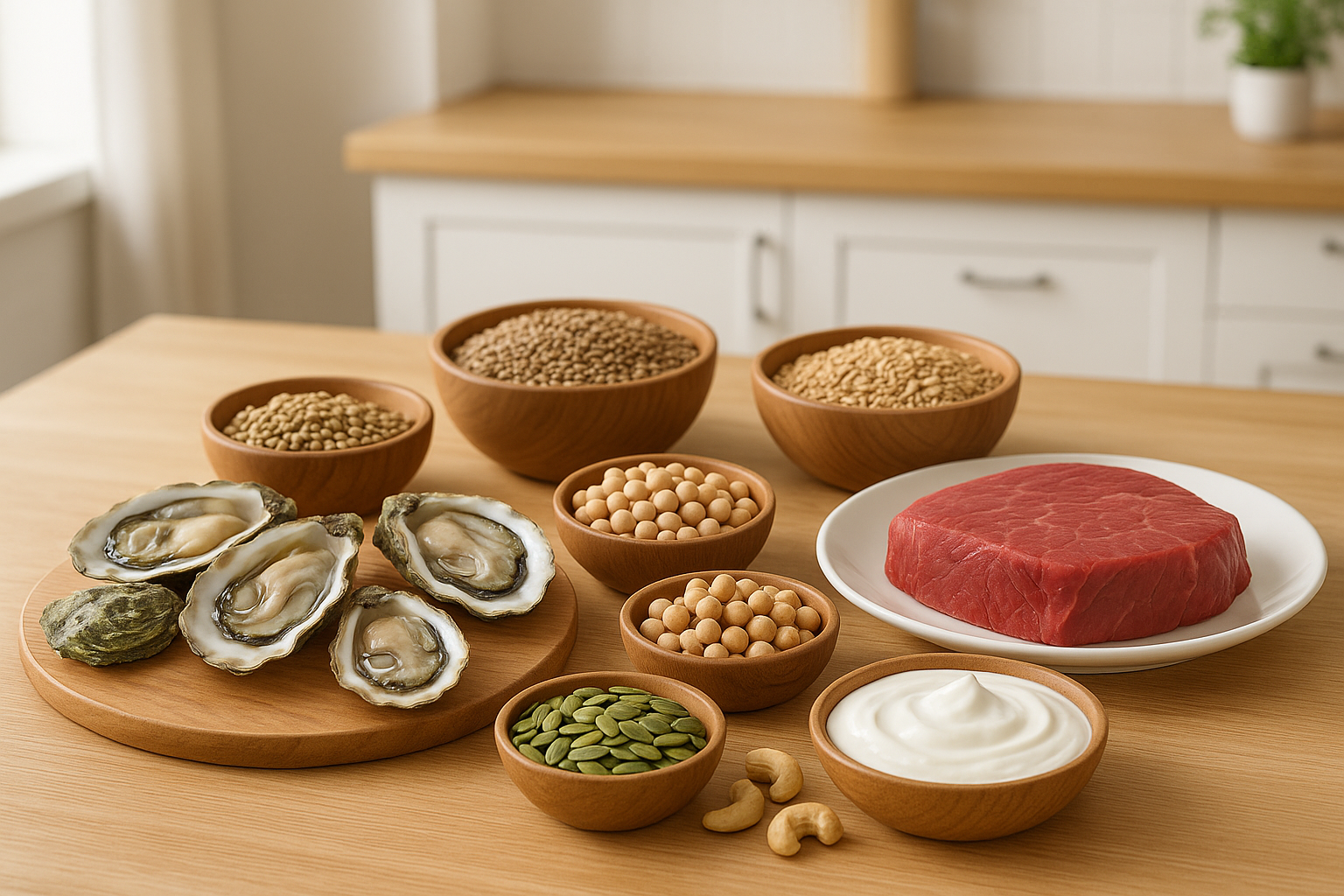
Zinc-Rich Foods That Help Replenish Levels
Animal-Based Sources
- Oysters and other shellfish
- Beef
- Pork
- Chicken and turkey
- Eggs
- Milk, yogurt, and cheese
Oysters are especially high in zinc. Meat, seafood, and dairy generally provide zinc in a form that is easier for the body to absorb.
Plant-Based Sources
- Pumpkin seeds
- Sesame seeds and tahini
- Hemp seeds
- Cashews
- Chickpeas
- Lentils
- Beans
- Tofu and tempeh
- Oats
- Whole grains
- Fortified breakfast cereals
For plant-based meals, pair zinc sources with protein-rich foods and use preparation methods like soaking beans or choosing fermented soy foods when possible.
Simple Meal Ideas for More Zinc
- Greek yogurt with oats, pumpkin seeds, and berries
- Lentil soup with whole-grain bread
- Beef or turkey chili with beans
- Chickpea and tahini salad wrap
- Scrambled eggs with cheese and whole-grain toast
- Tofu stir-fry with sesame seeds
- Oatmeal topped with cashews and hemp seeds
Should You Take a Zinc Supplement?
Zinc supplements can help when a true deficiency exists, but taking too much zinc can cause nausea, stomach upset, copper deficiency, and immune-related problems. High-dose zinc may also interfere with certain medications, including some antibiotics.
If you have persistent symptoms or risk factors, ask a healthcare professional whether testing or supplementation is appropriate. Do not use high-dose zinc long term unless advised by a clinician.
Key Takeaway
Common zinc deficiency signs may include frequent infections, slow wound healing, hair thinning, reduced taste or smell, skin issues, poor appetite, and diarrhea. Eating zinc-rich foods such as seafood, meat, dairy, seeds, legumes, nuts, and fortified foods can help support healthy zinc levels. If symptoms continue, seek medical guidance to identify the cause.