
Natural Sleep Remedies Without Melatonin for Long-Term Sleep Support
Natural Sleep Remedies Without Melatonin for Long-Term Sleep Support
Melatonin can be useful for some short-term sleep timing issues, but it is not the only natural option. For long-term sleep support, the strongest approach is usually a consistent set of habits that help your body feel sleepy at night, alert during the day, and calm enough to stay asleep.
Below are natural sleep remedies without melatonin that focus on sustainable routines rather than quick fixes.
1. Keep a Consistent Sleep and Wake Schedule
Your body runs on a circadian rhythm, an internal clock that responds strongly to timing. Going to bed and waking up at roughly the same time every day helps reinforce that rhythm.
Try this:
- Choose a realistic wake time you can keep most days.
- Avoid sleeping in for hours on weekends.
- If your bedtime is too late, shift it earlier by 15 to 30 minutes every few nights.
- Get out of bed around the same time even after a rough night, then protect the next night with a calming routine.
Consistency is one of the most effective long-term natural sleep supports because it trains your brain to expect sleep at predictable times.

2. Get Bright Light Early in the Day
Morning light helps signal daytime to your brain and supports healthier nighttime sleep pressure. Outdoor light is usually stronger than indoor light, even on cloudy days.
Simple options include:
- Step outside for 10 to 30 minutes after waking.
- Eat breakfast near a bright window if outdoor time is not possible.
- Take a morning walk.
- Keep lights brighter earlier in the day and dimmer in the evening.
This is especially helpful if you feel sleepy in the morning but wired at night.
3. Reduce Bright Light and Screens Before Bed
Evening light can delay sleepiness, especially from bright overhead lights and close-range screens. You do not have to eliminate screens completely, but reducing stimulation can help.
Try this one hour before bed:
- Dim household lights.
- Use warmer screen settings.
- Avoid intense work, stressful news, and fast-paced media.
- Keep the bedroom dark, cool, and quiet.
Think of this as giving your nervous system a runway into sleep.
4. Build a Repeatable Wind-Down Routine
A wind-down routine works because it becomes a cue. When repeated nightly, the same sequence tells your body that sleep is coming.
A simple routine might be:
- Prepare tomorrow’s essentials.
- Take a warm shower or bath.
- Stretch gently for five minutes.
- Read something calming.
- Practice slow breathing in bed.
Keep the routine short enough that you can actually maintain it. Long-term consistency matters more than perfection.
5. Practice Relaxation Techniques
Stress and hyperarousal are common reasons people struggle to fall asleep or wake during the night. Relaxation techniques can help lower physical tension and mental activity.
Options to try:
- Diaphragmatic breathing: Breathe slowly into the belly and extend the exhale.
- Progressive muscle relaxation: Tense and release muscle groups from feet to face.
- Body scan meditation: Notice each area of the body without trying to force sleep.
- Guided imagery: Picture a calm place in sensory detail.
If your mind races, do not fight every thought. Instead, return attention to a neutral anchor such as breath, body weight, or a repeated phrase.
6. Use Exercise as a Sleep Support Tool
Regular physical activity can improve sleep quality, mood, and stress resilience. It does not need to be intense to help.
Good long-term choices include:
- Brisk walking.
- Strength training.
- Cycling.
- Swimming.
- Yoga or mobility work.
Many people sleep better when vigorous workouts are done earlier in the day, while gentle stretching or restorative yoga may be better in the evening.
7. Watch Caffeine, Alcohol, and Heavy Meals
Natural sleep support is not only about what you add. It is also about removing common sleep disruptors.
Consider these adjustments:
- Stop caffeine by early afternoon, or earlier if you are sensitive.
- Remember that coffee, tea, energy drinks, chocolate, and some supplements can contain caffeine.
- Avoid using alcohol as a sleep aid. It may make you drowsy but can fragment sleep later.
- Finish heavy meals two to three hours before bed when possible.
- If hungry at night, choose a light snack rather than a large meal.
Small changes in timing can make a noticeable difference.
8. Try a Warm Bath or Shower
A warm bath or shower one to two hours before bed may help some people relax. Afterward, the body cools down, which can support the natural temperature drop associated with sleep onset.
Keep it comfortable rather than hot, and pair it with dim lights and quiet activities afterward.
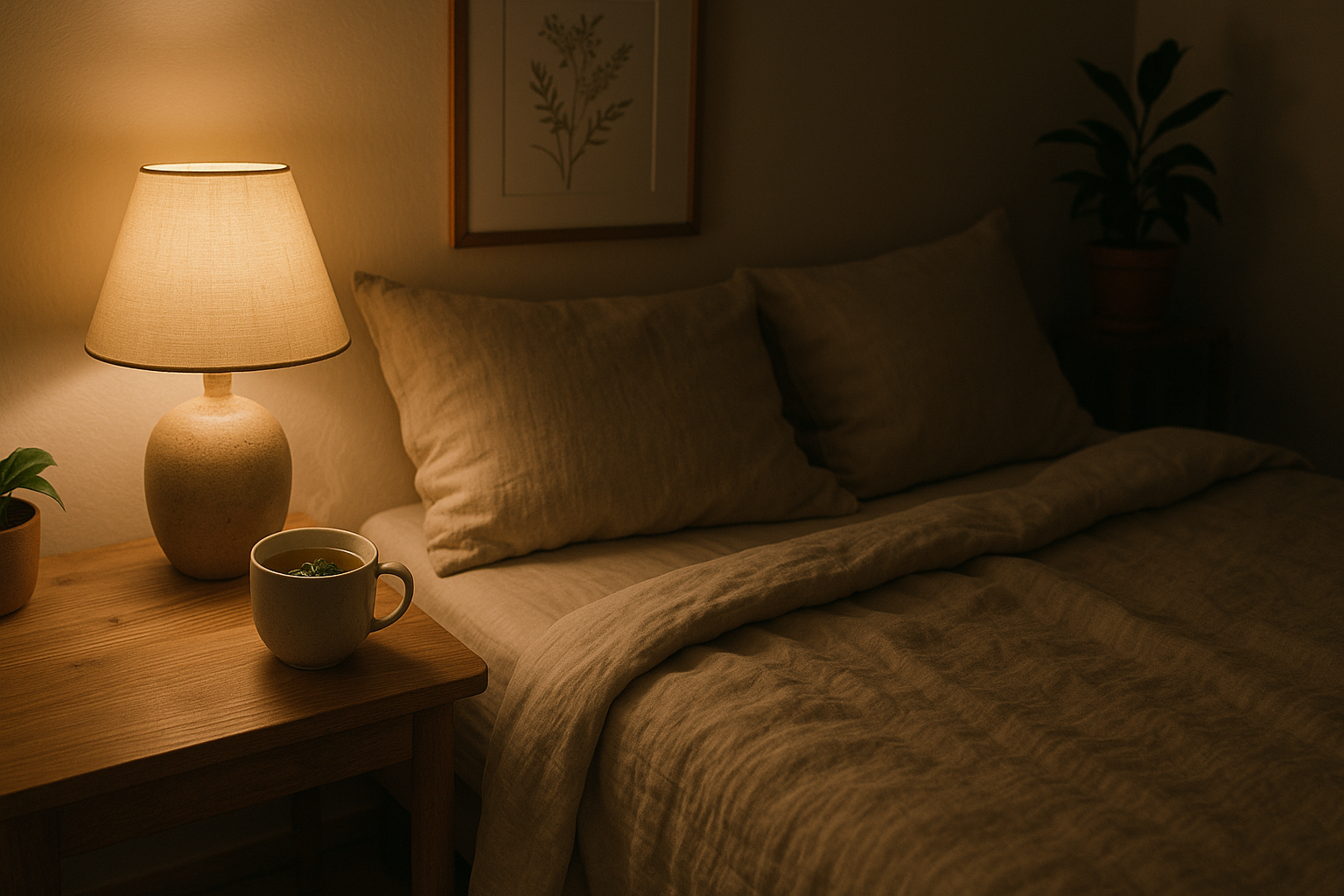
9. Create a Bedroom That Supports Sleep
Your sleep environment should reduce sensory disruptions and strengthen the association between bed and sleep.
Focus on:
- Cool temperature.
- Darkness or an eye mask.
- Quiet or steady white noise.
- Comfortable mattress and pillow.
- Breathable bedding.
- Minimal clutter near the bed.
If you use your bed for work, scrolling, or stressful conversations, your brain may stop associating it with rest. When possible, reserve the bed for sleep and intimacy.
10. Consider Herbal and Non-Melatonin Options Carefully
Some people use herbal teas or calming botanicals such as chamomile, lavender, passionflower, or valerian. These may feel relaxing for some individuals, but effects vary and natural does not always mean risk-free.
Before using herbs or supplements, be cautious if you:
- Are pregnant or breastfeeding.
- Take sedatives, antidepressants, blood thinners, or other medications.
- Have liver disease, kidney disease, or a chronic medical condition.
- Need to drive or operate machinery.
A calming herbal tea can be a pleasant part of a bedtime ritual, but it should not replace medical care for ongoing insomnia.
11. Use a Worry Journal
If anxious thoughts show up when your head hits the pillow, schedule a short worry session earlier in the evening.
How to do it:
- Write down worries or unfinished tasks.
- Add one next step for each concern if possible.
- Close the notebook and remind yourself that you have a plan.
This helps keep planning out of bed and reduces the feeling that nighttime is the only time to solve problems.
12. Follow the 20-Minute Reset Rule
If you cannot fall asleep after about 20 minutes, or you feel increasingly frustrated, get out of bed and do something quiet in dim light. Return to bed when sleepy.
Good reset activities include:
- Reading calm material.
- Listening to soft audio.
- Gentle breathing.
- Sitting quietly.
Avoid checking the clock repeatedly. Clock-watching often increases pressure and makes sleep harder.
When to Seek Help
Natural remedies can help many people, but persistent insomnia may need professional support. Cognitive behavioral therapy for insomnia, often called CBT-I, is a first-line, non-drug treatment that addresses the thoughts and behaviors that keep insomnia going.
Talk with a healthcare professional if sleep problems last more than a few weeks, worsen, or come with symptoms such as loud snoring, gasping, morning headaches, leg discomfort, depression, anxiety, or severe daytime sleepiness.
Bottom Line
The best natural sleep remedies without melatonin are usually the habits that strengthen your circadian rhythm and calm your nervous system. Start with a consistent wake time, morning light, less evening stimulation, a repeatable wind-down routine, regular exercise, and a sleep-friendly bedroom. These changes may seem simple, but when practiced consistently, they can provide meaningful long-term sleep support.