
Gentle Natural Remedies for Bloating and Better Digestive Comfort
Gentle Natural Remedies for Bloating and Better Digestive Comfort
Bloating can make your abdomen feel tight, full, or swollen. It may happen after eating, during periods of stress, with constipation, or after consuming certain foods. While occasional bloating is usually not serious, it can be uncomfortable. The good news is that several gentle habits may help reduce gas buildup and support smoother digestion.
Common Reasons Bloating Happens
Bloating may be related to swallowing excess air, eating quickly, carbonated drinks, constipation, high-fiber foods, lactose intolerance, irritable bowel syndrome, or changes in gut bacteria. Some people notice bloating after beans, onions, wheat, dairy, artificial sweeteners, or large meals.
Tracking your symptoms can help you notice patterns. Write down what you ate, when bloating started, stress levels, bowel habits, and any other symptoms.
1. Sip Warm Peppermint Tea
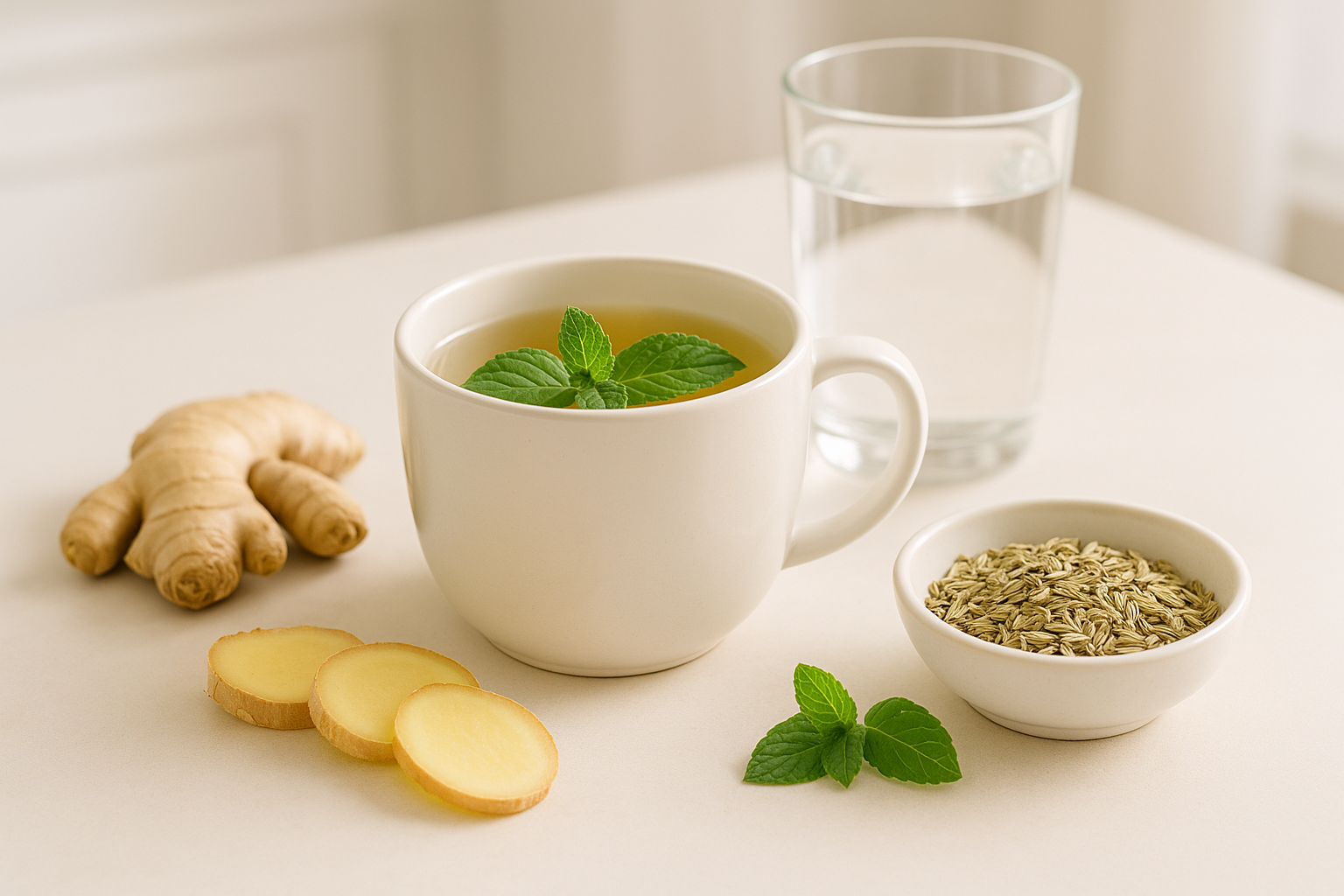
Peppermint is often used for digestive comfort because it may help relax muscles in the digestive tract. A warm cup of peppermint tea after meals may feel soothing for occasional gas and fullness.
Avoid peppermint if it worsens heartburn or reflux, because it may relax the lower esophageal sphincter in some people.

2. Try Ginger for Digestive Support
Ginger has a long history of use for nausea and digestive discomfort. You can try fresh ginger steeped in hot water, ginger tea, or adding small amounts of ginger to meals.
If you take blood thinners, have a bleeding disorder, are pregnant, or use medications regularly, ask a healthcare provider before using concentrated ginger supplements.
3. Walk After Meals
Gentle movement can help stimulate digestion and move gas through the intestines. A relaxed 10- to 20-minute walk after eating may be especially helpful if bloating tends to occur after meals.
You do not need intense exercise. Light walking, stretching, or gentle yoga poses may be enough to support comfort.
4. Eat Slowly and Chew Thoroughly
Eating quickly can cause you to swallow more air, which may increase gas and bloating. Try taking smaller bites, chewing well, and pausing between bites.
Simple mindful eating habits can make a difference: sit down for meals, avoid rushing, limit drinking through straws, and reduce chewing gum if it contributes to swallowed air.
5. Stay Hydrated
Water supports normal bowel movements and may help prevent constipation-related bloating. If you are increasing fiber intake, hydration becomes even more important.
Choose water, herbal tea, or other non-carbonated beverages. Carbonated drinks can make some people feel more bloated because they add gas to the digestive tract.
6. Increase Fiber Gradually
Fiber supports gut health, but adding too much too quickly can increase gas. If you are trying to eat more fruits, vegetables, beans, whole grains, nuts, or seeds, increase gradually over several weeks.
If beans cause bloating, try soaking and rinsing them well, starting with small portions, or choosing lentils, which some people tolerate better.
7. Consider Fennel or Chamomile Tea
Fennel and chamomile teas are traditional options for digestive comfort. Some people find them soothing after meals. While evidence varies, these teas are generally gentle for many adults when used in typical food-like amounts.
If you have allergies to related plants, are pregnant, or take medications, check with a healthcare professional before using herbal remedies regularly.
8. Identify Trigger Foods Without Over-Restricting
Common bloating triggers include dairy, wheat, onions, garlic, beans, cruciferous vegetables, sugar alcohols, and high-FODMAP foods. However, trigger foods are highly individual.
Instead of cutting out many foods at once, consider a short food and symptom diary. If symptoms are frequent, a registered dietitian can help you identify triggers while keeping your diet balanced.
9. Support Regular Bowel Movements
Constipation is a common cause of bloating. Helpful habits include drinking enough fluids, moving daily, eating fiber-rich foods gradually, and setting aside unhurried bathroom time.
If constipation is persistent or painful, ask a healthcare provider about safe treatment options.
10. Manage Stress Gently
The gut and nervous system are closely connected. Stress can affect digestion, bowel habits, and sensitivity to gas. Relaxation practices may help some people reduce digestive discomfort.
Try slow breathing, a short walk outdoors, meditation, gentle stretching, journaling, or a consistent sleep routine.
When to Seek Medical Advice
Contact a healthcare provider if bloating is severe, persistent, or new and unexplained. Seek medical care promptly if bloating occurs with severe abdominal pain, vomiting, fever, blood in stool, black stools, unexplained weight loss, difficulty swallowing, persistent diarrhea, or a major change in bowel habits.
Bottom Line
Natural remedies for bloating often work best when they focus on gentle, consistent habits: warm herbal teas, slower eating, hydration, light movement, gradual fiber changes, and attention to personal triggers. If bloating continues or comes with concerning symptoms, professional medical guidance is the safest next step.