
Iron Deficiency Fatigue: Why It Happens and How to Rebuild Iron Safely
Why Iron Deficiency Causes Fatigue
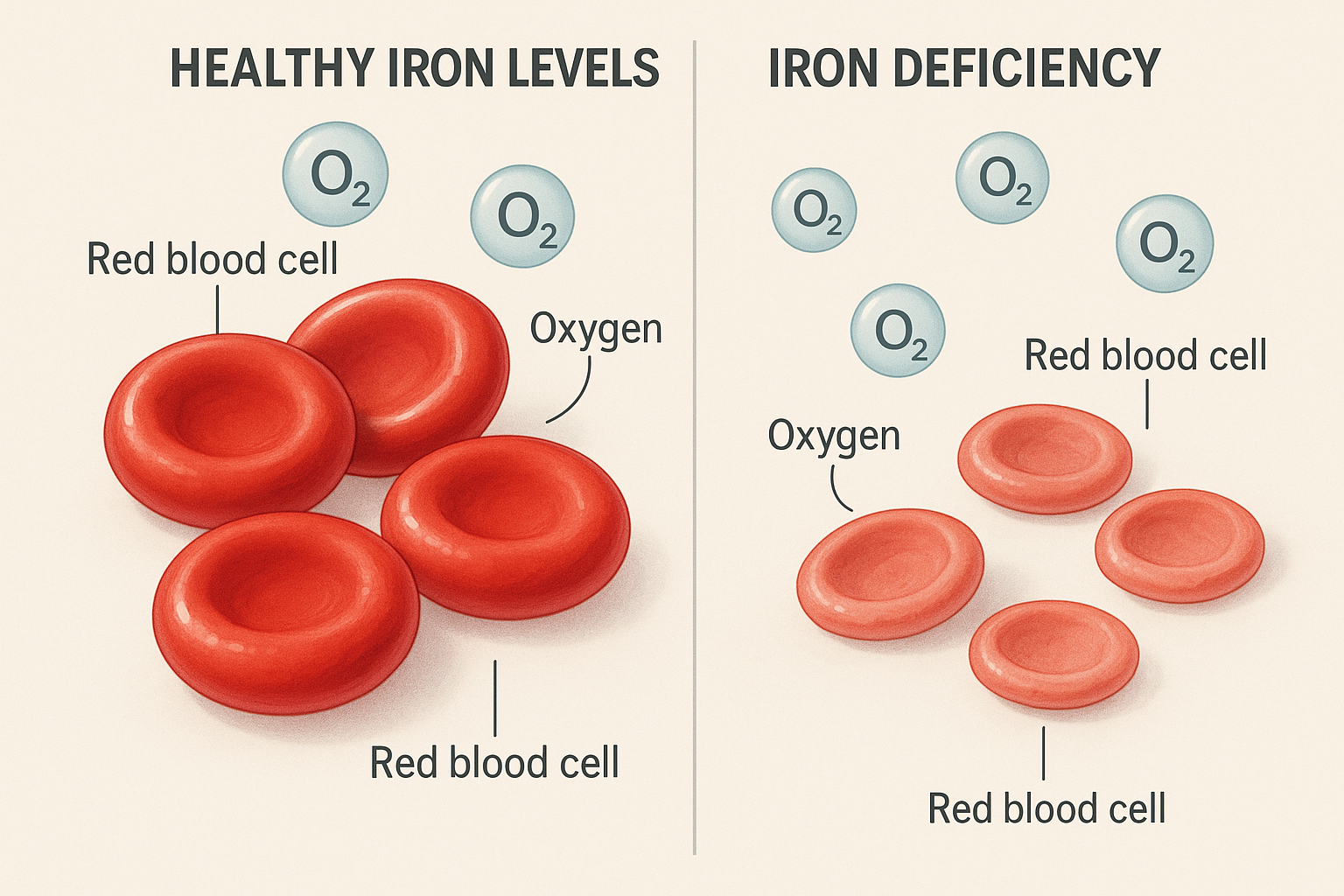
Iron is essential for making hemoglobin, the protein in red blood cells that carries oxygen from your lungs to the rest of your body. Without enough iron:
- Hemoglobin production drops
- Oxygen delivery to muscles and organs decreases
- Cells produce less energy
This leads to physical fatigue, weakness, shortness of breath, and reduced exercise tolerance. Your brain may also receive less oxygen, contributing to poor concentration, irritability, and brain fog.
Common Symptoms of Iron Deficiency
Iron deficiency can develop gradually. Early signs may include:
- Persistent fatigue
- Pale skin
- Cold hands and feet
- Headaches
- Brittle nails
- Hair thinning
- Dizziness
As deficiency progresses to iron deficiency anemia, symptoms may become more severe, including rapid heartbeat and chest discomfort.
Who Is at Higher Risk?
Certain groups are more likely to develop iron deficiency:
- People with heavy menstrual bleeding
- Pregnant individuals
- Vegetarians and vegans without adequate iron planning
- Frequent blood donors
- Individuals with gastrointestinal disorders affecting absorption
How to Rebuild Iron Levels Safely
1. Confirm With Testing
Before supplementing, a healthcare professional should check blood markers such as hemoglobin, ferritin, and transferrin saturation. Fatigue has many causes, and too much iron can be harmful.
2. Increase Iron-Rich Foods
There are two types of dietary iron:
- Heme iron (better absorbed): red meat, poultry, fish
- Non-heme iron: beans, lentils, tofu, spinach, fortified cereals
To improve absorption:
- Pair iron-rich foods with vitamin C sources like citrus or bell peppers
- Avoid drinking tea or coffee with iron-rich meals
3. Use Supplements Carefully
If diet alone is not enough, iron supplements may be recommended. Common forms include ferrous sulfate, ferrous gluconate, and ferrous fumarate.
Safety tips:
- Take only as prescribed
- Follow dosage instructions carefully
- Keep supplements out of reach of children
- Report side effects like severe stomach pain or constipation
Iron levels should be rechecked periodically to avoid excess accumulation.
4. Address the Underlying Cause
Rebuilding iron stores is important, but identifying the reason for deficiency is equally critical. Causes may include blood loss, poor intake, or malabsorption. Treating the root issue helps prevent recurrence.
How Long Does It Take to Feel Better?
Energy often begins improving within a few weeks of proper treatment, but rebuilding iron stores can take several months. Even after hemoglobin normalizes, ferritin levels may still need time to recover fully.
The Bottom Line
Iron deficiency fatigue occurs because your body cannot deliver enough oxygen to tissues. Proper testing, dietary adjustments, and carefully monitored supplementation can safely restore iron levels and improve energy. If you experience persistent fatigue, consider discussing iron testing with a healthcare professional to rule out deficiency and guide appropriate treatment.