
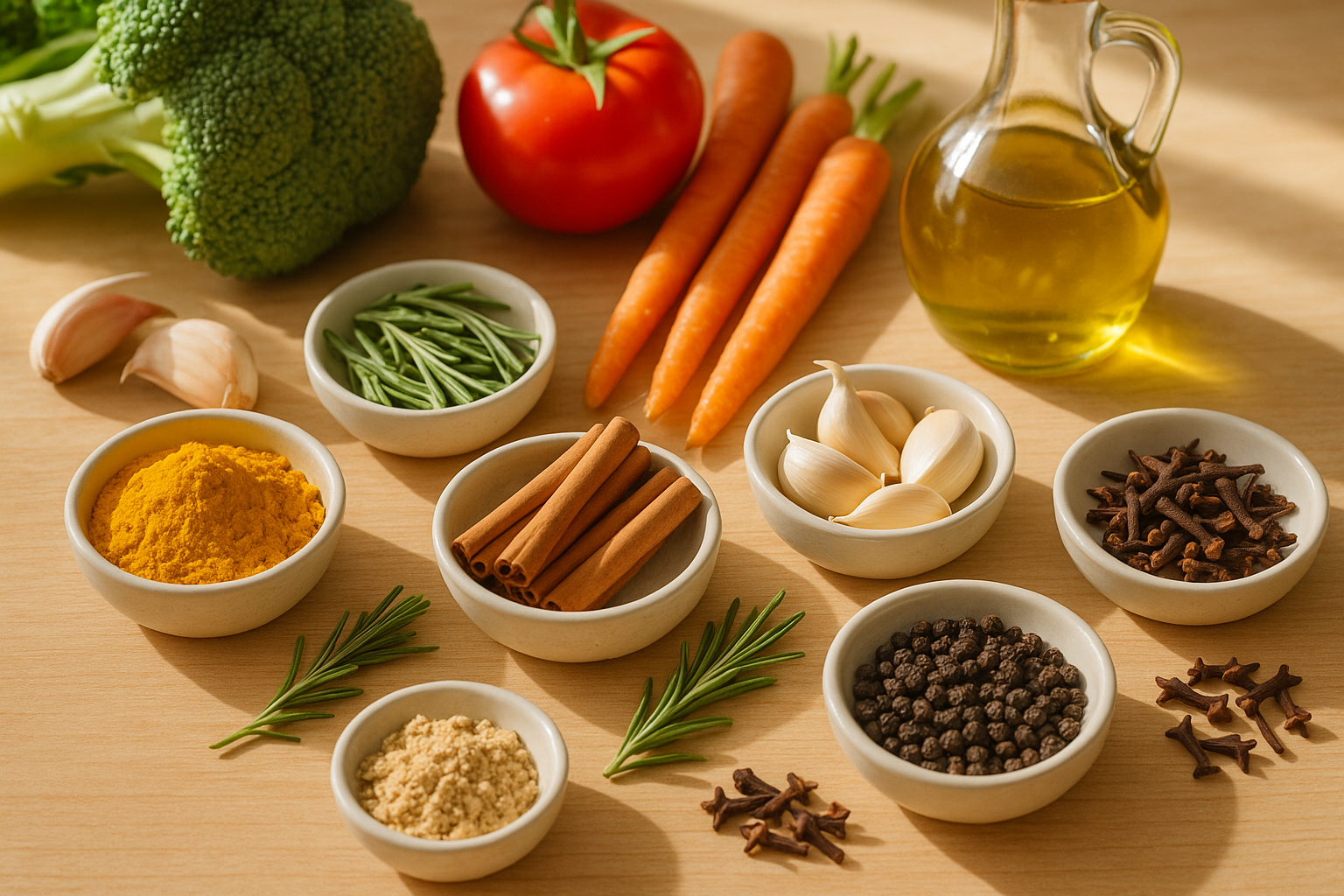
Anti-Inflammatory Herbs and Spices to Add to Your Daily Routine
Anti-Inflammatory Herbs and Spices to Add to Your Daily Routine
Inflammation is a normal immune response, but long-term, ongoing inflammation is linked with many chronic health concerns. Food choices cannot replace medical treatment, but a nutrient-rich diet that includes herbs and spices may help support a healthier inflammatory balance.
Herbs and spices are especially useful because they add flavor without relying heavily on excess salt, sugar, or saturated fat. Many also contain polyphenols and other plant compounds studied for antioxidant and anti-inflammatory activity.
1. Turmeric
Turmeric is one of the best-known anti-inflammatory spices. Its main active compound, curcumin, has been studied for its role in inflammatory pathways. Curcumin is not absorbed well on its own, so pairing turmeric with black pepper and a source of fat may improve absorption.
Easy ways to use it:
- Stir turmeric into soups, lentils, rice, or roasted vegetables
- Add a pinch to scrambled eggs or tofu
- Make a warm turmeric latte with milk or a fortified milk alternative
- Combine turmeric, black pepper, olive oil, and lemon for a simple dressing
2. Ginger
Ginger contains gingerols and related compounds that may help calm inflammatory signaling and support digestion. It works well in both sweet and savory dishes.

Easy ways to use it:
- Grate fresh ginger into stir-fries, soups, or marinades
- Add sliced ginger to hot water with lemon
- Blend ginger into smoothies
- Use powdered ginger in oatmeal, baked fruit, or spice blends
3. Garlic
Garlic contains sulfur-containing compounds that are associated with heart health and immune function. For the most benefit, crush or chop garlic and let it sit for several minutes before cooking.
Easy ways to use it:
- Add minced garlic to olive oil-based dressings
- Roast whole garlic cloves for a mellow flavor
- Use garlic in beans, sauces, vegetables, and whole-grain dishes
- Combine garlic with herbs like rosemary, thyme, or parsley
4. Cinnamon
Cinnamon is rich in antioxidant compounds and is often studied for metabolic health. It is a simple way to add sweetness-like flavor without adding much sugar.
Easy ways to use it:
- Sprinkle cinnamon on oatmeal, yogurt, or chia pudding
- Add it to coffee, tea, or smoothies
- Use it in roasted squash, sweet potatoes, or apples
- Mix cinnamon with ginger and nutmeg for a warming spice blend
Note: Cassia cinnamon contains coumarin, which may be a concern in high amounts. If you use cinnamon daily, consider using modest amounts or choosing Ceylon cinnamon.
5. Rosemary
Rosemary contains rosmarinic acid and other antioxidant compounds. It pairs well with Mediterranean-style meals, which are often recommended for overall inflammatory balance.
Easy ways to use it:
- Add rosemary to roasted potatoes, carrots, or mushrooms
- Use it with chicken, fish, beans, or tofu
- Infuse olive oil with rosemary for cooking or dressings
- Combine rosemary with garlic and lemon
6. Cloves
Cloves are highly concentrated in aromatic compounds, including eugenol. Because the flavor is strong, a little goes a long way.
Easy ways to use it:
- Add a small pinch of ground cloves to oatmeal or baked fruit
- Use whole cloves in simmered teas or stews, then remove before serving
- Pair cloves with cinnamon, ginger, and cardamom
7. Cayenne and Chili Peppers
Chili peppers contain capsaicin, a compound studied for pain and inflammatory pathways. Spicy foods are not right for everyone, especially people with reflux, ulcers, or digestive sensitivity.
Easy ways to use it:
- Add a pinch of cayenne to soups or chili
- Sprinkle red pepper flakes over vegetables or pasta
- Use fresh chili peppers in salsa, curries, or bean dishes
8. Oregano and Thyme
Oregano and thyme are everyday herbs with antioxidant plant compounds. They are easy to include in simple meals and work especially well in Mediterranean-inspired cooking.
Easy ways to use them:
- Add oregano to tomato sauces, salads, and roasted vegetables
- Use thyme in soups, beans, mushrooms, and poultry dishes
- Mix dried oregano, thyme, garlic, and olive oil as a marinade
How to Add Anti-Inflammatory Herbs Safely
Start small and use food amounts rather than large supplement doses unless your clinician recommends otherwise. Supplements can be much more concentrated than culinary herbs and may carry more risk.
Practical tips:
- Choose 2 or 3 herbs or spices to use regularly
- Add them to meals you already eat
- Pair herbs and spices with whole foods, not ultra-processed foods
- Rotate your choices for variety
- Watch for side effects such as heartburn, stomach upset, allergic reactions, or medication interactions
Simple Daily Routine Idea
Morning: Oatmeal with cinnamon and berries.
Lunch: Lentil soup with garlic, turmeric, black pepper, and rosemary.
Dinner: Roasted vegetables with olive oil, thyme, oregano, and a little chili pepper.
Evening: Ginger tea with lemon.
Bottom Line
Anti-inflammatory herbs and spices are an easy, flavorful way to support a balanced diet. Turmeric, ginger, garlic, cinnamon, rosemary, cloves, chili peppers, oregano, and thyme can all fit into a daily routine. For best results, use them as part of a broader healthy lifestyle that includes fiber-rich foods, regular movement, good sleep, stress management, and guidance from a healthcare professional when needed.