
Natural Remedies for Bloating and Digestive Discomfort
Natural Remedies for Bloating and Digestive Discomfort
Bloating can happen when gas builds up in the digestive tract, digestion slows, constipation occurs, or the gut reacts to certain foods. Occasional bloating is usually not serious, but it can be uncomfortable. The following natural remedies may help ease mild bloating and support better digestive comfort.
1. Eat more slowly
Eating quickly can cause you to swallow extra air, which may increase gas and bloating. Try taking smaller bites, chewing thoroughly, and pausing between bites. Avoid talking while chewing and limit drinking through straws if you notice they worsen symptoms.
2. Take a gentle walk after meals
Light movement can help stimulate digestion and encourage gas to move through the intestines. A 10 to 20 minute walk after eating may be enough to reduce fullness and abdominal pressure.
3. Try peppermint or ginger tea
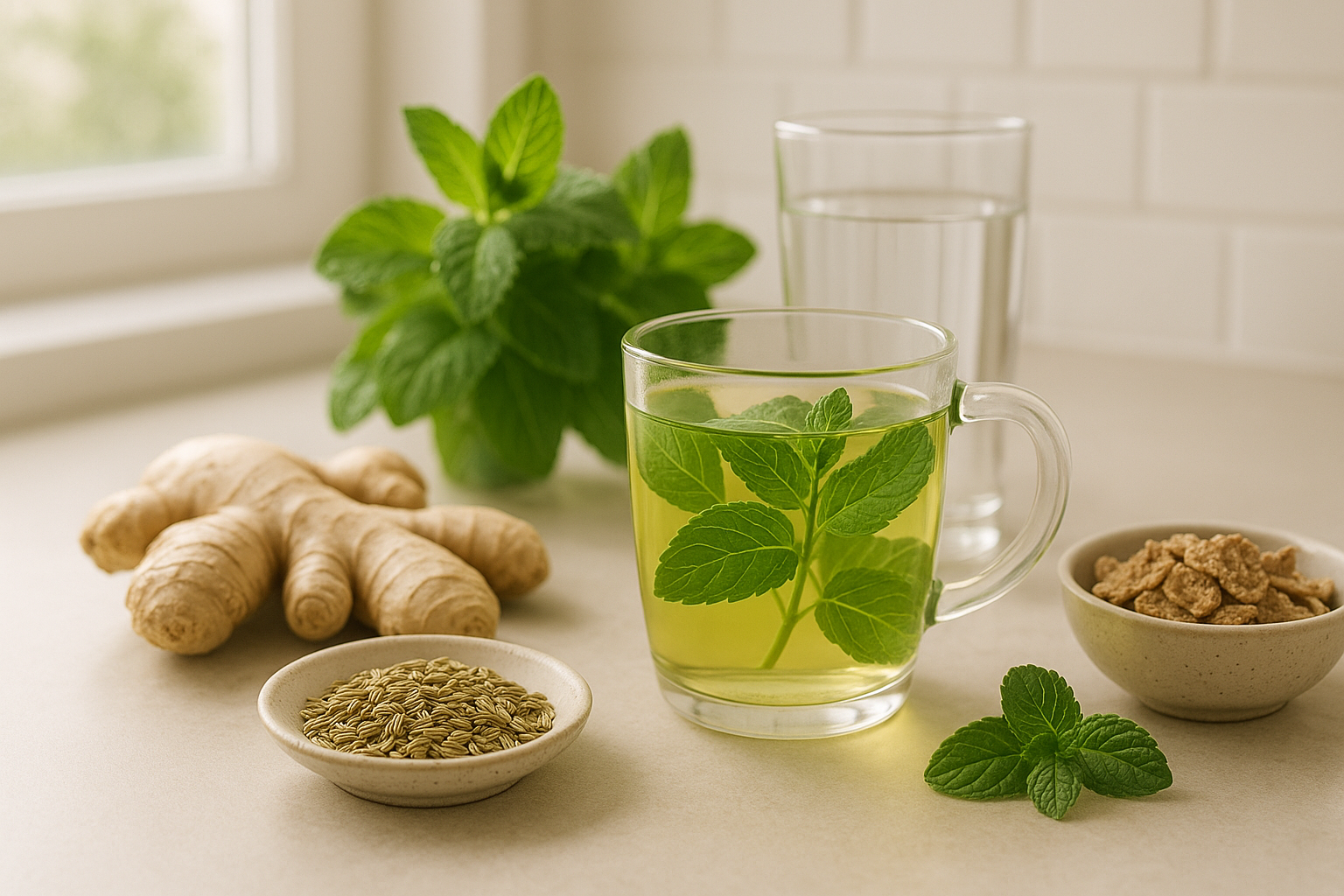
Peppermint tea is commonly used for digestive comfort, and ginger has a long history of use for nausea and indigestion. Sip slowly after meals and notice how your body responds. People with acid reflux may find peppermint worsens symptoms, so ginger or chamomile may be a better option.
4. Stay hydrated
Water supports normal digestion and helps prevent constipation, a common cause of bloating. If you are increasing fiber intake, hydration becomes even more important because fiber needs fluid to move comfortably through the digestive system.

5. Increase fiber gradually
Fiber supports regular bowel movements and a healthy gut microbiome, but adding too much too quickly can increase gas. If your diet is low in fiber, increase intake slowly with foods such as oats, beans, lentils, berries, vegetables, chia seeds, and ground flaxseed.
6. Identify personal food triggers
Some people feel bloated after eating foods such as beans, onions, garlic, wheat, dairy, cruciferous vegetables, carbonated drinks, or sugar alcohols. A short food and symptom diary can help identify patterns. Do not remove major food groups long term without guidance from a healthcare professional or registered dietitian.
7. Consider probiotic foods
Fermented foods such as yogurt with live cultures, kefir, sauerkraut, kimchi, miso, and tempeh may support gut microbial balance. Probiotics affect people differently, so start with small amounts and monitor symptoms. If bloating worsens, pause and reassess.
8. Reduce carbonated drinks
Sparkling water, soda, beer, and other carbonated beverages can introduce gas into the digestive tract. Switching to still water or warm herbal tea may help if carbonation is a trigger.
9. Support regular bowel movements
Constipation often causes bloating. Helpful habits include drinking water, eating fiber-rich foods, moving daily, and responding promptly to the urge to have a bowel movement. If constipation is frequent or painful, seek medical guidance.
10. Practice stress reduction
Stress can affect gut motility and sensitivity. Deep breathing, gentle yoga, meditation, and relaxed mealtimes may help calm the gut-brain connection and reduce digestive discomfort.
When to seek medical care
Contact a healthcare provider if bloating is persistent, severe, new and unexplained, or accompanied by warning signs such as blood in stool, persistent vomiting, fever, unexplained weight loss, difficulty swallowing, severe abdominal pain, or a major change in bowel habits.
Bottom line
Natural remedies for bloating often work best when combined: eat slowly, walk after meals, hydrate, increase fiber gradually, reduce carbonated drinks, and identify personal triggers. If bloating keeps coming back or interferes with daily life, professional evaluation can help uncover the cause and guide treatment.