Chapter 17: How To Source Peptides Safely
Quality, Legitimacy & Avoiding Dangerous Mistakes
One of the biggest questions women eventually ask after learning about peptides is:
“How do people actually obtain these?”
And honestly, this is where things become complicated.
Because while peptides have exploded in popularity across:
- wellness clinics
- longevity spaces
- social media
- biohacking communities
…the peptide industry itself is still highly fragmented.
Which means:
quality varies enormously.
And unfortunately, many women enter this space without realizing:
- products may be underdosed
- mislabeled
- contaminated
- improperly stored
- completely fake
This is why sourcing deserves serious attention.
Because no peptide conversation matters if:
the product itself is poor quality or unsafe.
Why The Peptide Industry Is So Confusing
Part of the confusion comes from the fact that peptides exist across several different categories:
- prescription medications
- compounded wellness products
- research-use products
- cosmetic formulations
- wellness clinic protocols
Some peptides have:
- FDA-approved medical uses
while others remain: - experimental
- research-focused
- not approved for general medical treatment
This creates enormous confusion for consumers trying to navigate the space safely.
Especially because social media often presents peptides as:
casual wellness products
without discussing:
- legality
- sourcing quality
- sterility
- safety standards
- medical oversight
The Biggest Mistake Women Make
One of the most dangerous mistakes women make is assuming:
all peptide suppliers are equal.
They are not.
In fact, quality differences can be dramatic.
And because peptides are biologically active compounds, poor-quality sourcing may create serious risks involving:
- contamination
- inaccurate labeling
- improper formulation
- bacterial exposure
- dosing inconsistency
This is one reason cautious sourcing matters so much.
The Safest General Approach
The most conservative and safety-focused approach is generally working through:
- licensed healthcare providers
- established medical clinics
- reputable compounding pharmacies when appropriate
- qualified longevity or metabolic health professionals
Women exploring peptides should ideally seek:
- transparency
- medical oversight
- ingredient accountability
- sterility standards
- quality testing
Especially for injectable products.
What Is A Compounding Pharmacy?
Food and Drug Administration-regulated compounding pharmacies prepare customized medications under specific regulatory frameworks.
In wellness and longevity settings, some peptide-related therapies may be obtained through properly licensed compounding pharmacies working alongside healthcare providers.
Women often prefer this route because it may provide:
- better quality assurance
- sterility standards
- dosing consistency
- medical guidance
- prescription oversight
However, regulations and availability vary by:
- state
- country
- peptide category
- current regulatory environment
Which is why professional guidance matters.
Why “Cheap” Can Become Dangerous
One thing I strongly encourage women to avoid is making decisions based solely on:
price.
Cheap peptide products may carry significantly higher risks involving:
- contamination
- improper storage
- inaccurate concentration
- poor manufacturing standards
And unfortunately, online wellness culture often encourages:
- bargain hunting
- underground sourcing
- impulsive experimentation
without adequately discussing risk.
That’s a problem.
Because injectable products require:
- sterility
- proper handling
- manufacturing quality
- careful sourcing
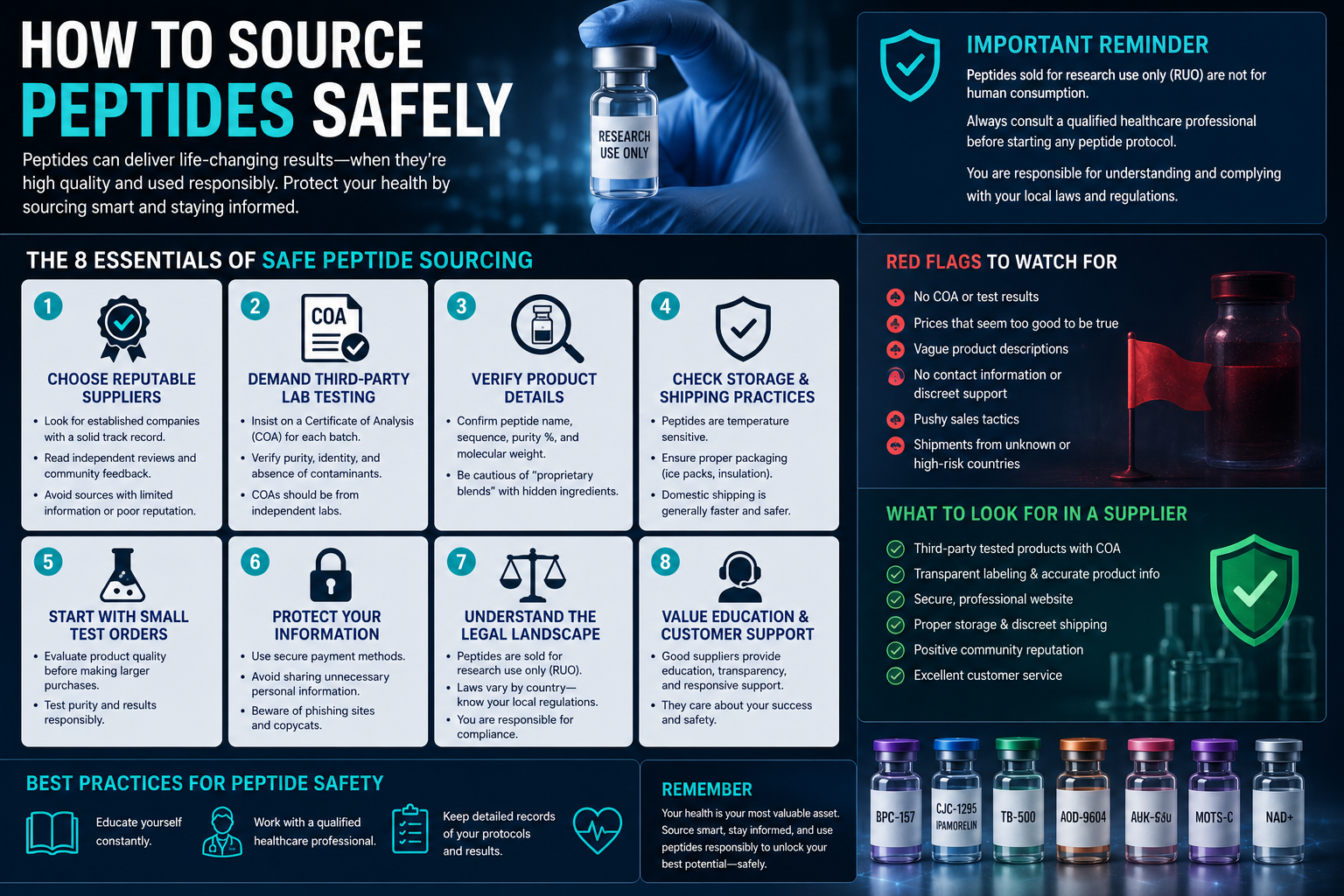
Red Flags To Watch For
Women should be cautious of suppliers that:
- make unrealistic promises
- guarantee dramatic results
- lack transparency
- avoid discussing testing
- provide no quality documentation
- aggressively market “miracle” outcomes
- appear anonymous or unprofessional
Extreme marketing hype is often a warning sign.
Especially in wellness spaces.
Why Lab Testing Matters
Reputable peptide discussions often involve concepts such as:
- third-party testing
- purity verification
- sterility testing
- batch consistency
This matters because peptides are sensitive compounds.
Improper handling or manufacturing may affect:
- stability
- potency
- safety
Again:
quality matters enormously.
Especially with anything injected into the body.
The Social Media Problem
One thing that concerns me about modern wellness culture is how casually peptides are often discussed online.
Influencers may present peptide use as:
- effortless
- risk-free
- universally effective
while completely skipping conversations around:
- medical oversight
- contraindications
- sourcing risks
- side effects
- long-term unknowns
That creates unrealistic expectations and sometimes unsafe behavior.
Especially among women feeling vulnerable about:
- aging
- body image
- chronic fatigue
- weight struggles
Women deserve honest education—not exaggerated hype.
The Emotional Vulnerability Factor
One thing wellness marketers understand extremely well is this:
women who feel exhausted or frustrated are often emotionally vulnerable.
Women struggling with:
- weight gain
- menopause symptoms
- fatigue
- chronic pain
- body changes
may feel desperate for solutions.
And unfortunately, desperation sometimes leads people toward:
- unsafe products
- aggressive claims
- unrealistic expectations
This is one reason balanced education matters so much.
Women should never feel pressured into:
- reckless experimentation
- shame-based wellness
- fear-driven purchasing
Questions Women Should Ask Before Using Peptides
Before exploring peptide-related wellness, women should thoughtfully consider:
- What are my actual goals?
- Do I understand the risks and unknowns?
- Am I prioritizing foundational health habits?
- Is this approach medically appropriate for me?
- Am I seeking support or chasing unrealistic transformation?
- Is the source reputable and transparent?
- Do I have realistic expectations?
These questions create much healthier decision-making.
Why Foundational Health Still Comes First
One of the biggest misconceptions in wellness culture is believing advanced therapies can override poor lifestyle habits.
They cannot.
No peptide can fully compensate for:
- chronic sleep deprivation
- unmanaged stress
- severe muscle loss
- inactivity
- poor nutrition
- excessive alcohol
- burnout
Women often want advanced solutions when they actually need:
- recovery
- protein
- sleep
- movement
- nervous system support
- metabolic stabilization
That doesn’t make peptides useless.
It simply means:
fundamentals still matter most.
The Most Sustainable Wellness Mindset
The healthiest women I know tend to approach wellness with:
- curiosity
- patience
- realism
- self-respect
- consistency
Not desperation.
Not obsession.
Not panic around aging.
And honestly, I think that emotional approach matters just as much as any supplement, peptide, or wellness strategy ever will.
Because stress itself profoundly affects:
- hormones
- inflammation
- recovery
- metabolism
- aging
Wellness should reduce chaos—not increase it.
The Difference Between Empowerment & Hype
True wellness education should empower women to:
- ask better questions
- make informed decisions
- understand their bodies
- think critically
- approach aging intelligently
It should not:
- manipulate insecurity
- promise miracles
- create fear
- encourage reckless behavior
That distinction matters enormously.
Especially in today’s wellness industry.
Ava’s Perspective
If there’s one thing I hope women take away from this book, it’s this:
your body deserves respect—not punishment.
You do not need to:
- panic about aging
- obsess over perfection
- chase every new trend
- experiment recklessly
Healthy aging is not about becoming flawless.
It’s about becoming:
- resilient
- informed
- strong
- energized
- confident
- intentional
And the women who tend to age most powerfully are usually the women who approach wellness from:
self-respect instead of fear.
That mindset changes everything.
Key Takeaways
- Peptide quality and sourcing matter enormously.
- Not all peptide suppliers are safe or reputable.
- Women should prioritize transparency, testing, and professional oversight.
- Cheap or poorly sourced products may carry serious risks.
- Social media often oversimplifies peptide safety and effectiveness.
- Foundational health habits still matter more than advanced wellness tools.
Sustainable wellness should be rooted in education, realism, and self-respect.