Chapter 15: Epitalon
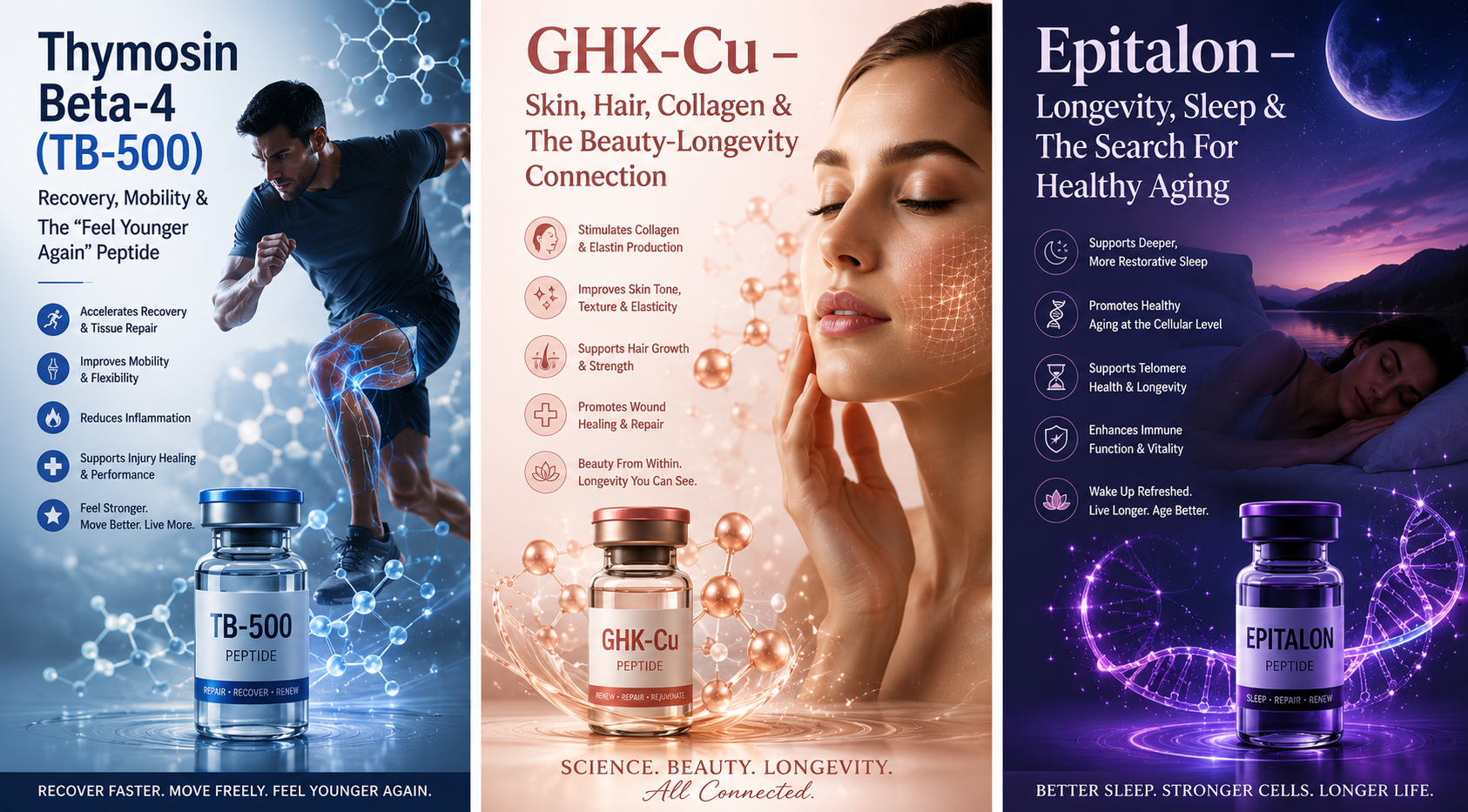
Longevity, Sleep & The Search For Healthy Aging
Eventually, almost every wellness conversation leads to one unavoidable reality:
aging.
Not just appearance.
But deeper questions like:
- How do we preserve vitality?
- How do we maintain cognitive clarity?
- How do we stay resilient longer?
- How do we age without feeling physically diminished?
For many women, these questions become more meaningful during midlife.
Because aging stops feeling theoretical.
You begin noticing:
- changing recovery
- sleep disruption
- lower resilience
- hormonal shifts
- metabolic changes
- altered energy patterns
And often, women realize they are not necessarily afraid of getting older.
They are afraid of:
- losing vitality
- losing independence
- losing physical capability
- losing the feeling of being fully alive
This growing interest in:
- longevity
- biological aging
- cellular health
- resilience-focused wellness
is one reason discussions around:
Epitalon
have become increasingly popular in advanced longevity and biohacking circles.
What Is Epitalon?
Epitalon is a synthetic peptide originally studied in relation to:
- aging
- cellular health
- melatonin regulation
- sleep
- longevity-related biological processes
It became especially well known in longevity communities because of research involving:
- telomeres
- cellular aging pathways
- pineal gland function
- circadian rhythm regulation
That sounds highly technical, so let’s simplify it.
What Are Telomeres?
Telomeres are protective structures located at the ends of chromosomes.
They are often compared to:
the plastic tips on shoelaces.
Over time, telomeres naturally shorten as cells divide and age.
Researchers have explored whether telomere shortening may relate to:
- biological aging
- reduced cellular resilience
- age-related decline
This is one reason longevity science became fascinated with compounds potentially connected to:
- cellular repair
- aging pathways
- resilience mechanisms
Epitalon entered this conversation because of early research exploring its possible relationship to telomerase activity and cellular aging pathways.
Again:
much more research is still needed.
But the concept generated enormous interest in longevity-focused wellness communities.
Why Women Become Interested In Longevity Wellness
At some point, many women realize they care less about:
- looking younger
and more about: - feeling stronger
- thinking clearly
- maintaining independence
- preserving energy
- remaining physically capable
That’s an important emotional shift.
Because healthy aging is not really about vanity.
It’s about:
quality of life.
Women want to:
- travel comfortably
- stay active
- maintain cognitive sharpness
- feel resilient
- continue fully participating in life
That’s what makes longevity wellness so emotionally compelling.
The Sleep & Circadian Rhythm Connection
One reason Epitalon discussions became especially popular among women is its association with:
- sleep regulation
- melatonin-related pathways
- circadian rhythm support
And honestly:
sleep affects almost everything.
Poor sleep may contribute to:
- accelerated aging
- inflammation
- insulin resistance
- fatigue
- mood changes
- cognitive decline
- poor recovery
- hormonal disruption
Many women navigating midlife experience:
- lighter sleep
- waking during the night
- difficulty staying asleep
- reduced recovery from poor sleep
This is one reason sleep-focused longevity conversations have become so important.
Because sleep is one of the body’s most powerful recovery and repair systems.
Why Aging Feels Different For Women
Women often experience aging differently emotionally than men.
Many women simultaneously navigate:
- hormonal changes
- caregiving stress
- career pressure
- sleep disruption
- changing identity roles
- body composition shifts
And through all of this, they’re still expected to:
- perform
- care for others
- remain productive
- appear youthful
- stay energetic
That’s exhausting.
Which is one reason women are increasingly drawn toward wellness conversations focused on:
restoration instead of perfection.
Potential Benefits Women Commonly Discuss
Women exploring Epitalon discussions often mention goals such as:
- healthy aging support
- improved sleep quality
- recovery support
- circadian rhythm support
- longevity-focused wellness
- energy support
- resilience support
Some women also describe:
- feeling more rested
- improved recovery sensation
- improved sleep consistency
- greater interest in proactive aging strategies
Again, responses vary significantly and long-term research remains ongoing.
The Difference Between Lifespan & Healthspan
One of the most important ideas in longevity science is the distinction between:
lifespan
and
healthspan.
Lifespan simply means:
how long you live.
Healthspan means:
how well you live while aging.
Most women are not interested in:
- simply adding more years
if those years involve: - exhaustion
- frailty
- poor mobility
- cognitive decline
- chronic disease
Women increasingly want:
- vitality
- resilience
- mental clarity
- strength
- independence
for as long as possible.
That’s what healthy-aging conversations should really focus on.
The Wellness Industry’s Fear Problem
One thing I dislike about parts of the anti-aging industry is how heavily it relies on:
- fear
- insecurity
- panic around aging
But aging itself is not failure.
Aging is:
- biological
- natural
- inevitable
The healthier goal is not:
trying to stop aging.
The healthier goal is:
supporting the body intelligently while aging.
That mindset creates far healthier emotional relationships with wellness.
Common Wellness Pairings
In longevity-focused wellness circles, Epitalon is often discussed alongside:
- sleep optimization
- stress reduction
- metabolic health strategies
- recovery-focused wellness
- mitochondrial support
- movement routines
- anti-inflammatory nutrition
- nervous system regulation
Because ultimately:
longevity is rarely about one single intervention.
It’s usually the cumulative effect of:
- movement
- recovery
- sleep
- nutrition
- stress management
- metabolic health
- consistency
Side Effects & Considerations
Because long-term human data remains limited, side effects and risks continue being evaluated.
Potentially discussed side effects may include:
- fatigue
- headaches
- dizziness
- temporary sleep changes
- injection site irritation
Individual responses vary considerably.
Again, cautious optimism is healthier than exaggerated hype.
Contraindications & Unknowns
Women with:
- cancer histories
- complex medical conditions
- autoimmune disease
- pregnancy or breastfeeding considerations
should discuss any advanced longevity therapies carefully with qualified healthcare professionals.
Long-term human evidence remains limited.
That’s important to acknowledge honestly.
Why Women Are Rethinking Aging
One thing I find incredibly encouraging is that many women are redefining what aging means.
Instead of chasing impossible standards, more women are focusing on:
- energy
- movement
- resilience
- vitality
- emotional wellbeing
- longevity
- metabolic health
That’s a far healthier direction than:
fear-based anti-aging culture.
Because healthy aging is not about pretending you’re 25 forever.
It’s about:
remaining strong, capable, and fully alive throughout life.
The Truth About Longevity
The women who tend to age most powerfully are rarely the ones obsessing over perfection.
They are usually the women who:
- move consistently
- manage stress wisely
- maintain muscle
- prioritize sleep
- nourish themselves adequately
- cultivate purpose
- preserve curiosity
- stay socially connected
Longevity is deeply connected to:
how we live emotionally as well as physically.
That matters more than most people realize.
Ava’s Perspective
The older I get, the less interested I become in:
- looking younger
and the more interested I become in: - feeling vibrant
- staying capable
- preserving energy
- protecting my mind
- maintaining freedom and independence
To me, that’s what longevity should really mean.
Not fear of aging.
But respect for the body and life itself.
Aging gracefully is not weakness.
It’s wisdom.
And I think women become extraordinarily powerful when they stop viewing aging as something shameful and start viewing it as something to navigate intelligently and confidently instead.
Key Takeaways
Longevity wellness works best when rooted in sustainable lifestyle foundations.
Epitalon is commonly discussed in longevity and healthy-aging conversations.
Interest centers around sleep, circadian rhythm, and cellular aging pathways.
Women increasingly prioritize healthspan—not simply lifespan.
Sleep quality strongly affects aging, recovery, metabolism, and resilience.
Healthy aging should focus on vitality and independence rather than fear.
Long-term human research on Epitalon remains limited.