
Probiotics vs Prebiotics: What Is the Difference and Which Do You Need?
Probiotics vs Prebiotics: What Is the Difference?
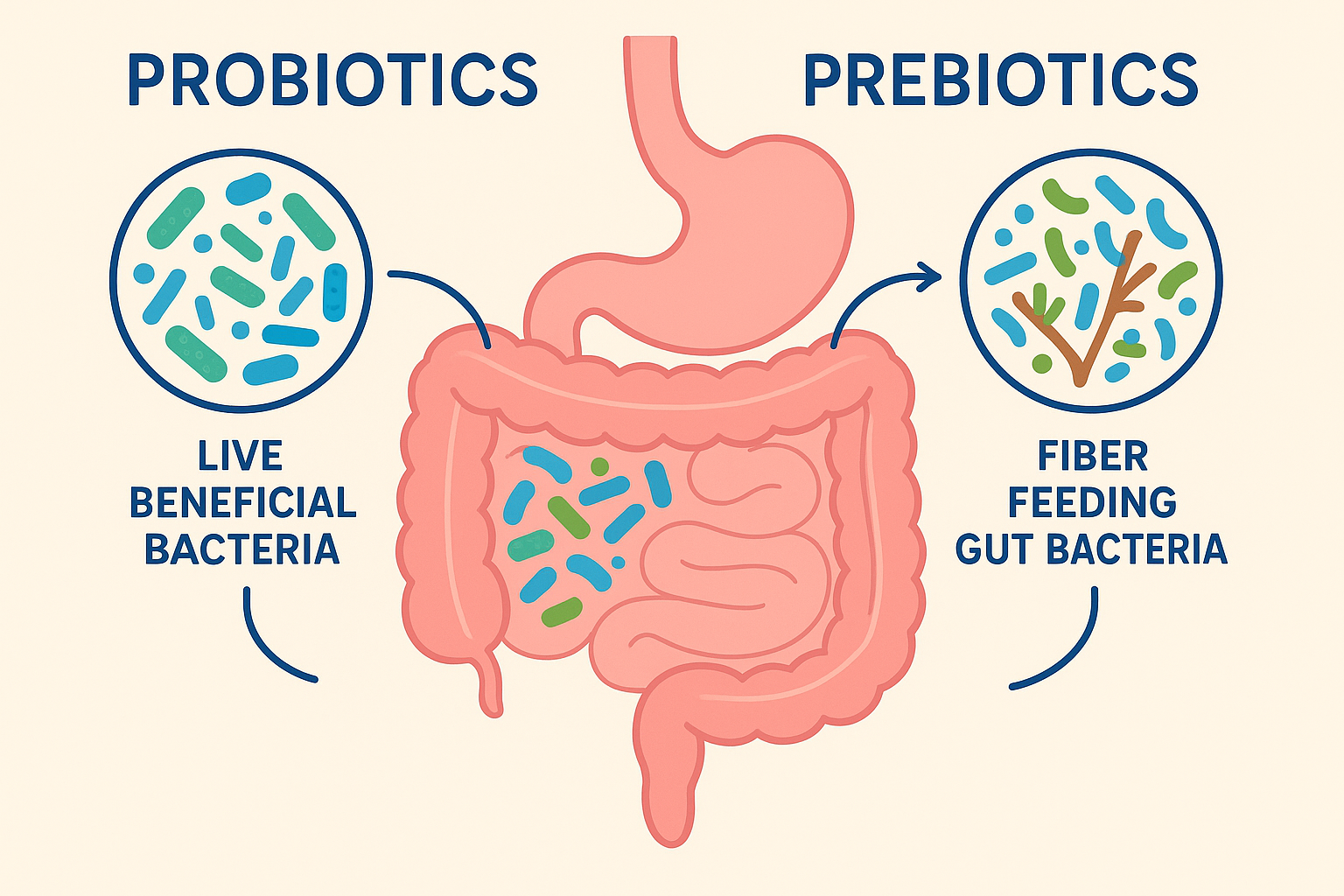
When comparing probiotics vs prebiotics differences, the simplest explanation is this:
- Probiotics are live beneficial bacteria.
- Prebiotics are types of fiber that feed those beneficial bacteria.
Both play important roles in maintaining a healthy gut microbiome, which influences digestion, immune function, and even mood.
What Are Probiotics?
Probiotics are live microorganisms that provide health benefits when consumed in adequate amounts. They are often called “good” or “helpful” bacteria because they help maintain a healthy balance of microbes in your gut.
Common Sources of Probiotics
- Yogurt with live active cultures
- Kefir
- Sauerkraut
- Kimchi
- Dietary supplements
Potential Benefits
According to trusted health authorities, probiotics may help:
- Restore gut balance after antibiotics
- Reduce certain types of diarrhea
- Support immune function
- Improve symptoms of some digestive disorders
Not all probiotics are the same. Different strains have different effects, and benefits depend on the specific strain and dose.

What Are Prebiotics?
Prebiotics are non-digestible fibers that feed beneficial bacteria in your gut. Unlike probiotics, they are not live organisms. Instead, they act as fuel for the good bacteria already living in your digestive tract.
Common Sources of Prebiotics
- Garlic
- Onions
- Leeks
- Asparagus
- Bananas
- Whole grains
- Beans and legumes
Potential Benefits
Prebiotics may help:
- Improve digestion
- Increase absorption of certain minerals
- Support regular bowel movements
- Enhance the growth of beneficial gut bacteria
By feeding good bacteria, prebiotics indirectly support many of the same systems as probiotics.
Key Differences Between Probiotics and Prebiotics
1. What They Are
- Probiotics: Live beneficial bacteria.
- Prebiotics: Fiber that feeds beneficial bacteria.
2. How They Work
- Probiotics add good bacteria to your gut.
- Prebiotics nourish the good bacteria already there.
3. Where They Are Found
- Probiotics: Fermented foods and supplements.
- Prebiotics: High-fiber plant foods.
They often work best together, supporting overall gut health in complementary ways.
Which Do You Need?
The answer depends on your health goals and diet.
You May Benefit from Probiotics If You:
- Recently took antibiotics
- Experience frequent digestive upset
- Have certain diagnosed gut conditions
You May Benefit from Prebiotics If You:
- Eat a low-fiber diet
- Experience mild constipation
- Want to support overall gut balance naturally
For many people, focusing on a fiber-rich diet that includes naturally fermented foods provides both prebiotic and probiotic support.
Can You Take Them Together?
Yes. In fact, some products combine both and are called synbiotics. Pairing probiotics with prebiotics may enhance the survival and effectiveness of beneficial bacteria.
Bottom Line
Understanding probiotics vs prebiotics differences helps you make informed choices about gut health. Probiotics introduce beneficial bacteria, while prebiotics feed and strengthen those bacteria. Together, they support digestion, immunity, and overall wellness.
If you are considering supplements, speak with a healthcare professional to determine what is appropriate for your individual needs.