
Vitamin D Deficiency Symptoms: Common Signs of Low Vitamin D
What Is Vitamin D?
Vitamin D is a fat-soluble vitamin that helps the body absorb calcium and phosphorus, which are essential for strong bones and teeth. It also supports immune health, muscle function, and inflammation regulation. The body produces vitamin D when skin is exposed to sunlight, and it can also be obtained from certain foods and supplements.
Common Vitamin D Deficiency Symptoms
Vitamin D deficiency symptoms may develop gradually. Some people experience mild signs, while others may have more noticeable health problems.
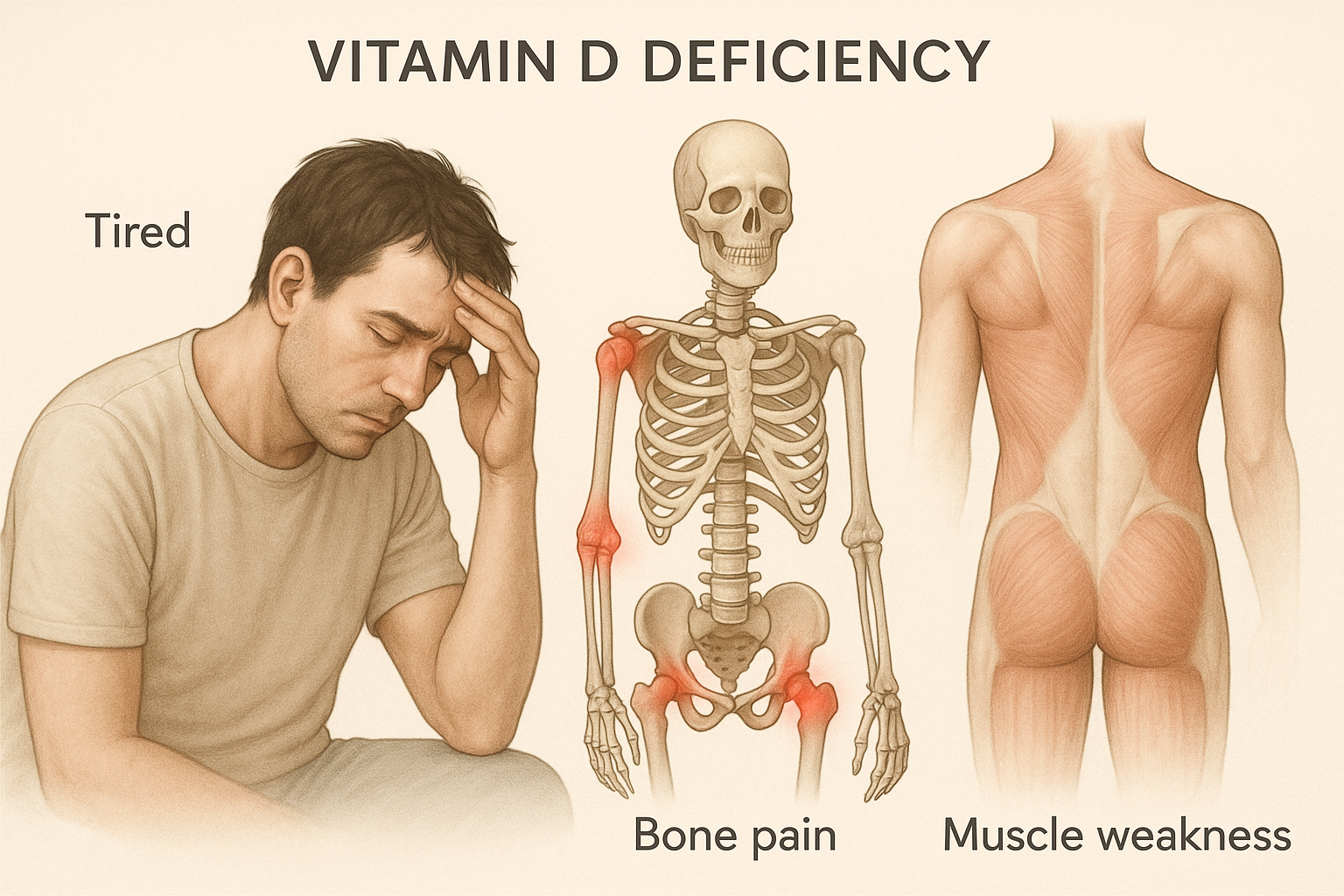
1. Fatigue and Low Energy
Persistent tiredness is one of the most commonly reported symptoms of low vitamin D. Even with adequate sleep, individuals may feel unusually fatigued or sluggish.
2. Bone Pain and Lower Back Pain
Vitamin D helps maintain bone mineralization. Low levels can lead to bone discomfort, particularly in the lower back, hips, pelvis, or legs.
3. Muscle Weakness or Cramps
Muscle weakness, aches, or cramps may occur due to impaired calcium regulation. In severe cases, this can increase the risk of falls, especially in older adults.

4. Frequent Illness or Infections
Vitamin D plays a role in immune system regulation. Deficiency may be associated with increased susceptibility to respiratory infections and slower recovery times.
5. Mood Changes and Depression
Low vitamin D levels have been linked to mood disturbances, including symptoms of depression, particularly in individuals with limited sun exposure.
6. Bone Loss and Fractures
Long-term deficiency can contribute to reduced bone density. In adults, this may lead to osteomalacia (soft bones) and increase fracture risk. In children, severe deficiency can cause rickets.
7. Hair Thinning
Some research suggests a potential link between low vitamin D levels and certain types of hair loss, though more studies are needed.
Who Is at Risk?
People at higher risk for vitamin D deficiency include:
- Older adults
- Individuals with limited sun exposure
- People with darker skin tones
- Those with obesity
- Individuals with digestive disorders affecting fat absorption
- Breastfed infants without supplementation
When to See a Healthcare Provider
Because symptoms can be vague, a blood test measuring serum 25-hydroxyvitamin D is the standard way to diagnose deficiency. Seek medical advice if you experience persistent fatigue, bone pain, muscle weakness, or frequent infections.
Summary
Vitamin D deficiency symptoms can range from mild fatigue to serious bone complications. Early recognition and proper testing are essential to prevent long-term health issues. If you suspect low vitamin D levels, consult a healthcare professional for evaluation and guidance on safe supplementation or lifestyle adjustments.